July 1, 2026 is a date that will matter in pharmacy for years. The Medicare GLP-1 Bridge launched today, and if you haven’t read the CMS guidance in full yet, this week’s briefing is your catch-up. The operational details will catch most pharmacies off guard before the end of the week.
What the Bridge Actually Is
The Medicare GLP-1 Bridge is a nationwide CMS demonstration program running from July 1, 2026 through December 31, 2027, extended from its original December 31, 2026 endpoint. For the first time in Medicare’s history, eligible Part D beneficiaries can access GLP-1 medications specifically for weight management at a flat $50 monthly copay, regardless of which benefit phase they are in and regardless of their deductible status.
CMS Administrator Dr. Mehmet Oz framed the program directly: “These treatments are a major medical advancement, but too many seniors are currently unable to access them due to high cost. This program will break down barriers and help seniors lead healthier, longer lives.”
An estimated 3.8 million beneficiaries could be eligible based on KFF’s analysis of 2023 Part D enrollment data.
The Specific Drugs Covered and the Formulation Details That Matter
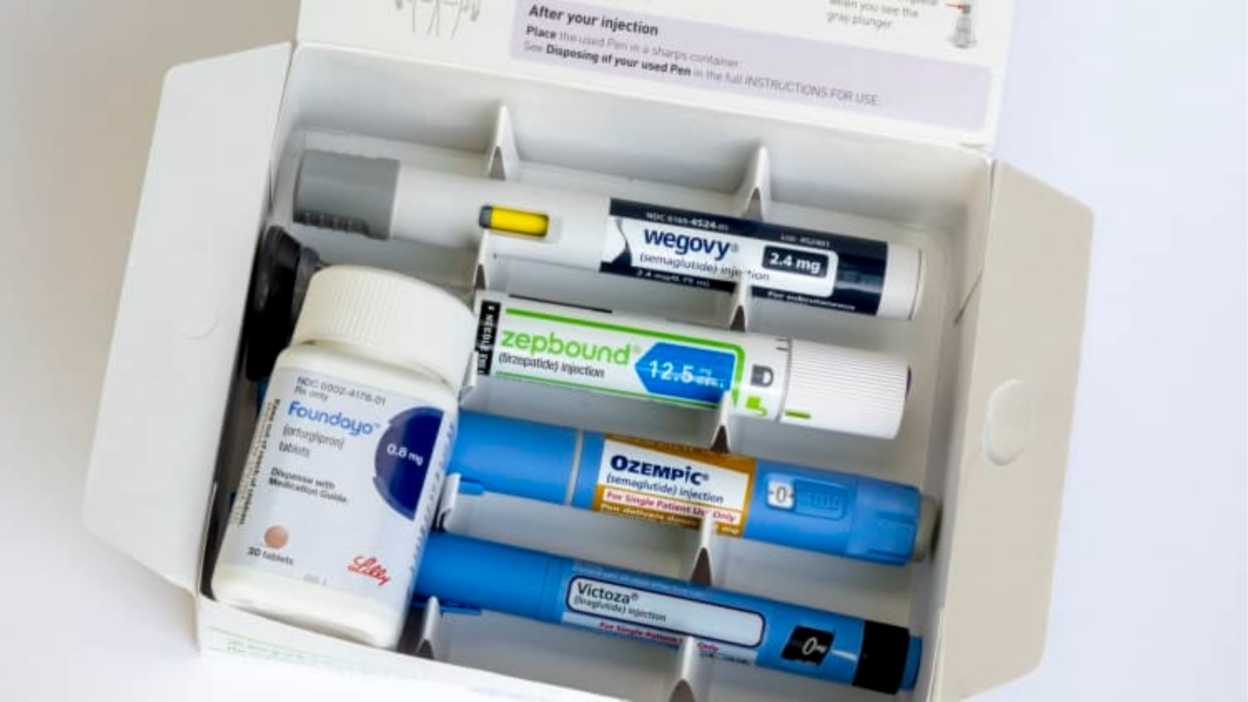
The covered drugs are specifically: all formulations of Foundayo, all formulations of Wegovy injection and tablet, and the KwikPen formulation of Zepbound only.
The single-dose vial and single-dose pen formulations of Zepbound are not covered under the Bridge. Eli Lilly chose to include only the KwikPen formulation because it contains a month’s worth of doses in a single pen.
Ozempic, Mounjaro, Rybelsus, and other GLP-1s are not part of the Bridge. These drugs remain under standard Part D coverage when prescribed for type 2 diabetes, cardiovascular risk reduction, or sleep apnea.
This formulation distinction will cause dispensing errors. When a Bridge-eligible patient presents a Zepbound single-dose vial prescription, that prescription does not process through the Bridge. If the patient’s drug plan doesn’t cover it for weight management under standard Part D, the claim will reject. The pharmacist who knows this ahead of time can catch the issue and contact the prescriber for a reformulation before the patient leaves the counter confused.
The Eligibility Criteria: Four Requirements, All Must Be Met
To qualify for the Bridge, a beneficiary must meet all four of these requirements simultaneously.
Requirement 1: Active enrollment in a standalone Medicare Part D Prescription Drug Plan or a Medicare Advantage plan that includes prescription drug coverage. Beneficiaries enrolled only in private fee-for-service plans, cost contract plans, or PACE organizations do not qualify.
Requirement 2: The GLP-1 is being used solely for weight management. This is the eligibility tripwire that will generate the most confusion. A beneficiary taking Wegovy for cardiovascular risk reduction under the SELECT indication does not qualify for the Bridge. A beneficiary taking Zepbound for sleep apnea under its FDA approval does not qualify. Those patients access their GLP-1 through standard Part D formulary coverage instead. CMS will monitor formulary and utilization management practices to prevent plans from improperly shifting these patients to the Bridge.
Requirement 3: Clinical criteria assessment at therapy initiation. The key clinical eligibility criteria include a BMI of 35 or greater; a BMI of 30 or greater with a diagnosis of heart failure, uncontrolled hypertension, or chronic kidney disease; or a BMI of 27 or greater with a diagnosis of pre-diabetes, previous heart attack, previous stroke, or symptomatic peripheral artery disease. Critically, these clinical criteria are assessed at the time GLP-1 therapy was first initiated, including for beneficiaries who started therapy before enrolling in Medicare Part D or before July 1, 2026.
Requirement 4: Prior authorization approval from the CMS central processor.
The Prior Authorization Workflow That Will Break Most Prescriber Offices
This is the operational detail that will generate the most phone calls to your pharmacy in the next 30 days.
Prior authorization requests for Bridge prescriptions go to a CMS central processor, not to the patient’s Part D plan. This is a fundamentally different workflow than everything prescribers currently do for prior authorizations.
Many doctors are not familiar with this process yet, as the GLP-1 Bridge is brand new and does not flow through normal channels. Some physician offices may not know how to submit to the CMS processor, what documentation CMS requires, or how the program even works.
The pharmacy technical details: CMS has established a Bank Identification Number of 028918 and a Processor Control Number of MEDDGLP1BR specific to the Bridge. Claims for Bridge-covered prescriptions go to this processor, not to the patient’s Part D plan. Pharmacies do not need to opt in. All pharmacies automatically participate.
The pharmacy reimbursement structure: pharmacies collect the $50 copay directly from the beneficiary. The central processor reimburses the pharmacy at no less than wholesale acquisition cost, minus the $50 copay, plus a dispensing fee and applicable sales tax.
When a prescriber’s office is unfamiliar with the process and routes the prior authorization to the patient’s Part D plan instead of the CMS central processor, the authorization will not transfer to the Bridge correctly, and the claim will likely reject or process at standard Part D cost-sharing rather than the $50 Bridge copay. This scenario will happen frequently in the first weeks of the program. The pharmacist who knows the correct routing is the one who catches it before the patient walks away confused or pays the wrong amount.
The LIS Patient Risk That Could Blindside Your Most Vulnerable Patients
This is the most important equity issue embedded in the Bridge design, and it needs proactive pharmacist attention before it becomes a crisis.
For beneficiaries enrolled in the Low-Income Subsidy program, the LIS cost-sharing subsidies will not apply in the Medicare GLP-1 Bridge. This may make it more difficult for low- and modest-income beneficiaries who are otherwise eligible to take advantage of the program if the $50 monthly copayment is unaffordable.
The $50 monthly copay will not count toward a patient’s Part D deductible or the $2,100 annual out-of-pocket cap on prescription drug costs. Additional coupons or discounts may not be used to reduce the $50 copay further. A quarter of Medicare beneficiaries had an income below $24,600 in 2024.
For a patient whose LIS currently covers their drug copays at $0 to $10 per prescription, the Bridge introduces a new $50 monthly obligation that their LIS does not offset. That patient is worse off accessing a GLP-1 through the Bridge than staying within their LIS-protected Part D benefit, if their Part D plan covers the GLP-1 at all.
The pharmacist’s role: identify LIS patients who are newly being prescribed a Bridge-covered GLP-1 and run through the cost comparison before they leave the counter. If their Part D plan covers the drug, even at a higher standard copay, the LIS benefit may still produce a lower net out-of-pocket cost than the $50 Bridge copay. This is a nuanced calculation that requires knowing both the standard Part D cost-sharing for that specific patient and the Bridge copay, and it is a calculation only a pharmacist can easily perform at the point of care.
The BALANCE Context: What Comes After This Bridge
The Bridge is temporary by design. CMS originally planned for the Bridge to serve as a six-month transition to the BALANCE Model, which was intended to shift GLP-1 obesity coverage responsibility to private Part D plan sponsors in a durable long-term structure.
Insurers including CVS and UnitedHealthcare declined to participate voluntarily in BALANCE for Medicare, citing concerns about the program’s structure and costs. CMS subsequently extended Bridge through 2027 and plans to use utilization data from the demonstration to encourage future BALANCE participation. The BALANCE Model did launch in Medicaid in May 2026 and is scheduled to conclude there at the end of 2031.
During the pre-implementation period in early 2026, CMS negotiated with Novo Nordisk and Eli Lilly on model parameters including pricing, cost-sharing, and access policies. Both manufacturers have agreed to participate in a potential future BALANCE Medicare model, with a $245 net price per 30-day supply agreed for all model drugs in 2027.
What this means for pharmacists and patients: the Bridge is the pathway to affordable GLP-1 access for weight management in Medicare through the end of 2027. After that, the landscape depends on whether BALANCE launches in Medicare with sufficient insurer participation to create a durable benefit. Patients starting GLP-1 therapy now under the Bridge face a real risk of coverage disruption at the end of 2027 if BALANCE does not launch or if their Part D plan does not cover the drug for obesity. The pharmacist who counsels patients about this timeline and the importance of tracking their BALANCE eligibility and plan options during the 2027 open enrollment period provides a genuinely valuable clinical service.
Your Clinical Action This Week
Three specific protocol steps before you fill your first Bridge prescription.
Step 1: Confirm which formulations are in stock and eligible. Zepbound single-dose vials and single-dose pens do not process through the Bridge. If a patient presents a Zepbound vial prescription, know immediately that it requires either a call to the prescriber to switch to KwikPen or routing through the patient’s standard Part D benefit.
Step 2: Build the eligibility quick-check into your workflow. Before submitting a GLP-1 claim for a Medicare patient, ask: Are they enrolled in a PDP or MA-PD? Is the indication weight management only, not diabetes, cardiovascular risk, or sleep apnea? If both are yes, route the claim to BIN 028918, PCN MEDDGLP1BR.
Step 3: Flag your LIS patients proactively. Run a report of your active Medicare GLP-1 patients who also carry LIS designation. For each one, compare what their LIS benefit currently produces on their GLP-1 cost versus the $50 Bridge copay. If the LIS benefit produces lower cost-sharing through standard Part D, direct the patient away from the Bridge toward their existing coverage, and document the reason.
The pent-up demand is real. The 3.8 million newly eligible seniors are real. The prior authorization bottleneck at unfamiliar prescriber offices is also real. The pharmacist who knows the workflow, catches the routing errors, and proactively counsels the LIS patients will be the most valued clinical resource in their patients’ GLP-1 access journey from day one.
Sources: CMS (Medicare GLP-1 Bridge official program page, cms.gov/medicare/coverage/prescription-drug-coverage/medicare-glp-1-bridge), CMS (Information for Pharmacies, including BIN/PCN and NDC lists), CMS (Information for Part D Plans), CMS Press Release (Coming Soon: CMS to Provide $50 Monthly Access to GLP-1 Medications for Medicare Beneficiaries, May 6, 2026), CMS Medicare GLP-1 Bridge Patient Fact Sheet (Product No. 12234, June 2026), KFF (What to Know About the BALANCE Model for GLP-1s in Medicare and Medicaid, updated May 11, 2026), AARP (Medicare $50 Per Month GLP-1 Bridge Program, June 30, 2026), CNBC (Medicare Obesity Drug GLP-1 Coverage Starting July 1, June 30, 2026), Sheppard (Medicare’s $50 Per Month GLP-1 Bridge: What You Need to Know, May 15, 2026), Solace Health (Medicare GLP-1 Bridge Program: Prior Authorization Guide), Pharmacy Times (Medicare GLP-1 Bridge coverage, June 2026)