
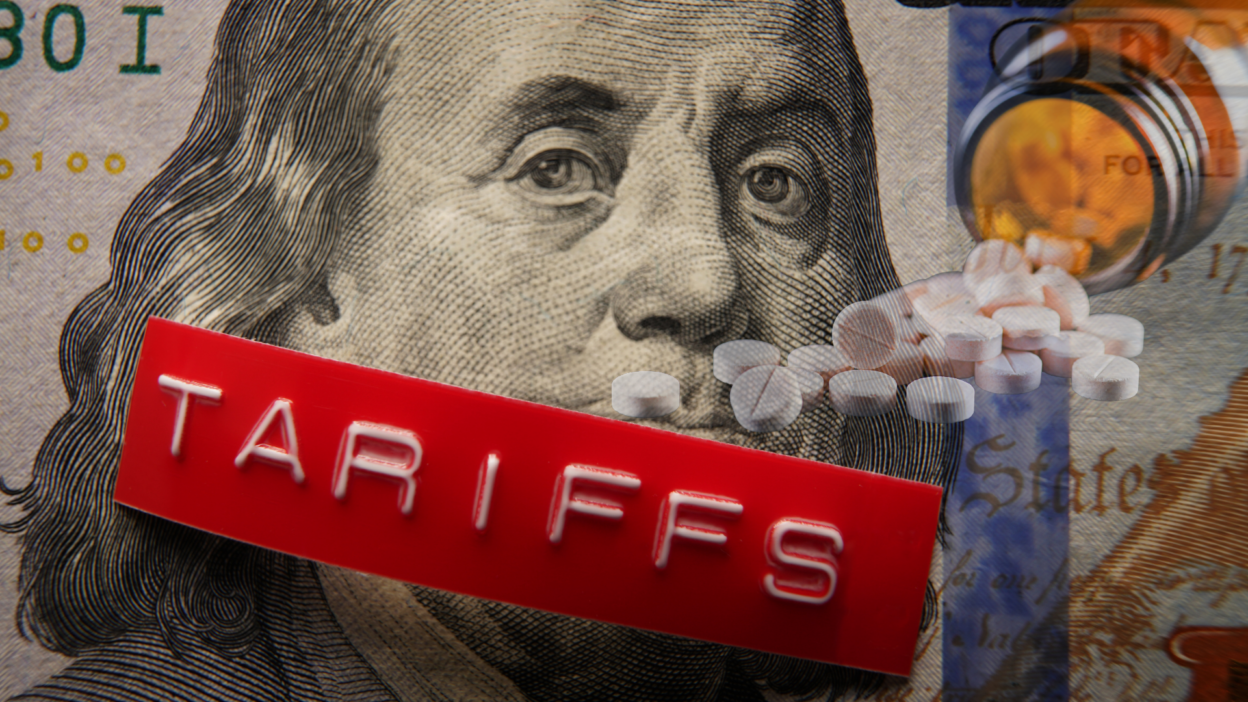
On July 22, 2026, President Trump posted on Truth Social that imported generic drugs would face a 100% tariff beginning August 2028, rising to 200% in August 2029. The announcement arrived with no accompanying official policy document, no regulatory text, and no guidance from the White House on how existing trade agreements would interact with the proposed schedule.
The uncertainty is real. The structural vulnerability underneath the announcement is not.
What Was Actually Announced and What It Means Legally
In a Truth Social post Tuesday, Trump said generic drugs imported into the United States would continue to carry a 0% tariff during a 2-year transition period beginning August 1, 2026. Under the announced plan, the tariff would then increase to 100% for 1 year before rising to 200% thereafter. Trump said the policy is intended to reshore generic pharmaceutical manufacturing in the United States, describing the eventual tariff as a penalty for companies that do not establish domestic manufacturing capacity within the allotted period. Trump said his administration’s tariff plans related to patented drugs would remain unchanged.
The White House has reportedly indicated the tariffs would be imposed under Section 232 of the Trade Expansion Act of 1962, the same authority used for the April 2 tariffs on patented drugs and APIs. Section 232 allows the president to impose tariffs if the Secretary of Commerce finds that imports threaten national security. No such finding has yet been published for generics.
Crucially, the administration has not yet released an official policy implementing the tariffs. Whether the policy achieves its stated goal of reshoring production remains an open question, given that building and validating new U.S. manufacturing capacity typically takes years longer than the 2-year runway Trump has offered.
This is a Truth Social announcement, not a signed executive order with regulatory text, a Federal Register notice, or an implementing rule. The gap between announcement and implementation matters. Track the Section 232 finding, the eventual Federal Register notice, and the final implementing rule. None of these exist yet. All of them will need to exist before tariffs take effect in 2028.
The Supply Chain Reality That Makes This Announcement Consequential Regardless
Whether the 2028 tariffs land exactly as announced, or at a different rate, or with exemptions, or not at all, the supply chain vulnerability they address is real and documented.
India ships around one-third of its pharmaceutical exports to the U.S. Pharmaceuticals are among India’s top three exports to America, totaling $10.5 billion in 2024-2025. Duties on drugs would leave over 40% of India’s exports to the U.S. adversely affected. The U.S. is extraordinarily dependent on imported generic medications: India supplies approximately 47% of generic drug volume consumed in the U.S., and China supplies most active pharmaceutical ingredients that Indian and other generic manufacturers use to make those drugs.
This newsletter covered the drug supply chain fragility story in depth earlier this year, including the ASHP Pharmacy Forecast 2026 warning from Tom Kraus that China is “potentially preparing to engage in conflict over Taiwan in 2027,” and the supply chain vulnerability data showing 83 of the top 100 generics have no U.S. API source. The tariff announcement lands on top of a supply chain structure that the pharmacy profession has already identified as a national security risk, independent of trade policy.
Generic drug manufacturers include major players like Sandoz, Teva, and Viatris, all of which manufacture many of their generic medicines outside the U.S., with plants in Canada, Austria, India, and other countries. These companies do not have the manufacturing infrastructure inside the United States to absorb a 100% tariff on their import costs without dramatic price increases, supply disruptions, or both.
Building pharmaceutical production in the U.S. is complex and costly, and nearly all the inputs would still come from abroad. One supply chain expert noted bluntly: “I am not sure that even a potential 200% tariff will change the fundamental math.”
The two-year transition period gives generic manufacturers time to adjust. It does not give them time to build and validate new U.S. manufacturing facilities. Pharmaceutical manufacturing facility construction, equipment procurement, FDA inspection and approval, and process validation for a new production line typically requires five to ten years at minimum. Two years produces lobbying, negotiation, and incremental supply chain shifts toward countries with trade agreements that may offer tariff exemptions, not new domestic capacity.
The India Trade Agreement Complication
A trade pact struck between the U.S. and India in February 2026 may complicate how much of the announced tariff Indian drug companies will actually face. The specific terms of that framework agreement and how they interact with a Section 232 generic drug tariff are not yet publicly resolved. India’s pharmaceutical industry and the Indian government are expected to negotiate aggressively for exemptions or phase-in terms given the economic stakes: $10.5 billion in annual pharmaceutical exports is not a supply chain India will yield without a significant fight.
Other major generic drug exporting nations, including several EU member states, will similarly engage in trade negotiations that could produce carve-outs, phase-in modifications, or country-specific exemptions that change the effective tariff landscape considerably from the announced headline rates.
For pharmacists building supply chain risk maps, this geopolitical complexity means that the announced tariff schedule is a planning scenario, not a guaranteed outcome. The appropriate response is not to assume the 200% tariff lands as announced. It is to map vulnerability for the most import-dependent categories and build contingency optionality before it becomes necessary.
The Categories with the Highest Tariff Vulnerability
The generic drug categories with the most concentrated import dependence and the fewest domestic manufacturing alternatives are the highest-risk exposure points in a tariff environment.
Sterile injectables. The sterile injectable supply chain is concentrated in a small number of facilities globally, many of them in India and China. The drug shortage history of sterile injectables, documented extensively in ASHP’s shortage database, already reflects the thin manufacturing redundancy in this category. A 100% tariff on imported sterile injectables would reach directly into hospital formularies for anesthesia agents, IV antibiotics, cardiovascular emergency medications, and oncology supportive care.
Antibiotics. The antibiotic active pharmaceutical ingredient supply chain is heavily concentrated in China. Even antibiotics manufactured in India frequently use APIs sourced from Chinese chemical manufacturers. A 100% tariff on generic antibiotics would hit the drug category most critical to infectious disease management and hospital-acquired infection control.
Endocrine medications. Thyroid hormones, insulin precursors, and other endocrine agents have supply chains with limited domestic redundancy. Levothyroxine, one of the most dispensed drugs in U.S. pharmacy, has manufacturing increasingly concentrated outside the United States.
Generic oncology supportive care. Antiemetics, corticosteroids, and other supportive care medications used in oncology are frequently generic, frequently imported, and frequently single-source or near-single-source. The oncology pharmacy supply chain is already operationally complex without tariff-driven price shock.
Mental health medications. The generic antidepressant, antipsychotic, and mood stabilizer supply chain has significant import dependence. Given the scale of mental health medication use in the United States and the documented shortage history for several generic psychiatric medications, this category merits specific attention in any supply chain vulnerability assessment.
What Using the Two-Year Window Actually Looks Like
The two-year transition period is real, regardless of what happens to the tariff schedule itself. And two years is a meaningful planning window for pharmacies and health systems that use it deliberately.
Build your supply chain risk map now. Pull your top 25 dispensed generics by volume and by cost. For each, identify the primary manufacturer, the manufacturing country, and the number of FDA-approved manufacturers for that specific drug. The FDA Orange Book and FDA Drug Shortages Database both contain this information. Categories with one or two manufacturers concentrated in a single country are your highest-risk exposure points. Document this map. Share it with your leadership. Review it quarterly.
Develop therapeutic interchange protocols for your highest-risk categories. For every high-volume, high-risk generic category, identify the therapeutic alternatives that would be available if the primary agent became cost-prohibitive or unavailable. Document those protocols now, when the pharmacy and formulary teams have time for deliberate planning rather than crisis response.
Build relationships with domestic and near-shore manufacturers before their leverage increases. A 100% tariff announcement, even if ultimately modified, drives demand toward domestically produced generics and toward manufacturers in countries with favorable trade terms. Those manufacturers will have more negotiating leverage in 2027 and 2028 than they have today. Establishing purchasing relationships, preferred supplier agreements, and contingency inventory arrangements now, while demand has not yet concentrated, produces better terms than doing it in 2027 when every large pharmacy buyer is trying to do the same thing simultaneously.
Watch for the Section 232 finding. The legal authority to impose Section 232 tariffs requires a published finding from the Secretary of Commerce. When that finding is published, it will contain the specific product scope, the tariff schedule, and any exemptions. That document is the one that controls pharmacy economics, not the Truth Social post.
The Domestic Manufacturing Opportunity
The tariff announcement is not only a threat. For a small number of pharmacists and pharmacy organizations, it is a specific business opportunity.
The U.S. domestic generic drug manufacturing sector, hollowed out by decades of offshore cost competition, has been receiving increasing investment incentives in 2025 and 2026. The reshoring signal from a 100% tariff announcement, even one with uncertain ultimate implementation, accelerates capital allocation toward domestic manufacturing. That capital will need pharmacists who understand what domestic production of pharmaceuticals requires, what FDA’s domestic manufacturing standards look like in practice, what supply chain redundancy planning means at the formulary level, and how to counsel health systems and payers on the transition from import-dependent to domestically sourced generic procurement.
The ASHP Drug Supply Chain Security Act compliance work, the domestic API sourcing work, and the pharmaceutical supply chain intelligence function documented in this newsletter’s supply chain issue from earlier this year all belong more squarely inside health system pharmacy operations after this announcement than before it.
Sources: AJMC (Trump Announces Timeline for 100% Generic Drug Tariffs Beginning in 2028, 200% in 2029, July 22, 2026), CNBC (Trump Plans Generic Drug Tariffs from 2028 With Two-Year Delay Testing U.S. Onshoring Push, July 22, 2026), Bloomberg (Trump Plans 100% Tariff on Generic Drugs From August 2028, July 22, 2026), France24 (Trump Announces 100% Tariffs on Imported Generic Pharmaceutical Drugs, July 22, 2026), The Hill (Trump Threatens 100% Generic Drug Tariffs Beginning in 2028, July 21, 2026), Business Standard (Trump Announces 100% Tariff on Imported Generic Drugs From August 2028, July 22, 2026), Fiscal Times (Trump Plans 200% Tariff on Generic Drugs, July 22, 2026), ASHP Drug Shortages Database, ASHP Pharmacy Forecast 2026, FDA Orange Book (Approved Drug Products With Therapeutic Equivalence Evaluations)