

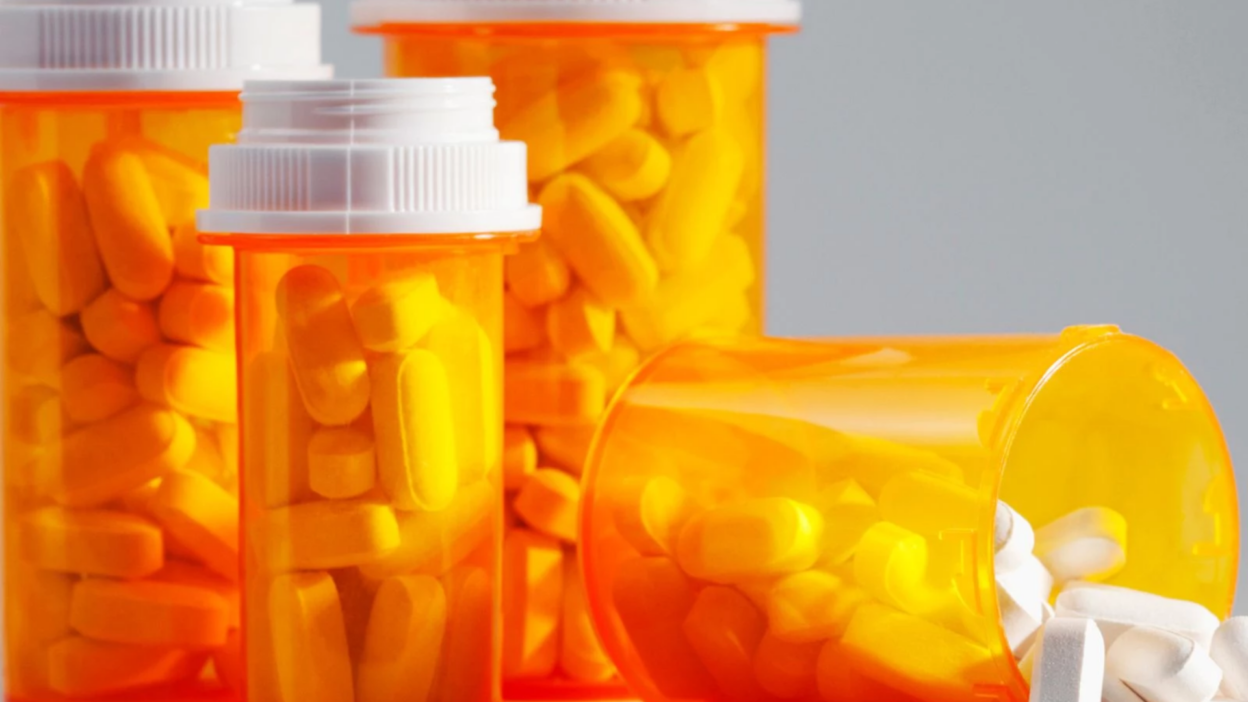
The amber prescription vial is so familiar that most pharmacists barely notice it anymore. It sits beside the counting tray, moves through the dispensing workflow, receives a label, and eventually leaves the pharmacy in a patient’s hand. The shape, material, and process feel almost permanent because pharmacists have interacted with some version of the same container for decades.
Melinda Su-En Lee, PharmD, looked at that ordinary object and saw a business opportunity.
Lee co-founded Parcel Health while studying pharmacy at the University of Michigan. Her original idea grew from seeing the amount of plastic waste generated through pharmacy and wondering whether prescription packaging had to remain built around disposable plastic. Parcel Health eventually developed the Tully Tube, a mostly paper-based prescription container that launched in 2024 and uses between roughly 40% and 71% less plastic than comparable conventional vials, depending on size.
Now the idea has reached a milestone that has much less to do with sustainability and much more to do with whether an invention can survive the realities of pharmacy operations.
On November 19, Capsa Healthcare and Parcel Health announced that Capsa’s RoboPharma HV Wall became the first central-fill automation system confirmed compatible with the Tully Tube. Capsa says its broader central-fill automation installed base processes more than 550,000 prescriptions each day across central-fill and mail-order operations. The compatibility announcement applies specifically to the RoboPharma HV Wall, so it does not mean hundreds of thousands of prescriptions are suddenly moving into paper vials. It does mean the Tully Tube has crossed an important operational threshold: it can now run through a high-volume central-fill platform rather than depending only on manual or smaller-scale dispensing workflows.
That distinction matters because inventing something is only the first part of healthcare entrepreneurship.
The harder part is making the healthcare system willing and able to use it.
A product does not scale in pharmacy unless it fits the workflow
A pharmacist working behind a retail counter can physically pick up a different vial if necessary. Central fill works differently.
At a high-volume facility, automation handles large portions of counting, filling, labeling, packaging, inspection, and sorting. A packaging format that cannot move reliably through that machinery has very little chance of becoming a serious option for an operator processing thousands of prescriptions every day.
That is why the Capsa announcement is more significant than it initially sounds.
MarketScale described central-fill compatibility as a gatekeeper for scale. A paper vial may be attractive from a sustainability standpoint, but a central-fill operator cannot adopt it simply because they like the material. It has to work inside the equipment already responsible for the workflow.
Parcel Health’s own product design reflects that reality. The Tully Tube still uses a plastic cap because Parcel Health says plastic currently gives it the durability needed to satisfy child-resistance requirements and work with pharmacy automation. The company connects that cap to the paper body through a patented adapter.
That may not sound as elegant as eliminating plastic entirely, but it demonstrates an important entrepreneurial principle.
Healthcare rarely lets founders design in a vacuum.
Safety requirements, automation, regulation, staffing, existing technology, and human behavior all place boundaries around the solution. The founder’s job is not simply to imagine the perfect product. It is to build something better that can still function inside the real system.
The first version of the idea already taught that lesson
Parcel Health did not begin with the Tully Tube.
The company’s earlier product was called the Phill Box, a square, plastic-free prescription container. The concept pushed further toward eliminating plastic, but the design encountered problems integrating with pharmacy workflows and meeting practical safety requirements. Parcel Health eventually moved toward the cylindrical Tully Tube instead, keeping a plastic cap while dramatically reducing the overall amount of plastic.
That evolution is one of the most useful parts of the founder story.
Entrepreneurs sometimes treat changing the product as evidence that the original idea failed. In reality, the product often needs to change because the founder is finally learning what the market requires.
The mission can remain the same while the solution evolves.
Parcel Health still wanted to reduce plastic waste from prescription packaging. What changed was the understanding of how that goal had to coexist with automation, child resistance, moisture protection, dispensing workflows, and the way pharmacies actually operate.
The current central-fill milestone is another step in that same process.
The idea had to move from interesting packaging to operational infrastructure.
This is where the PharmD becomes an entrepreneurial advantage
Lee’s pharmacy background matters because pharmacists see constraints that outsiders may not even know exist.
Someone approaching prescription packaging purely as a design problem might focus on material, appearance, manufacturing cost, or sustainability.
A pharmacist is more likely to notice a different set of questions.
Will the container protect the medication from light and moisture? Can technicians label it quickly? Will patients understand how to open it? Does it meet child-resistance requirements? Can it move through automation? Will the form factor create new problems during filling, storage, or transportation?
Those questions are not secondary details.
In pharmacy, they are the product.
Parcel Health says the Tully Tube resists water, humidity, and light, uses a reversible child-resistant cap with an easy-open option, and can be customized for pharmacies and health systems.
The company’s November central-fill announcement extends that same logic. A packaging idea becomes more valuable when it works inside the infrastructure pharmacies already use.
That is what domain expertise can do for an entrepreneur.
It helps you understand the problem before the market has to teach it to you.
Most pharmacists see the vial. An entrepreneur can see several businesses hiding inside it.
The amber vial appears to be one object.
From an entrepreneurial perspective, it contains several separate problems.
There is the environmental problem created by disposable plastic. There is an operational problem around how packaging moves through automation. There is a patient-experience problem involving how people open, store, understand, and interact with their medication. There is a branding opportunity for pharmacies and health systems. There is also a digital-engagement opportunity because the physical container sits in front of the patient every time they take the medication.
Parcel Health has gradually moved into several of those layers.
On October 30, the company launched Doorstep, a digital experience accessed through the QR code on the bottom of the Tully Tube. Patients can use it to set text-message medication reminders, connect to their pharmacy’s refill portal, view cap instructions, and receive pharmacy information without downloading an app or creating an account.
That means the company no longer sees the container only as packaging.
It also sees it as a healthcare touchpoint.
The original opportunity was plastic waste. Solving that problem created a new object. The new object created a new place to interact with the patient. That interaction created opportunities around reminders, refills, pharmacy loyalty, and medication adherence.
One problem opened the door to the next.
That is often how companies become platforms.
The best healthcare opportunities can hide inside things everyone has stopped questioning
Pharmacists work around hundreds of objects and processes that feel permanent because they have existed for so long.
The label looks the way it does because that is how labels have always looked. Prescriptions move through a certain queue because that is how the software was built. Prior authorizations involve repeated phone calls because everyone has learned how to tolerate the process. Inventory, returns, pickup, counseling, synchronization, refills, and prescriber communication all contain routines that employees eventually stop questioning.
That familiarity can become a disadvantage.
When someone experiences the same frustration every day, they often stop seeing it as a problem that could be redesigned.
It becomes “just pharmacy.”
Entrepreneurs have to reverse that instinct.
Instead of asking how to become better at working around the system, they ask why the workaround exists in the first place.
The prescription vial is a good example because it appears almost too ordinary to deserve innovation. Yet Parcel Health turned that object into a company, won recognition from TIME’s Best Inventions list in 2026, and has now reached a point where its product can interface with high-volume central-fill automation.
The product did not need to begin with artificial intelligence or a revolutionary drug.
It began with someone noticing a bottle.
A pharmacist founder has already completed years of user research
Technology companies spend large sums trying to understand healthcare workflows.
They hire consultants, conduct interviews, observe users, map processes, study pain points, and test assumptions about what healthcare professionals actually need.
Pharmacists already possess a large amount of that knowledge.
A pharmacist who has worked several years behind the counter has watched thousands of patients struggle with medication access. They have seen the same insurance problems repeat. They know which calls waste staff time, which labels confuse patients, which refill processes create friction, and which software features force employees into workarounds.
A hospital pharmacist has another set of insights. They may understand where medication reconciliation breaks down, which transitions create risk, how supply shortages affect care, and where information gets lost between teams.
A specialty pharmacist sees another system entirely, including prior authorization, financial assistance, limited distribution, specialty routing, adherence, and complex patient support.
Those experiences represent far more than job history.
They are years of embedded market research.
The entrepreneurial question is whether that knowledge can become infrastructure
Many pharmacists who become entrepreneurs naturally think about opening a pharmacy, consulting practice, or patient-care service.
Those can all be valuable businesses.
Parcel Health demonstrates another possibility.
A pharmacist can use pharmacy knowledge to build something that pharmacy itself needs.
The customer becomes the pharmacy, health system, manufacturer, payer, or healthcare organization rather than the individual patient.
In that model, the pharmacist’s expertise becomes the foundation for infrastructure.
That infrastructure could be physical, like packaging. It could be software. It might be workflow automation, training, compliance support, logistics, data, patient engagement, or a new operational model.
The key distinction is that the founder is no longer only practicing pharmacy differently.
They are building something that changes how other people practice pharmacy.
That creates a very different kind of leverage.
Central fill shows why scalability is an operational problem
Healthcare founders often talk about scale as though it means finding more customers.
In pharmacy, scale frequently requires solving infrastructure first.
A vial that works in 20 pharmacies but cannot move through central fill may eventually encounter a ceiling. A software product that works in one health system but cannot integrate with common EHRs faces the same problem. A clinical service that depends on one exceptional pharmacist but cannot be standardized across multiple sites may also struggle to expand.
Scaling requires removing the barrier that prevents the next level of adoption.
For Parcel Health, central-fill compatibility addresses one of those barriers.
Capsa says its RoboPharma technology fills more than 550,000 prescriptions per day across its installed base. Again, the Tully Tube compatibility announcement covers the HV Wall specifically and does not mean that entire volume is available to Parcel Health. However, demonstrating compatibility with high-volume central-fill equipment gives the product access to a category of pharmacy operations that requires automation rather than manual packaging.
That is what makes the milestone strategically important.
Parcel Health is proving that its alternative container can begin participating in the infrastructure of large-scale pharmacy.
Healthcare entrepreneurs have to respect the existing system without becoming trapped by it
There is an interesting tension in healthcare innovation.
A founder has to question the status quo aggressively enough to create something new, while respecting the system enough to understand why certain requirements exist.
Prescription packaging needs child resistance for a reason.
Medication containers need protection from environmental conditions for a reason.
Pharmacy automation exists because high-volume dispensing cannot depend on someone manually handling every step.
The entrepreneur does not win by ignoring those constraints.
They win by designing around them.
That is what separates a clever idea from a usable healthcare product.
Lee’s original question may have been why pharmacy still depended so heavily on plastic packaging. The company has since had to answer much harder questions about materials, manufacturing, regulation, patient usability, automation, branding, digital engagement, and now central fill.
The business grew because the problem became more complicated, not less.
The opportunity may be hiding in the part of pharmacy you complain about most
There is a practical lesson here for pharmacists who are curious about entrepreneurship but do not know what they would build.
Do not start by trying to invent a startup.
Start by paying attention to what repeatedly irritates you.
Maybe the problem is packaging. Perhaps it is the medication label that patients never understand. It could be the way pickup works, the process for returning unused medication, the way inventory gets managed, or the communication gap between the pharmacy and the prescriber.
Prior authorization remains full of friction. Medication adherence remains difficult. Transitions of care remain messy. Pharmacies still perform many repetitive administrative tasks manually.
Each one of those areas contains multiple problems.
Most will never become viable companies.
That is fine.
The first step is developing the habit of seeing them.
Then ask whether the opportunity belongs inside practice or outside it
Once you identify a recurring problem, there is another important question.
Does the solution require practicing pharmacy differently, or does pharmacy need a new product or company?
If patients repeatedly misunderstand a particular counseling point, perhaps the answer is a better clinical workflow.
If hundreds of pharmacies experience the same packaging problem, the opportunity may be a product.
If employees repeatedly perform a manual task because existing software does not support it, the answer could be technology.
If organizations lack expertise in a particular area, consulting might make more sense.
If the biggest problem is knowledge, the solution could be education.
Entrepreneurs sometimes become attached to the idea of building software because technology companies attract attention.
That is backwards.
The problem should determine the business.
Parcel Health’s solution became physical packaging because the original problem was physical packaging. The digital layer came later when the product created a new opportunity.
The advantage is knowing what everyone else has learned to ignore
The amber vial did not become an opportunity because pharmacists had never seen one before.
It became an opportunity because they had seen it so many times that almost nobody thought to question it anymore.
That is what makes Lee’s story particularly useful for pharmacists.
Pharmacy experience can sometimes feel restrictive when you view it only through the lens of traditional career options. The same experience becomes an advantage when you view it through the lens of problem discovery.
You know what breaks.
You know what creates friction.
You know where patients get confused.
You know which workflows employees tolerate because they believe there is no alternative.
Someone entering healthcare from the outside may spend months learning those things.
You may have already learned them hundreds of times.
Look for the thing everyone accepts because “that’s just how pharmacy works”
For the next week, look around your own work environment differently.
Instead of asking what business you should start, identify one process, tool, object, or workflow that everyone has accepted for years.
Maybe it is the vial. Maybe it is the label. Maybe it is pickup, returns, counseling, inventory, medication synchronization, prior authorization, adherence, or communication with prescribers.
Then ask why it works that way.
Does the current design exist because it is genuinely the best solution, or because replacing it would be difficult? What would have to change for something better to work? Who experiences the problem most frequently? How many pharmacies or healthcare organizations share it? Would anyone pay to make it disappear?
Those questions begin turning professional frustration into entrepreneurial analysis.
That is the larger lesson inside Parcel Health’s central-fill milestone.
Melinda Su-En Lee did not simply become a pharmacist and then decide to open another pharmacy. She used what she learned inside pharmacy to question one of its most ordinary pieces of infrastructure, then helped build a company that sells a new version of that infrastructure back into the healthcare system.
Now that product is beginning to work inside central fill.
The sustainability story matters.
The entrepreneurial story may matter even more.
Your PharmD can teach you how to practice pharmacy.
It can also teach you where pharmacy still needs to be rebuilt.
Resources & Citations
- Chain Drug Review. “Capsa and Parcel Health Introduce Paper Vials to Automated Central Fill.” November 19, 2026. The report confirms that Capsa Healthcare’s RoboPharma HV Wall, powered by the HV Cell, is the first central-fill automation system confirmed compatible with Parcel Health’s Tully Tube. It also reports the Tully Tube’s reversible cap, QR-code functionality, and Parcel Health’s claim of up to 71% less plastic than a comparable traditional vial.
- MarketScale. “Capsa’s RoboPharma HV Wall Is the First Central Fill System Confirmed Compatible With Parcel Health’s Paper Vials.” November 20, 2026. MarketScale explains why compatibility with high-volume central-fill automation is an important scaling milestone and notes that the announcement applies to the HV Wall specifically rather than representing a named production deployment across Capsa’s entire installed base.
- Capsa Healthcare. “Central Fill Pharmacy Automation.” Capsa reports that its RoboPharma and Axona central-fill platform processes more than 550,000 prescriptions per day across its installed base.
- Parcel Health. “About Us.” Parcel Health identifies Melinda Su-En Lee as co-founder and CEO, describes the Tully Tube’s 2024 launch, and says the product has been adopted across health systems and retail pharmacies. The company also identifies Lee as a pharmacist by training.
- University of Michigan College of Pharmacy. “Pharmacy Student Co-founds Sustainable Medication Packaging Company.” The university identifies Lee as PharmD ’21 and reports that she co-founded Parcel Health while studying pharmacy after recognizing the waste associated with conventional prescription packaging.
- Parcel Health. “Introducing Doorstep: Keeping Pharmacies and Patients Connected.” October 30, 2026. Parcel Health describes the QR-code platform that allows patients to set text medication reminders, access pharmacy refill links, receive pharmacy information, and view Tully Tube instructions without downloading an app or creating an account.
- Axios Pittsburgh. “Pittsburgh Startup Swaps Plastic Pill Bottles for Paper.” October 26, 2026. Axios reports on Parcel Health’s evolution from its earlier Phill Box design to the Tully Tube and notes that the product uses approximately 40% to 71% less plastic than conventional vials depending on size.