

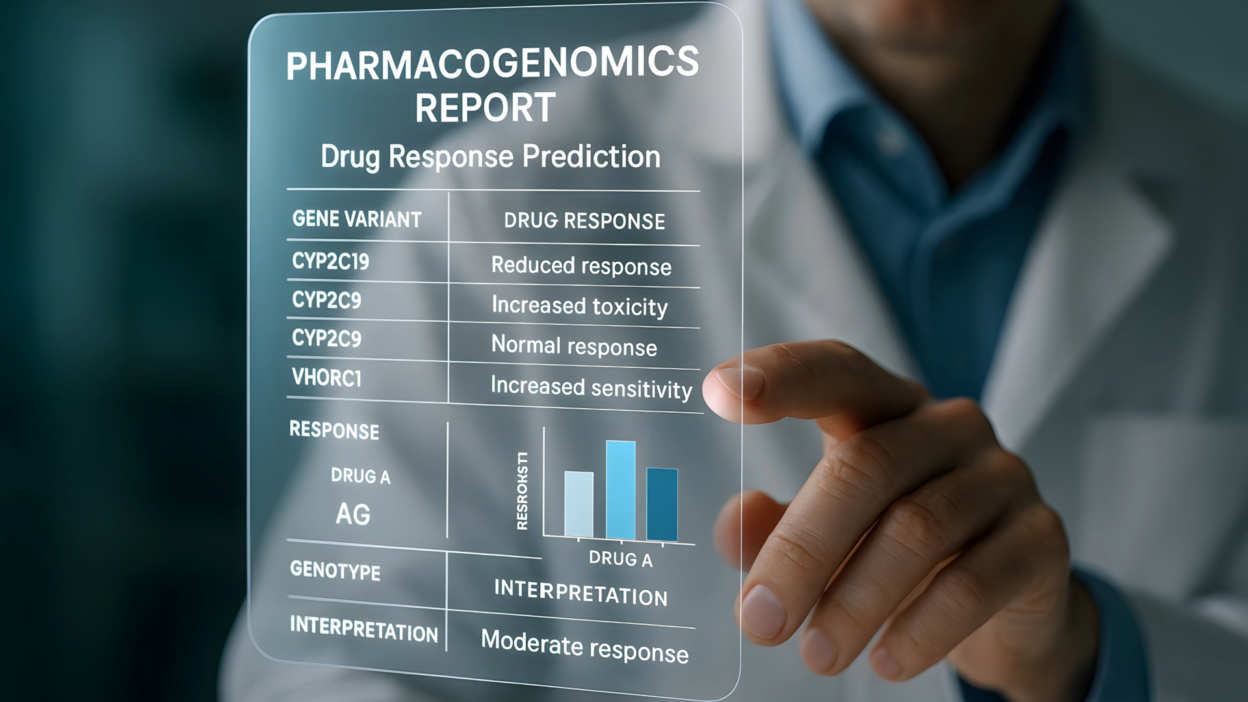
Personalized medicine gets real for everyday patients and pharmacists
In 2026, pharmacogenomics (PGx) isn’t just a buzzword whispered in academic corridors or specialty clinics. It’s arriving, boldly, at the community pharmacy counter, changing how we think about everyday medications and the people who take them.
What does this mean for patients, pharmacists, and the future of safe, effective care? Let’s walk through what’s changing, why it matters, and how you can start leading this new chapter in pharmacy.
The tipping point: Pharmacogenomics goes mainstream
Remember when whole-genome sequencing cost as much as a private jet? In 2001, it did, $100 million. Today, you can sequence a whole genome for under $300. Narrow it down to the most relevant drug genes, CYP2D6, CYP2C19, CYP2C9, SLCO1B1, DPYD, and a few others, and you’re looking at $100–$250 for a test, with results in hand in as little as a day or two.
This seismic drop in price and turnaround time is the real breakthrough. Suddenly, PGx isn’t a rarefied privilege. It’s a practical, validated tool, now offered by health systems and pharmacy benefit managers as part of medication therapy management (MTM).
Why it matters: The genetic roots of medication surprises
Let’s get real: many drug failures, side effects, and “mystery” reactions aren’t mysteries at all, they’re written into our DNA. I see it all the time in clinical practice, and if you work in pharmacy, you probably do too.
- CYP2C19 & clopidogrel: If your patient’s a poor metabolizer, that antiplatelet they’re faithfully taking? It might not be working at all, leaving them at risk for stroke or heart attack while everyone assumes they’re “covered.”
- CYP2D6 & codeine: An ultra-rapid metabolizer could convert codeine into dangerous levels of morphine, especially risky for kids or post-surgery patients. The FDA flagged it, but most prescriptions still aren’t checked for this.
- DPYD & 5-FU: For patients with certain DPYD variants, a standard chemo dose could be lethal. Why aren’t we testing everyone, as Europe now requires?
- SLCO1B1 & statins: That “statins make my muscles hurt” complaint? It might be genetic, and predictable, with the right test.
Who stands to win?
This isn’t just about high-tech science. It’s about real people, with real stakes:
- Patients who’ve been bounced from drug to drug, never understanding why things go wrong, now get real answers, and safer options.
- Pharmacists gain a new, high-value service: interpreting PGx results, offering tailored recommendations, and becoming essential clinical partners.
- Physicians get actionable, pharmacist-driven recommendations, building trust and collaboration.
- Payers (insurers, employers, government plans) can finally target one of the biggest sources of wasted healthcare dollars: preventable adverse drug reactions and trial-and-error prescribing.
Where we go from here
Pharmacogenomics is converging with the core of what pharmacists already do, medication reviews and safety checks. The natural next step? Comprehensive Medication Review (CMR) + PGx panel equals the most complete medication safety review a patient can receive. And it’s starting to happen in independent pharmacies across the country.
If you’re a pharmacist, here’s your call to action:
Start learning PGx now. Learn to spot the clues in a patient’s chart. Imagine being able to say, “Your CYP2C19 status is why those antidepressants haven’t worked.” That’s a level of service no automated system, no app, and no big-box chain can match at scale.
That’s your competitive moat, your unique value. Start building it.
Questions to consider
- Have you encountered cases where a patient’s reaction to a drug just didn’t make sense?
- What would it mean for your practice if you could explain those mysteries with confidence, and offer a better way forward?
- How can you bring PGx into your workflow today?
Let’s keep this conversation going. The future of pharmacy is personal, precise
Stay ahead of healthcare shifts, clinical innovation, and future of Pharmacy