

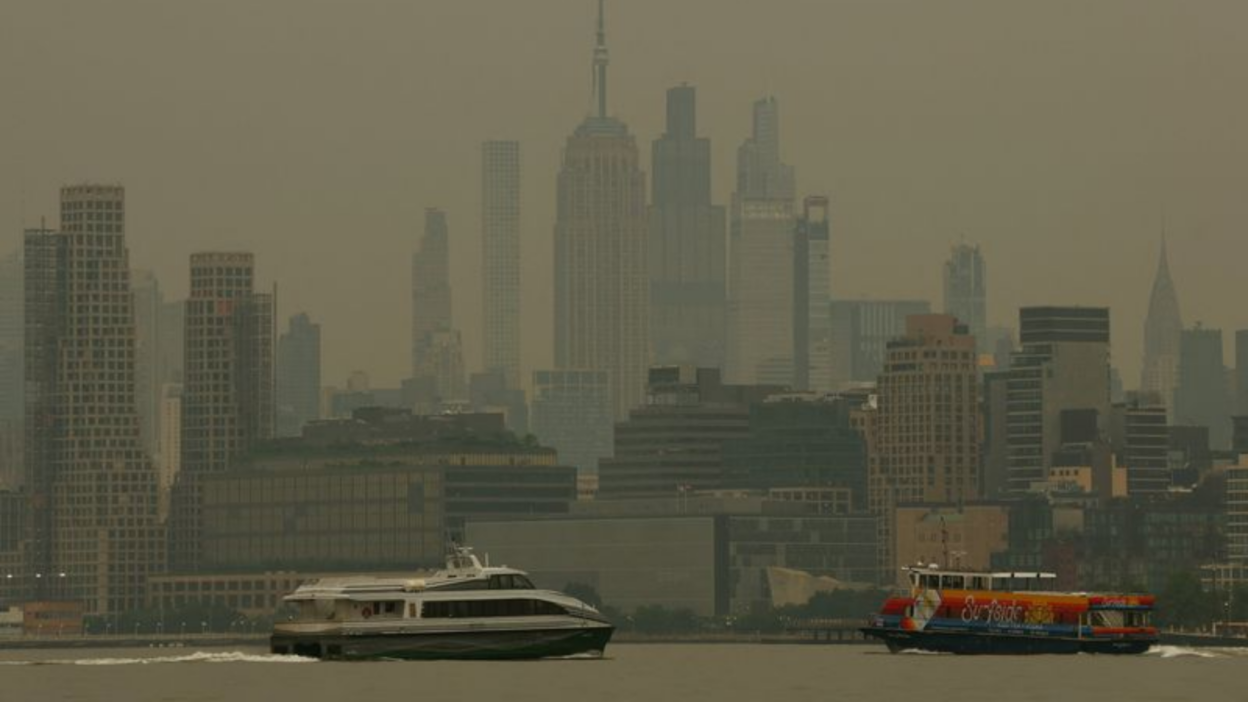
Between July 14 and July 20, 2026, more than 120 million Americans in the Midwest and Northeast lived under air quality alerts caused by smoke from Canadian wildfires burning in Ontario. The crisis created one of the clearest clinical and business moments in pharmacy this year, and how your pharmacy responded in real time will matter to patients long after the smoke clears.
What Happened and What the Numbers Actually Mean
Detroit, Minneapolis, and Chicago were among the most polluted major cities in the world on July 16, according to IQAir. Baltimore and Washington, D.C. recorded PM2.5 concentrations near 200 micrograms per cubic meter, more than 13 times above the 15 micrograms per cubic meter the EPA considers safe for 24-hour exposure.
The Chicago Clarity sensor network recorded a single-hour PM2.5 reading of 471.8 micrograms per cubic meter, corresponding to an AQI of 481, the highest in the network for that event. Detroit, Grosse Pointe, Ann Arbor, and Shaker Heights all climbed above AQI 400 into the hazardous range. Air quality alerts were in effect across 18 states and the District of Columbia.
Emergency rooms in affected cities saw surges in respiratory complaints. Asthma patients went through their inhalers faster. People with COPD, heart failure, and chronic cardiovascular disease faced elevated risk of serious events.
The Detroit Health Department distributed free masks to residents. In Philadelphia, officials warned that “everyone is likely to experience health effects from being exposed” to smoke. DC Health canceled government outdoor activities and closed outdoor pools and spray parks.
Canada is experiencing its second worst wildfire season on record according to government data, with almost 4,000 fires recorded already this calendar year. The smoke is projected to continue affecting the U.S. through August, and the pharmacist who prepared in July will be better positioned than the one who reacted in August.
The Business Reality Most Pharmacies Missed This Week
Every asthma patient running out of albuterol, every COPD patient whose Spiriva wasn’t due for two more weeks, every elderly cardiovascular patient suddenly struggling to breathe walked somewhere for help this week. The pharmacies that proactively reached out, facilitated early refills, and offered clinical guidance captured those patients’ trust in a moment of genuine vulnerability. The pharmacies that waited for patients to come to them, or that turned them away citing refill-too-soon policies without exploring override options, lost a loyalty-building moment that won’t come back.
That distinction is not abstract. Pharmacy Times highlighted this week that as the 2026 wildfire smoke blankets the U.S., pharmacists can facilitate early refills, counsel on protective measures, and help patients understand when worsening symptoms require emergency care. That sentence describes a clinical service. It also describes a patient relationship differentiator that no mail-order pharmacy, no DTC platform, and no AI-enabled dispensing system can deliver.
A patient who was struggling to breathe on Wednesday evening and received a proactive text message from their pharmacist by Thursday morning, before they had to call anyone, will remember that. They will tell their family. They will not switch pharmacies when the next corporate discount offer arrives.
The Early Refill Override Most Pharmacists Don’t Fully Use
The most immediately actionable pharmacy action during an air quality crisis is also one of the least understood: most state Medicaid programs and a growing number of commercial payers allow early refill overrides during declared public health emergencies.
Most states where air quality alerts were active during this event had active emergency declarations in place. A pharmacist who knows their state’s emergency override process can fill a COPD patient’s controller inhaler one week early and prevent an ER visit, without a prior authorization fight, because the override pathway exists specifically for public health emergencies.
The process varies by state and payer, but the general framework is consistent: contact the payer’s pharmacy customer service line, reference the active air quality or public health emergency declaration, and request an override for early fill of a maintenance respiratory medication. Document the override reason in your dispensing notes. Many states publish emergency refill protocols through their state boards of pharmacy and Medicaid managed care organizations. If you don’t have your state’s specific protocol documented somewhere accessible, that gap is worth closing before the next event.
For patients on fixed incomes who are hesitant to fill early because of cost, this is also the moment to walk them through manufacturer copay assistance programs for controller inhalers, the Asthma and Allergy Foundation’s patient resources, and the NeedyMeds database for cost assistance on respiratory medications.
The Clinical Counseling Framework for Air Quality Events
Pharmacy Times published a wildfire respiratory FAQ this week specifically for pharmacists counseling patients with asthma, COPD, and allergies. The clinical framework is organized around four patient risk tiers.
Patients who should stay indoors completely during unhealthy or hazardous AQI events include anyone with moderate to severe asthma, stage 3 or 4 COPD, heart failure with reduced ejection fraction, or recent cardiovascular events. These patients need proactive outreach, not passive waiting.
Patients who can spend limited time outdoors with a properly fitted N95 or KN95 mask include those with mild asthma that is currently well-controlled, mild to moderate COPD without recent exacerbations, and older adults without specific cardiopulmonary diagnoses. Surgical masks and cloth masks provide minimal protection against PM2.5 particles, which are small enough to penetrate standard face coverings. Only N95 or better filtration blocks PM2.5 meaningfully.
All patients with respiratory conditions should shift to indoor air as quickly as possible when AQI exceeds 150. Running HVAC systems on recirculate mode, using HEPA air purifiers in primary living spaces, and keeping windows and doors sealed are the primary protective measures in the home environment.
The rescue versus controller medication distinction matters most during air quality events. Rescue inhalers, albuterol and levalbuterol, address acute bronchospasm after exposure has occurred. Controller inhalers, inhaled corticosteroids, long-acting beta agonists, and long-acting muscarinic antagonists, reduce baseline airway inflammation and make acute exacerbations less severe. Patients who increase rescue inhaler use during smoke events without adjusting or maintaining their controller therapy are managing symptoms rather than preventing them.
The specific sign that warrants emergency care rather than pharmacy management: any patient whose rescue inhaler use increases to more than four times per day, who wakes at night more than twice per week with respiratory symptoms, or who experiences any chest tightness unresponsive to two rescue inhaler doses should be directed to emergency evaluation rather than managed at the pharmacy counter.
The Long-Term Signal Behind This Week’s Event
Wildfire smoke is no longer a seasonal aberration. It has become a recurring feature of American healthcare delivery, and the clinical infrastructure for managing it belongs in every pharmacy’s standard operating toolkit.
A 2026 study published in Science Advances estimated that exposure to wildfire smoke PM2.5 contributed to approximately 24,100 deaths annually across the United States. Researchers projected smoke-related deaths could increase by more than 70% by 2050.
The Canadian wildfire season has now produced major U.S. air quality events in 2023, 2025, and 2026. Each event follows a similar clinical pattern: rapid deterioration in affected cities over 48 to 72 hours, surge in rescue inhaler demand, increased respiratory ED visits, followed by partial clearing and then subsequent smoke waves as new fire activity drives fresh plumes south. The 2026 event continued through late July with 900 active fires still burning across Canada and smoke projected through August.
The pharmacies that build environmental health counseling competency now, including AQI monitoring familiarity, N95 guidance protocols, early refill override procedures, and proactive patient outreach systems, are building a clinical capability that will differentiate them from competitors every summer for the foreseeable future. This is not a once-a-decade emergency preparedness exercise. It is an annual clinical competency requirement for pharmacies serving patients with respiratory and cardiovascular disease.
The One-Page Handout Your Pharmacy Should Have Ready Today
A one-page wildfire smoke patient handout, digital and print, covers the four decisions every patient needs to make during an air quality event.
Check your AQI before going outside. airnow.gov is the EPA’s official resource, updated hourly. Below 50 is good. 51 to 100 is moderate. 101 to 150 is unhealthy for sensitive groups. Above 150 is unhealthy for everyone. Above 200 is very unhealthy. Above 300 is hazardous. The App Store version of AirNow provides push alerts for local AQI changes.
Know if you’re in the highest-risk category. Patients with asthma, COPD, heart failure, coronary artery disease, diabetes, or who are elderly, pregnant, or very young are at highest risk from PM2.5 exposure.
Know when to use rescue medication versus when to go to the ER. Rescue inhaler for mild to moderate bronchospasm with known exposure. ER if rescue inhaler use exceeds four times per day, if chest tightness doesn’t respond to two rescue doses, or if any patient with cardiac history develops chest pain or significant shortness of breath.
Indoor protection. HEPA air purifier in the main living space. HVAC on recirculate, not fresh air intake. Avoid candles, incense, or cooking with high heat that generates additional indoor particulates during smoke events.
Text or email that handout to every patient in your system with an asthma, COPD, heart failure, or cardiovascular disease diagnosis this week. The proactive outreach, sent during an active public health event before the patient had to ask, is the pharmacy relationship equivalent of a physician calling a hospitalized patient to check in. It is rare. It is remembered.
Sources: Medical Daily (Canada’s Wildfires Are a U.S. Public Health Emergency, and There Is No Framework for Who Pays the Health Costs, July 2026), CNN (Wildfire Smoke Will Drive Poor Air Quality Through Saturday as New Plumes Arrive from Canada, July 17, 2026; Wildfire Smoke Is Driving Terrible Air Quality in Major Cities, July 18, 2026), IQAir (Midwest and Northeast U.S. Air Quality Alert, July 17, 2026), Clarity.io (Understanding the Canadian Wildfires: Widespread Air Quality Impacts With Smoke Stretching Across the U.S., July 2026), CBS News (Maps Show Wildfire Smoke Forecast, Air Quality Alerts, July 2026), NPR (Canada Wildfires Cause Poor Air Quality in the Midwest and Northeast U.S., 2025), Newsweek (Map Shows Where Canadian Wildfire Smoke to Smother U.S. Into August, July 2026), Pharmacy Times (Wildfires and Respiratory Health: A Pharmacist’s FAQ on Protecting Patients With Asthma, COPD, and Allergies, July 2026), Science Advances (Wildfire Smoke PM2.5 Annual Deaths and 2050 Projections, 2026)