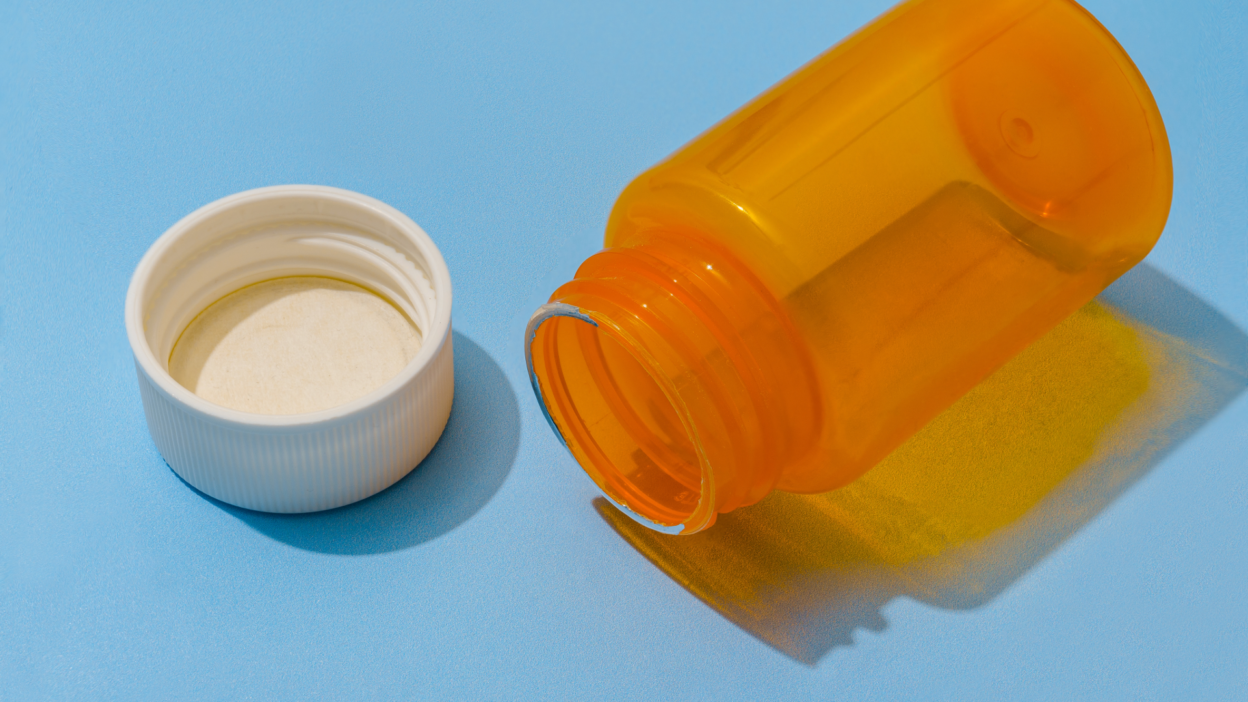
Pharmacists touch prescription vials hundreds of times without thinking much about the vial itself. It arrives empty, receives a label and medication, reaches the patient, and often ends up in the trash.
Melinda Su-En Lee, PharmD, saw something different.
While studying pharmacy at the University of Michigan, Lee noticed the steady stream of discarded prescription containers generated through routine pharmacy care. Axios reported that the waste reminded her of the plastic-filled landfill near her childhood home in Malaysia. Instead of accepting the familiar orange vial as an unavoidable part of pharmacy, she began asking whether medications could be packaged differently.
That question eventually became Parcel Health, which Lee co-founded with industrial designer Mallory Barrett. Their Tully Tube is a mostly paper-based prescription container that reduces plastic use by roughly 40% to 71%, depending on size. Parcel Health says 37 health systems, pharmacies, telemedicine brands, compounding pharmacies, and veterinary practices have adopted the product. Axios reported that more than one million Tully Tubes have been sold since the product launched in 2024.
In October, TIME named the Tully Tube one of its Best Inventions of 2026 in the Medical & Healthcare category. Then, on October 30, Parcel Health added another layer to the idea. A QR code on the container can now connect patients to medication reminders, pharmacy refill portals, pharmacy information, and other digital tools through a product called Doorstep. No app or account is required.
The story is about sustainable packaging. However, the larger lesson for pharmacists is entrepreneurship.
Lee did not start by inventing a new drug or building an AI platform. She looked closely at something pharmacists already interacted with every day and asked why it still worked that way.
The ordinary objects around us can hide enormous problems
Entrepreneurs often get portrayed as people who see opportunities nobody else can see.
Sometimes the opposite is true.
Everyone sees the problem. They have simply seen it so many times that it no longer looks like a problem.
The prescription vial is a perfect example. Pharmacists open cases of them, fill them, label them, hand them to patients, and order more. The workflow feels permanent because it has existed for decades.
Lee noticed the waste behind that routine.
Parcel Health says more than eight billion plastic prescription vials are discarded in the United States each year. The company designed the Tully Tube around a paper body while keeping enough plastic in the cap and adapter to meet pharmacy safety and operational requirements. The container is designed to resist moisture and light, work with pharmacy automation, and offer both child-resistant and easier-open functionality.
Those details matter because replacing an established healthcare product is harder than simply designing something that looks better.
A pill container has to protect the medication. It has to fit pharmacy workflows. Patients must be able to use it. Automation systems need to handle it. Child-resistance requirements still apply.
The idea had to survive the reality of pharmacy.
That is where the story becomes even more useful for entrepreneurs.
The first idea did not work perfectly, so they changed it
Parcel Health did not begin with the Tully Tube.
Its first product was called the Phill Box, a square, plastic-free medication container. According to Axios, that design proved difficult to integrate into existing pharmacy systems and safety requirements. Lee and Barrett went back to the drawing board. In 2024, they launched the cylindrical Tully Tube instead, keeping a plastic cap while dramatically reducing the amount of plastic in the overall container.
That may be the most valuable part of the founder story.
Healthcare entrepreneurs often fall in love with the first version of the solution. Yet the customer does not experience your vision. The customer experiences whether the product actually works inside their workflow.
A pharmacy does not care that a container is innovative if it breaks its automation process. A health system will not adopt a sustainable product if medication safety suffers. Patients will not celebrate better packaging if they cannot open it.
The solution therefore had to adapt to the system it was entering.
Parcel Health preserved the larger goal while changing the product.
That is entrepreneurship in practice.
The mission remained reducing plastic waste. The design changed when the market taught the founders what the product needed to become.
The bottle eventually became more than packaging
Then something else happened.
Parcel Health noticed that patients were already scanning the QR code printed on the bottom of the Tully Tube. Originally, the code led to recycling instructions. The company says roughly one quarter of its website traffic was coming from that scan experience.
That created another question.
If the patient is already interacting with the medication container, could that interaction become useful after the prescription leaves the pharmacy?
On October 30, Parcel Health launched Doorstep.
A patient can scan the Tully Tube and set up text medication reminders, reach the dispensing pharmacy’s refill portal, view pharmacy information, learn how to switch the cap between child-resistant and easy-open modes, and provide product feedback. The system does not require patients to download another app or create an account.
That is an interesting evolution.
The company started with plastic waste. Solving that problem created a new physical product. The product created a new point of contact with the patient. That point of contact created an opportunity around adherence, refills, pharmacy communication, and retention.
One problem exposed another.
A package can become a healthcare touchpoint
Pharmacy packaging is usually treated as something passive.
It holds the medication.
Doorstep treats the container as a potential entry point into the patient’s medication experience.
That concept deserves attention even if Parcel Health’s specific model remains early.
Think about how often the medication package is physically present when a patient makes a medication decision. The bottle is there when the patient remembers to take the drug, forgets a dose, notices that pills are running low, wonders how to request a refill, or tries to remember what the pharmacist told them.
Traditionally, the container has offered very little help during those moments.
A QR code creates another option.
The physical product can connect to the pharmacy’s digital infrastructure at exactly the moment the patient is interacting with the medication.
Parcel Health says Doorstep aims to improve adherence and pharmacy retention. Those goals still need real-world evaluation. However, the design principle is compelling: use something already inside the patient’s routine rather than asking the patient to discover and adopt an entirely separate tool.
That is another entrepreneurial lesson.
Sometimes innovation is not adding another destination.
It is making an existing touchpoint more useful.
The same customer can reveal the next product
Parcel Health’s path also shows how a company can expand without abandoning its original customer.
The first problem was packaging waste.
Once pharmacies adopted the Tully Tube, the company learned more about what those pharmacies needed. It also saw how patients interacted with the product.
That produced new possibilities.
Could the package reinforce the pharmacy’s brand? Could it make refills easier? Could it provide reminders? Could it help patients understand the cap? Could the same surface help the pharmacy communicate with patients after they leave?
This is how businesses often grow.
A founder solves one painful problem well enough to earn access to the customer. That relationship then exposes adjacent problems.
The second idea may be more valuable because the company now understands the workflow.
Parcel Health also reported encouraging results from a Wellstar pilot involving the Tully Tube. According to the company, 80% of surveyed patients reported more positive feelings about the pharmacy after the switch, while prescription volume increased 6.5%. These are company-reported results from a pilot rather than proof that changing packaging will produce the same outcomes elsewhere. Still, they helped lead Parcel Health to explore whether the container could support a broader patient relationship.
The product started as packaging.
The company is now exploring what can happen around the package.
Pharmacists have thousands of hours of healthcare user research
This is where the story becomes especially relevant to pharmacists.
Entrepreneurs spend enormous amounts of time observing customers.
They conduct interviews. They map workflows. They shadow users. They document pain points. They watch where people make mistakes and where processes slow down.
Pharmacists already do much of that simply by going to work.
A community pharmacist sees which prescriptions repeatedly create confusion. A hospital pharmacist notices where medication information gets lost during transitions. A specialty pharmacist learns which access barriers delay treatment. A managed-care pharmacist sees which utilization rules create unintended consequences.
Over a career, that becomes thousands of hours of exposure to healthcare workflows.
Most pharmacists do not think of that experience as market research.
It can be.
You know which phone calls happen repeatedly. You know which software screens create extra work. You know which pieces of packaging frustrate patients. You know which instructions people misunderstand. You know which tasks require workarounds because the intended process fails.
Someone entering healthcare from the outside might spend months trying to learn those things.
You may already know them.
The challenge is recognizing that knowledge as valuable.
You do not need to invent a molecule to become a healthcare entrepreneur
Healthcare entrepreneurship can feel intimidating because the most visible companies often involve biotechnology, artificial intelligence, robotics, or huge venture-capital rounds.
That can create the impression that a pharmacist needs a revolutionary scientific breakthrough before they can build something.
Parcel Health tells a different story.
Lee started with packaging.
The opportunity came from questioning an ordinary object inside a familiar workflow.
That principle can apply almost anywhere in pharmacy.
Maybe the opportunity is packaging. It could also be patient education, medication organization, inventory management, workflow software, refill communication, caregiver support, adherence, medication access, delivery, documentation, or a process that pharmacists currently complete manually.
The idea does not have to sound futuristic.
It needs to solve a real problem.
An entrepreneur who removes ten minutes of unnecessary work from a task performed millions of times can create enormous value. So can someone who eliminates one recurring frustration that causes patients to abandon treatment.
Innovation does not need to begin with technology.
It needs to begin with observation.
The pharmacy counter is full of unanswered “why” questions
Think about the processes pharmacists rarely question anymore.
Why does this information still arrive by fax?
Why does the pharmacy learn about an insurance problem only after the prescription is submitted?
Why does a patient have to call three places to determine where a specialty medication can be filled?
Why do medication lists still disagree after a hospital discharge?
Why do patients receive pages of medication information but still leave confused about the one thing they actually need to know?
Why do pharmacies perform certain repetitive tasks manually when the information already exists somewhere else?
Some of those processes have legitimate reasons behind them. Others may be constrained by regulation, economics, technology, or safety requirements.
That does not make the question useless.
In fact, the constraint often makes the problem more interesting.
Lee and Barrett could not simply remove plastic and declare the job finished. Their alternative still had to protect medication, work with automation, satisfy safety requirements, and fit pharmacy operations.
The problem had boundaries.
Good healthcare innovation usually does.
The entrepreneur’s job is to understand those boundaries well enough to create something better inside them.
Good ideas often begin as small observations
There is also a tendency to evaluate ideas too early.
A pharmacist notices something frustrating and immediately decides it is too small to become a business.
The orange pill bottle probably looked small too.
However, scale changes the mathematics of a problem.
A tiny inefficiency repeated once is irrelevant. The same inefficiency repeated millions of times may represent a market.
A few grams of unnecessary plastic in one container do not look significant. Multiply that waste across billions of prescription vials and the problem looks very different.
Entrepreneurs learn to ask how often something happens.
Frequency matters.
So does severity. The number of people affected matters. The cost of the problem matters. The willingness of someone to pay for a better solution matters.
That is why frontline healthcare experience can be so valuable.
Pharmacists often know which problems repeat long before they know how large the market might be.
That is enough to begin investigating.
The first version of your idea should be a question
Pharmacists interested in entrepreneurship often ask, “What business should I start?”
That question can create pressure to invent the answer immediately.
A better question is simpler.
What do I interact with every day that could work significantly better?
Do not begin with the product.
Begin with the frustration.
Then study it.
Who experiences the problem? How often does it happen? What does it currently cost in time, money, safety, or patient experience? What workaround do people use today? Why has nobody fixed it? Who would benefit enough to pay for a better answer?
Lee did not begin by saying healthcare needs a company called Parcel Health.
She began with a problem she could see.
The company came later.
That sequence matters.
The strongest healthcare ideas often grow from understanding the problem deeply before deciding what the solution should look like.
Keep a “Why Are We Still Doing It This Way?” list
For the next week, pay attention to your own work.
Every time you catch yourself wondering why a pharmacy process still works the way it does, write it down.
Do not judge the idea yet.
A complaint about packaging belongs on the list. So does a frustrating insurance workflow. Add the patient question you answer five times every shift. Include the piece of software that forces you to enter the same information twice.
At the end of the week, review what you collected.
Which problem happened most often? Which one wasted the most time? Which created the greatest patient frustration? Which affected more than your specific workplace? Which problem would another pharmacy, health system, payer, manufacturer, or patient actually pay to solve?
Then investigate the strongest one.
You do not need to quit your job.
You do not need investors.
You do not even need a solution yet.
You are training yourself to see healthcare differently.
Sometimes the product idea is already sitting in your hand
Parcel Health’s story is compelling because almost every pharmacist immediately understands the object at the center of it.
The prescription vial is ordinary.
That is exactly the point.
Lee spent enough time around the pharmacy workflow to see something familiar from a different angle. She connected routine medication dispensing with a sustainability problem that mattered to her personally. Then she found a design partner, built a solution, discovered what did not work, redesigned it, and eventually reached pharmacies and health systems across the country.
Now the same container is becoming a digital touchpoint.
The path from plastic waste to paper packaging to patient engagement did not require abandoning the original pharmacy problem. Each step came from looking more closely at it.
That is the part pharmacists should remember.
Your experience is not valuable only because it qualifies you for another pharmacy job.
It has also taught you how healthcare actually works.
You have seen the shortcuts, workarounds, bottlenecks, wasted steps, confusing tools, and everyday frustrations that someone eventually has to redesign.
Most of them will never become businesses.
A few might.
The next time you pick up something at work and think, “Why are we still doing it this way?” pay attention.
Sometimes that question is simply frustration.
Sometimes it is the beginning of a company.
Resources & Citations
- Parcel Health. “The Tully Tube Named One of TIME’s Best Inventions of 2026.” October 15, 2026. Parcel Health reports that the Tully Tube reduces plastic use by up to 71%, has been adopted by 37 health systems, telemedicine brands, retail and compounding pharmacies, and veterinary practices, and was selected for TIME’s 2026 Best Inventions list in the Medical & Healthcare category. The company also reports results from its Wellstar pilot.
- Parcel Health. “Introducing Doorstep: Keeping Pharmacies and Patients Connected.” October 30, 2026. Parcel Health describes Doorstep as a digital layer accessed through the QR code on the Tully Tube. Patients can set text medication reminders, connect to a pharmacy refill portal, access pharmacy information, learn about the container, and provide feedback without downloading an app or creating an account.
- Axios Pittsburgh. “Pittsburgh Startup Swaps Plastic Pill Bottles for Paper.” October 26, 2026. Axios reports on Melinda Su-En Lee’s pharmacy-school experience, Parcel Health’s founding, the company’s first Phill Box design, its later redesign into the Tully Tube, and the product’s adoption. Axios reported more than one million Tully Tubes sold since 2024 across roughly 71 pharmacy, health-system, and veterinary locations.
- Parcel Health. “Founding Story of Parcel Health.” Parcel Health’s company history describes Lee’s experience at the University of Michigan College of Pharmacy, her sustainability motivation, her connection with co-founder Mallory Barrett, and the development of the company’s early medication-packaging products.
- Parcel Health. “About Us.” Current company overview. Parcel Health identifies Melinda Su-En Lee, PharmD, as co-founder and CEO and describes the Tully Tube’s 2024 launch and continued adoption by health systems and pharmacies.