One week in April 2026 just told the entire pharmacy profession where its future is heading. Three major AI announcements landed in a matter of days, each one accelerating the same trajectory: the drug development pipeline is about to move faster, the complexity of what reaches the pharmacy counter is about to increase, and every pharmacist’s workflow will look different within five years.
What Just Happened, Three Announcements in One Week
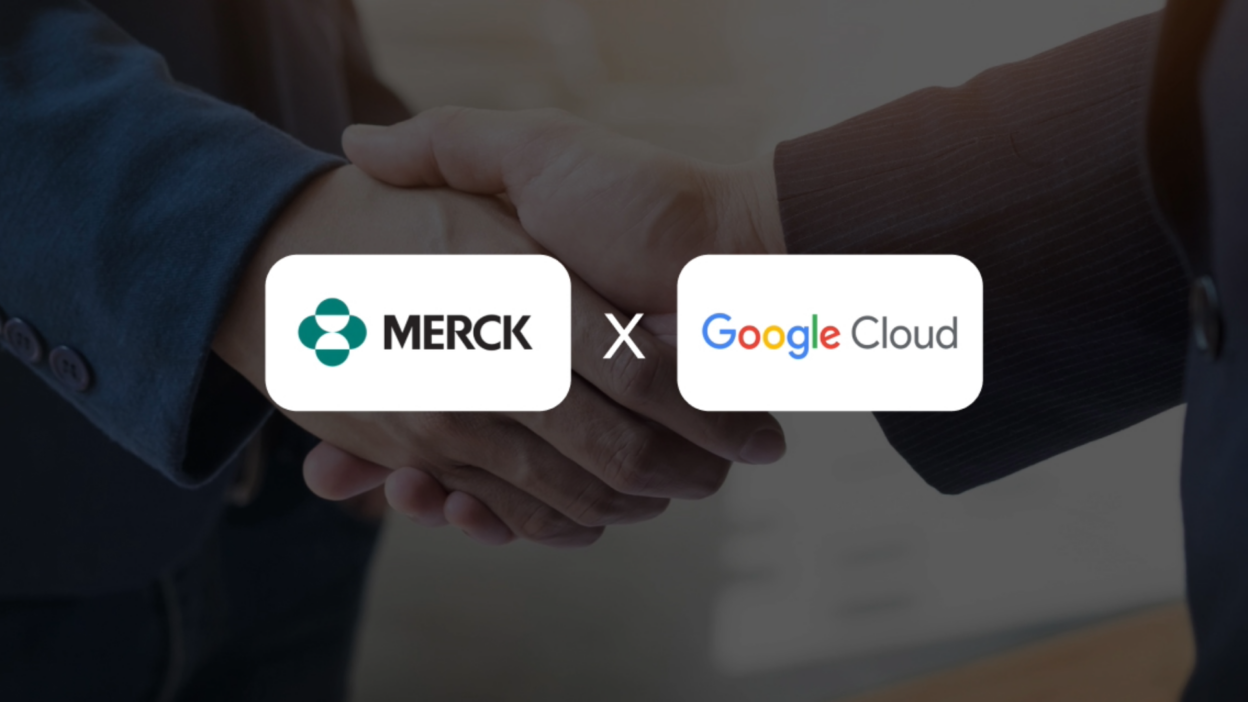
On April 22, at Google Cloud Next 2026 in Las Vegas, Merck and Google Cloud announced a landmark partnership to enhance Merck’s digital backbone as an AI-enabled enterprise. The multi-year investment, valued at up to $1 billion, will deploy an agentic AI platform across Merck’s research and development, manufacturing, commercial operations, and corporate functions, and includes Google Cloud engineers working alongside Merck teams to deploy Google Cloud’s most sophisticated AI, including Gemini Enterprise.
The goal is to digitize Merck’s data and boost productivity for its 75,000 employees worldwide. The program covers research and development, manufacturing, commercial operations, and corporate functions. Merck said the aim is to improve productivity, digitize more data, and help teams move scientific and business processes faster.
Thomas Kurian, CEO of Google Cloud, framed the scope clearly: “Our partnership with Merck represents a fundamental shift in how technology supports the entire pharma value chain. By deploying an industry-first agentic ecosystem powered by Gemini Enterprise, Merck is not just optimizing business processes; it is building a future where the speed of AI and the expertise of human ingenuity come together to bring drugs to patients faster.”
The Merck announcement didn’t stand alone. Amazon Web Services simultaneously launched Amazon Bio Discovery, an agentic AI application built to speed up preclinical drug discovery of new antibody therapies. Currently, 19 of the top 20 global pharmaceutical companies use AWS to power research workloads. Memorial Sloan Kettering Cancer Center used an early version of the platform to generate 100,000 antibody candidates for wet lab testing in a matter of weeks. Early adopters include Bayer, the Broad Institute, and Voyager Therapeutics.
Then OpenAI joined the week. OpenAI introduced GPT-Rosalind, named after chemist and X-ray crystallographer Rosalind Franklin, describing it as “a frontier reasoning model built to support research across biology, drug discovery, and translational medicine.” The model combines advanced reasoning capabilities with integration across scientific tools, databases, and experimental processes. OpenAI is already working with Amgen, Moderna, the Allen Institute, and Thermo Fisher Scientific to apply it to research and discovery workflows.
The announcement followed OpenAI’s strategic alliance with Novo Nordisk to advance AI drug discovery capabilities and identify promising drug candidates more quickly.
Three platforms. Three major tech giants. All in the same week. All targeting the same goal: compress the timeline from molecule to medicine.
What This Actually Means for the Pharmacy Pipeline
Drug development typically takes 10 to 15 years from target discovery to approval. GPT-Rosalind was built to address this timeline. OpenAI has stated its goal is to help researchers “explore more possibilities, surface connections that might otherwise be missed, and arrive at better hypotheses sooner.”
And the regulatory environment isn’t standing still either. In February 2026, the FDA announced it will no longer require two clinical trials for new drug approval, a fundamental shift in the approval framework. The agency also mandated the use of AI for FDA staffers and introduced a one-month expedited drug assessment track for medications the FDA determines serve a national interest.
Put those two trends together, faster AI-driven discovery and faster regulatory review, and the logical conclusion is clear. More drugs will reach approval, faster. The pipeline will grow. And every new approval comes with a pharmacist who needs to understand it, counsel patients on it, manage its interactions, and navigate its prior authorization landscape.
Health-system pharmacists play a crucial role in monitoring the pharmaceutical pipeline to manage formularies, allocate resources, and optimize clinical programs for new therapies. The pipeline from Q3 2025 through Q2 2026 featured novel therapies for rare and ultrarare diseases, targeted cancer treatments, and new agents across multiple disease states, selected from 56 novel drugs awaiting FDA approval during that period.
That number, 56 drugs in the pipeline for a single 12-month window, will grow, not shrink, as AI compresses discovery timelines.
The AI That Will Touch Your Workflow Directly
The big-tech drug discovery deals get the headlines. But the AI that will change the day-to-day for most pharmacists sits closer to home: inside the EHR systems running on your floor or in your health system.
Epic and Oracle Health have both submitted AI policy recommendations to HHS in 2026, signaling active development of clinical AI frameworks for their platforms. Oracle cited concerns about federal guidance on clinical decision support software, recommending clarity on when software falls outside FDA device requirements, an indication that AI-assisted clinical decision support is moving from pilot to standard deployment.
AI tools are already entering pharmacy-adjacent workflows. Automated medication verification against drug-drug interactions, formulary compliance checks, duplicate therapy flags, and medication reconciliation suggestions, these capabilities are building into EHR infrastructure now. What Big Pharma’s AI partnerships at the discovery level signal is that the volume and complexity of what these systems will need to evaluate will increase substantially over the next decade.
The Human Judgment Question
Here is where every pharmacist needs to think carefully, not just passively watch.
Despite more than $17 billion invested in AI-driven drug discovery since 2019, AI-developed drugs have yet to reach large-scale clinical trials. The first AI-designed drugs are only now entering pivotal trials, with multiple clinical readouts expected throughout 2026 and 2027. The balanced forecast is validation and disappointment in roughly equal measure.
AI compresses early discovery timelines and improves hit rates in specific applications. It does not replace clinical validation, and it does not replace the pharmacist who understands the patient in front of them. The technology accelerates iteration. It does not provide judgment.
Merck’s own leadership framed the partnership as building “a future where the speed of AI and the expertise of human ingenuity come together.” That framing is deliberate. Merck is not replacing pharmacists, physicians, or scientists. It is giving them faster, better-organized data, and expecting them to know what to do with it.
The pharmacists who will lead in this environment share three traits. They understand AI well enough to use it effectively. They understand it well enough to question it accurately. And they know exactly where human clinical judgment must override it, in patient counseling, in toxicity management, in the complex polypharmacy cases where no algorithm captures the full clinical picture.
What to Track and Do Right Now
Understand what AI is being deployed in your institution’s EHR. Ask your informatics team or IT department which AI-assisted clinical decision support modules are active in Epic, Oracle Health, or Cerner at your institution. Find out if pharmacists have input into those configurations.
Volunteer to participate in pilot evaluations. Every AI tool deployed in a health system goes through an evaluation phase. Pharmacists who join those pilot committees become the people who shape how the tool is configured, which alerts fire, which thresholds trigger, which patient populations get flagged. That influence is far more valuable than waiting for the tool to arrive fully built.
Monitoring the pharmaceutical pipeline is a standing professional responsibility for clinical pharmacists, evaluating new therapies, managing formularies, optimizing treatment programs for newly approved agents. As AI accelerates the approval pipeline, that responsibility intensifies. Staying current is not optional.
Know what AI cannot do. No AI system currently running in a pharmacy or health system can replace a pharmacist who notices a patient struggling with adherence due to cost, a caregiver who doesn’t understand the dosing schedule, or a drug-disease interaction that the system didn’t flag because the comorbidity wasn’t coded. That’s the clinical judgment gap. It belongs to the PharmD.
The $1 billion Merck-Google partnership signals where the industry is investing. The pharmacists who understand what that investment produces, and what it can’t, will be the ones shaping patient care on the other side of it.
Sources: Merck Press Release / Google Cloud Press Corner (Merck-Google Cloud Partnership Announcement, April 22, 2026), Fierce Pharma (Merck-Google $1B AI Deal), Analytics Insight (Merck Google Cloud AI Partnership), TechResearchOnline, Pharmaphorum (Amazon Bio Discovery Launch; OpenAI GPT-Rosalind Launch), TechTarget / Pharma Life Sciences (GPT-Rosalind), Fierce Biotech (GPT-Rosalind), GEN / Genetic Engineering & Biotechnology News (Amazon Bio Discovery), PYMNTS (Amazon Bio Discovery), AJMC (FDA Single-Study Drug Approval Policy, February 2026), FDA (Artificial Intelligence for Drug Development, 2026), AJHP / Oxford Academic (Novel Drug Approvals Pipeline Q3 2025 – Q2 2026), Becker’s Hospital Review (Epic, Oracle AI Policy Recommendations to HHS, 2026), Drug Target Review (AI in Drug Discovery: 2026 Predictions)