
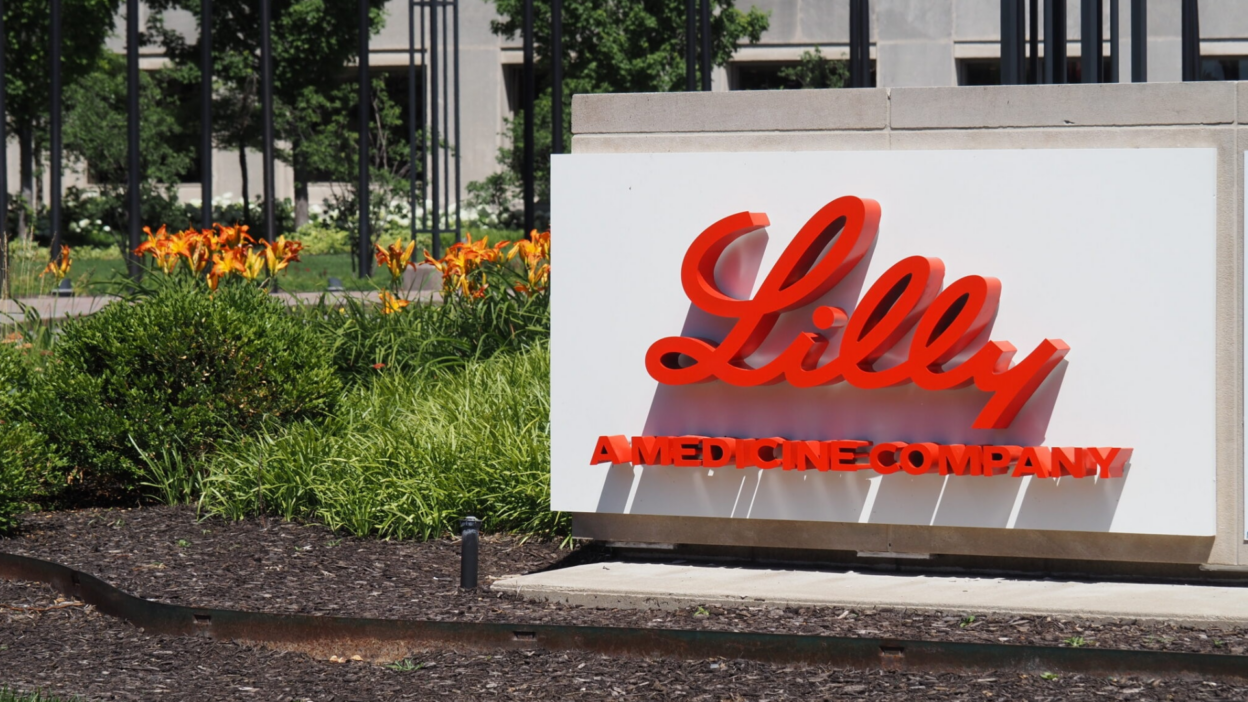
Eli Lilly reported Q2 2026 earnings this week, and the numbers are genuinely staggering. They are also one of the clearest business signals the pharmacy profession has received in years, because they describe exactly where the clinical support gap is largest and exactly who is positioned to fill it.
The Quarter That Rewrote Pharmaceutical History
Lilly posted $23.2 billion in second-quarter revenue, a 48% increase from the same period a year earlier. The company raised its full-year revenue forecast to between $85 billion and $87 billion, which would represent the largest annual revenue in the company’s 150-year history.
The driver is not a mystery. The drug breakdown tells the entire story of where pharmaceutical revenue is concentrating right now.
Mounjaro sales climbed 91% to $9.94 billion, topping analyst estimates by over $700 million. Zepbound brought in $4.93 billion. Together they comprised 64.7% of Lilly’s quarterly revenue, reinforcing injectables’ continued dominance in new GLP-1 starts. Lilly CEO Dave Ricks confirmed that volume growth of 60% was the primary engine, with a 13% decline in realized prices partly offsetting that volume increase.
The oral market is accelerating faster than most pharmacy operators anticipated. Foundayo, Lilly’s once-daily oral orforglipron tablet, generated $98 million in its first full reporting period. Late July prescriptions nearly doubled month-over-month. Lilly confirmed that Foundayo prescriptions approximately doubled in July versus prior months. Patients who were injectable-averse are entering the GLP-1 market for the first time through the oral pathway, and they are arriving at pharmacy counters with counseling needs that are distinctly different from injectable GLP-1 starters.
What a $23 Billion Quarter Actually Means for Pharmacy
Every billion dollars in GLP-1 revenue represents a patient population that needs counseling, monitoring, adherence support, injection training, nutritional guidance, food-drug interaction screening, and ongoing clinical management. That patient population is growing at a rate that physician offices, endocrinology practices, and primary care clinics cannot keep up with on their own.
The clinical support infrastructure problem is not new, but the Lilly Q2 numbers quantify its current scale precisely. At $14.87 billion in combined Mounjaro and Zepbound revenue for a single quarter, Lilly’s GLP-1 franchise is running at a pace that will exceed $50 billion annually for tirzepatide formulations alone. Novo Nordisk’s semaglutide programs add tens of billions more. The total GLP-1 market by most analyst estimates will exceed $130 billion globally by 2030.
The patients generating that revenue cycle through prescriptions every month. Each cycle is a touchpoint. Each touchpoint is either a clinical interaction or a dispensing transaction. The pharmacy that converts those touchpoints into structured clinical interactions, documented adherence monitoring, and proactive outreach builds a patient panel with measurably better outcomes and measurably better retention on therapy. The pharmacy that treats each cycle as a transaction watches patients discontinue, restart, and cycle through without accumulating the outcomes that distinguish it from a mail-order fulfillment center.
The Oral GLP-1 Counseling Gap That Is Arriving Right Now
Foundayo’s prescription doubling in July is the signal that the oral GLP-1 market transition is happening faster than most pharmacy operators planned for. This matters clinically because oral and injectable GLP-1 therapy require completely different patient counseling, and the patient population entering through the oral pathway is largely new to GLP-1 therapy altogether.
This newsletter covered the oral semaglutide counseling imperative in detail in the Ozempic pill issue. The same framework applies to Foundayo with the specific pharmacology of orforglipron as the active agent. Orforglipron is a non-peptide small molecule GLP-1 receptor agonist without the SNAC absorption enhancement system that oral semaglutide uses, but it shares the fundamental requirement for optimized administration conditions.
The counseling elements that determine whether a Foundayo patient achieves the clinical outcomes that kept them on therapy long enough to matter:
Administration timing discipline. The pre-meal or fasting administration requirement for oral GLP-1 agents is not a preference. It is a pharmacokinetic requirement. Patients who take their dose with food, with coffee, or alongside their morning medications achieve subtherapeutic exposure. The patient who was not counseled on this and discontinues at week six because they “weren’t seeing results” is a patient who never received adequate drug exposure. The pharmacist who delivers this counseling at every initial fill prevents that outcome.
The 30-minute food-free window management. Patients with busy morning routines find the pre-dose window disruptive. The pharmacist who anticipates this and helps the patient build it into their routine, whether by setting the alarm 30 minutes earlier, taking the dose before the shower, or using it as a trigger for morning hydration, improves adherence in a way that no prescribing physician has time to address in a 15-minute visit.
GI side effect anticipation. Nausea, constipation, and abdominal discomfort are the primary reasons GLP-1 patients discontinue in the first 8 weeks. The pharmacist who proactively names these effects at initiation, provides a timeline for when they typically peak and improve, and gives the patient a specific protocol for what to do if they become severe keeps patients on therapy through the period that determines long-term outcomes.
The dysesthesia monitoring update for Wegovy HD patients. This newsletter covered the 18.9% dysesthesia rate in the highest-dose Wegovy HD approval in a prior issue. The same counseling discipline that applies there, proactive disclosure before the symptom occurs, applies to the early-adopter Wegovy HD patients whose prescriptions are accelerating through your queue right now.
The Clinical Services Menu That Positions Your Pharmacy in a $50 Billion Annual Market
The GLP-1 clinical support gap is not filled by better dispensing. It is filled by clinical services that no mail-order pharmacy, no DTC platform, and no AI-enabled dispensing automation can provide.
Build a one-page GLP-1 patient services menu for your pharmacy. It should include five specific elements.
CGM-assisted metabolic monitoring. Continuous glucose monitoring in non-diabetic GLP-1 patients provides real-time feedback on how the medication is affecting glucose metabolism, insulin sensitivity, and post-meal response. For patients on tirzepatide or semaglutide for obesity who do not have diabetes, CGM enrollment transforms the GLP-1 treatment into a metabolic coaching program with visible data. That visibility improves adherence. It also creates a structured touchpoint for pharmacist review that is documentable and, in an RPM framework, billable.
Structured adherence check-in protocol. A 30-day, 90-day, and 6-month pharmacist outreach call structure, built around specific clinical questions: Are you experiencing any side effects? Have your eating patterns changed? Have you noticed any sensory changes? Are you taking the medication at the right time and with nothing else? That protocol, consistently delivered, catches the adherence failures before they become discontinuations.
Nutritional counseling referral pathway. The muscle loss risk documented extensively in this newsletter’s GLP-1 coverage, 25-40% of total weight loss as lean mass without adequate protein intake, requires a dietitian referral pathway. The pharmacist who has an established referral relationship with a registered dietitian and who connects every GLP-1 patient to that pathway at initiation is providing coordinated care that improves patient outcomes and builds a professional network that generates referrals in return.
Muscle preservation guidance. Whether or not a full dietitian referral is immediate, every GLP-1 patient should receive specific guidance from the pharmacist on protein intake targets, 100 to 120 grams per day as a minimum floor, resistance exercise as a complement to GLP-1 therapy, and the importance of monitoring for fatigue, weakness, and hair loss as early signals of inadequate nutritional support during rapid weight loss.
Oral administration counseling script. For Foundayo, Ozempic pill, and any future oral GLP-1 dispensed: the administration script delivers three specific messages at every pickup. Take it first thing in the morning, before anything else including coffee. Wait the full required window before eating or drinking. Call us if you aren’t seeing expected results after 4 to 6 weeks at therapeutic dose, because it may be an absorption issue rather than a drug failure.
The Prescriber Outreach Opportunity This Earnings Report Creates
The Lilly Q2 numbers and the Foundayo prescription acceleration give pharmacists a specific, timely conversation opener with every GLP-1 prescriber in their market.
The pharmacist who walks into a prescriber’s office in August 2026 and says “I’ve been tracking GLP-1 prescription volume in our area since the Foundayo launch doubled monthly prescriptions in July. I’m building out a structured patient support program and I wanted to explain what we offer beyond dispensing, and how we can help your patients stay on therapy through the first three months” is having a completely different conversation than the pharmacist who drops off a business card and says “we fill GLP-1 prescriptions.”
The first conversation is built around the clinical gap the prescriber already knows exists. Prescribers who write GLP-1 prescriptions know their patients discontinue. They know their offices don’t have the infrastructure to provide the monitoring and adherence support that 24-48 hour access to a pharmacist provides. They know that most of their GLP-1 patients are not seeing an endocrinologist or a dietitian. The pharmacist who arrives with a specific solution to a problem the prescriber has already identified closes a referral relationship in a single visit.
That relationship, established in August when Foundayo prescriptions are doubling month-over-month, generates referrals for every GLP-1 patient who walks into that prescribing office for the next five years.
The Five-Year Business Position This Moment Defines
The GLP-1 market at $23 billion per quarter and growing is the most commercially significant pharmaceutical development in pharmacy’s history. This newsletter has covered it from every clinical angle across the past year: retatrutide’s Phase 3 data, oral semaglutide administration requirements, Wegovy HD dysesthesia, the ADA Standards cardiorenal framing, the semaglutide-alcohol use disorder Lancet trial, the menopausal migraine and depression data from ECO 2026, the Medicare GLP-1 Bridge launch, and now the Lilly Q2 earnings data that quantifies exactly how large the patient population has become.
Every one of those clinical stories pointed at the same business reality: the pharmacist who builds the clinical infrastructure to support GLP-1 patients systematically is positioned inside the fastest-growing therapeutic market in pharmaceutical history at the moment of maximum growth.
The pharmacist who hasn’t built that infrastructure yet is watching that market from outside it, filling prescriptions for a patient population that is receiving clinical support from somewhere other than their pharmacy.
The GLP-1 services menu, the adherence protocol, the prescriber outreach, the CGM monitoring program, and the muscle preservation counseling are not ambitious additions to a busy pharmacy operation. They are the basic clinical infrastructure that every pharmacy serving GLP-1 patients should have operational before the end of Q3 2026.
Build it now. The market is $23 billion per quarter and accelerating.
Sources: Eli Lilly and Company Q2 2026 Earnings Press Release (July 30, 2026), CNBC (Lilly Q2 2026 Earnings Coverage, July 30, 2026), Reuters (Eli Lilly Posts Record Revenue of $23.2 Billion in Q2 2026), STAT News (Eli Lilly Smashes Revenue Records as GLP-1 Demand Drives Historic Quarter), Wall Street Journal (Eli Lilly Earnings: Mounjaro, Zepbound Drive Historic Quarter), Bloomberg (Lilly Raises 2026 Forecast as GLP-1 Sales Surge), Pharmacy Times (Eli Lilly Q2 2026 Coverage: Foundayo Prescription Doubling), Novo Nordisk Q2 2026 Earnings (Comparison Reference for Total GLP-1 Market Scale)