
Imagine feeling restless, overwhelmed, or increasingly agitated while sitting at home. For some people living with schizophrenia or bipolar disorder, these episodes can appear unexpectedly. They can also be difficult to manage without medical support.
Until recently, a medication designed to treat these episodes had to be given under medical supervision. Now, that is changing.
On November 16, 2026, the FDA approved at-home use of IGALMI (dexmedetomidine) sublingual film. Eligible adults can now use the medication to treat acute agitation linked to schizophrenia, schizoaffective disorder, or bipolar I or II disorder.
The FDA first approved IGALMI in 2022. This latest decision expands its use beyond supervised healthcare settings. It also adds schizoaffective disorder to the approved indications.
For patients, this creates another treatment option at home. For healthcare professionals, it offers a glimpse into how psychiatric care may evolve.
How Does This Medication Work?
Acute agitation can cause intense restlessness, emotional tension, and difficulty staying calm. These episodes can disrupt daily life and create challenges for patients and caregivers.
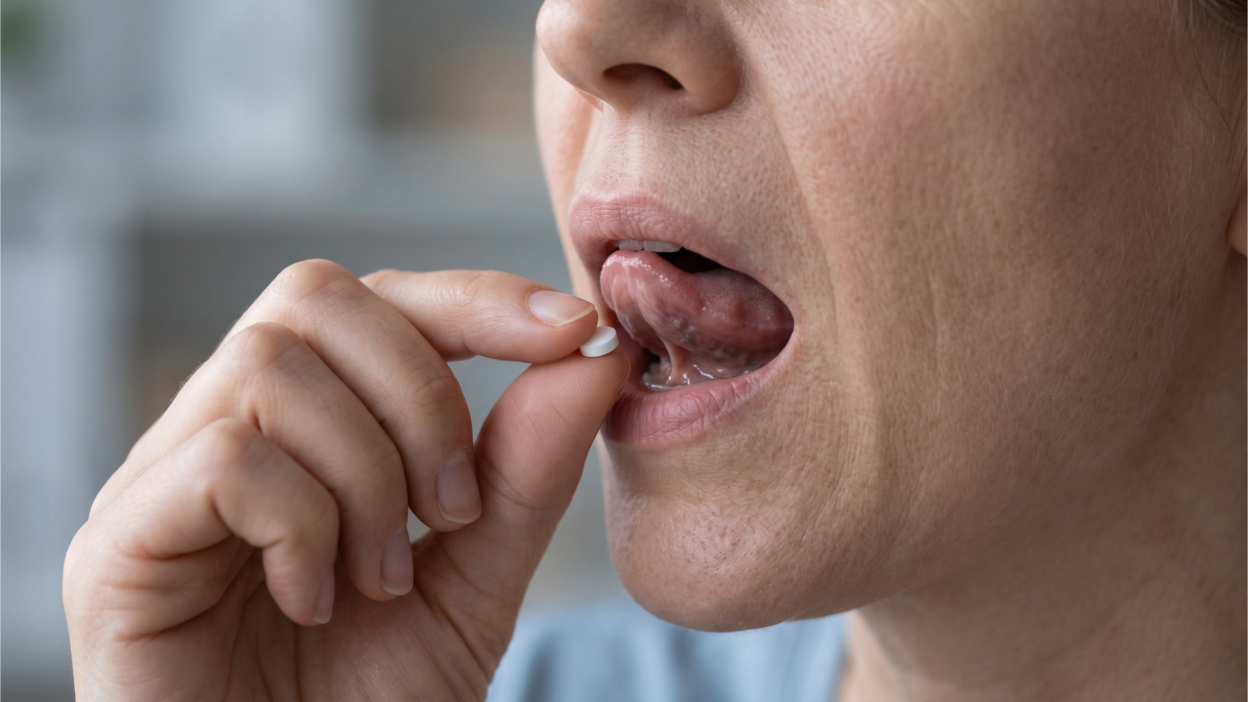
IGALMI comes as a thin film that dissolves under the tongue or between the lower lip and gum. It contains dexmedetomidine, a medication that helps reduce activity in the body’s stress-response system.
Unlike daily psychiatric medications, IGALMI is used when an episode of agitation occurs. It treats the immediate symptoms rather than the underlying condition.
Earlier clinical trials showed that IGALMI reduced agitation more effectively than placebo. Researchers observed improvements as early as 20 to 30 minutes after treatment, depending on the study and dose.
However, those studies took place under medical supervision. Before patients could use the medication at home, researchers needed to understand how safely it could be used without a healthcare professional present.
What Did the At-Home Study Find?
The FDA’s decision was supported by a Phase 3 clinical trial called SERENITY At-Home, also known as SERENITY III.
Researchers studied patients with schizophrenia, schizoaffective disorder, or bipolar disorder over 12 weeks. Participants used the medication themselves when agitation occurred.
According to Teva, 102 patients treated 1,160 episodes of agitation with IGALMI during the study. The company reported that patients generally tolerated repeated use and that no participants stopped treatment because of tolerability concerns.
The most common side effects included sleepiness, dizziness, dry mouth, and numbness or tingling in the mouth.
These results helped support the FDA’s decision. However, the study doesn’t mean IGALMI is appropriate for every patient. Severe or dangerous episodes may still require emergency care. In addition, researchers haven’t established the safety of using the medication every day over long periods.
What Should Pharmacists Know?
Moving treatment into the home makes patient education especially important.
The updated FDA label recommends a 120-microgram dose for unsupervised use. Patients may take another dose if agitation returns, but they must wait at least 12 hours. The at-home regimen differs from dosing used in supervised healthcare settings.
IGALMI can lower blood pressure and slow the heart rate. As a result, pharmacists should pay close attention to cardiovascular history and other medications. The label advises avoiding use in patients with certain heart conditions, low blood pressure, a history of fainting, or risk factors for QT prolongation. It also advises avoiding several interacting medications, including QT-prolonging drugs and, for at-home use, sedatives, hypnotics, and opioids.
Proper administration is another key counseling point. Patients should allow the film to dissolve without chewing or swallowing it. They should avoid food and drinks for 15 minutes after placing it under the tongue or one hour after placing it behind the lower lip.
After taking IGALMI, patients should remain seated or lying down and stand up slowly. They should also avoid driving or operating dangerous equipment for at least eight hours.
The updated label does not recommend unsupervised use in adults aged 65 or older or in patients with liver impairment. These precautions show why careful patient selection and medication reviews remain essential.
What This Means for the Future of Pharmacy
The bigger story is how this approval changes where treatment can happen.
A medication that once required medical supervision can now be used by eligible patients at home. That gives some patients more flexibility while creating new opportunities for pharmacists to support safe medication use.
As more treatments move outside hospitals and medical offices, patients will need clear instructions and reliable guidance. Pharmacists can help by reviewing medications, identifying safety concerns, educating caregivers, and coordinating with the healthcare team.
There is also an interesting question for the future. Could treating agitation earlier at home help reduce emergency department visits or hospitalizations?
Researchers will need real-world data to answer that question. For now, the approval provides another option for eligible patients and expands how certain psychiatric symptoms can be managed.
It also highlights a growing opportunity for pharmacists. As healthcare moves closer to patients’ everyday lives, medication expertise will remain essential to making that care safe, effective, and accessible.
Sources
- Teva Pharmaceuticals. U.S. FDA Approves IGALMI as First At-Home Acute Treatment for Agitation Associated with Schizophrenia, Schizoaffective Disorder, or Bipolar I or II Disorder in Adults. November 16, 2026.
- Teva Neuroscience. IGALMI (dexmedetomidine) Sublingual Film: Full Prescribing Information. Revised November 2026.
- ClinicalTrials.gov. Dexmedetomidine in the Treatment of Agitation Associated With Schizophrenia and Bipolar Disorder (SERENITY III). NCT05658510.
- Preskorn SH, Zeller S, Citrome L, et al. Effect of Sublingual Dexmedetomidine vs Placebo on Acute Agitation Associated With Bipolar Disorder: A Randomized Clinical Trial. JAMA. 2022;327(8):727–736.
- Citrome L, Preskorn SH, Lauriello J, et al. Sublingual Dexmedetomidine for the Treatment of Acute Agitation in Adults With Schizophrenia or Schizoaffective Disorder: A Randomized Placebo-Controlled Trial. Journal of Clinical Psychiatry. 2022;83(6):22m14447.
- Drug Topics. FDA Expands Dexmedetomidine for At-Home Use. November 2026.