Drug Topics this week published one of the most practically useful pharmacy business pieces to appear in a long time. It deserves more than a headline. It deserves action.
The core message: pharmacists are building excellent clinical services and then telling nobody about them. The result is empty appointment slots, undertapped capabilities, and real revenue left on the table every single day.
The Most Common Mistake Costs Nothing to Fix
The most common mistake pharmacists make when promoting their new clinical service is not marketing it at all. That’s not a generalization. It’s the literal top finding from Drug Topics’ analysis.
What does “not marketing” look like in practice? Services that don’t appear on the pharmacy website. Staff who were never briefed. A single pharmacist trained in a service while the rest of the team has no idea it exists.
As pharmacists gain authority to prescribe birth control and expand clinical services, many community pharmacies are discovering that a lack of promotion is the single biggest factor limiting the success of those services. Policy changes broaden scope of practice, but no funding or public health campaigns come with them. Pharmacies bear full responsibility for creating local awareness and demand for what they offer.
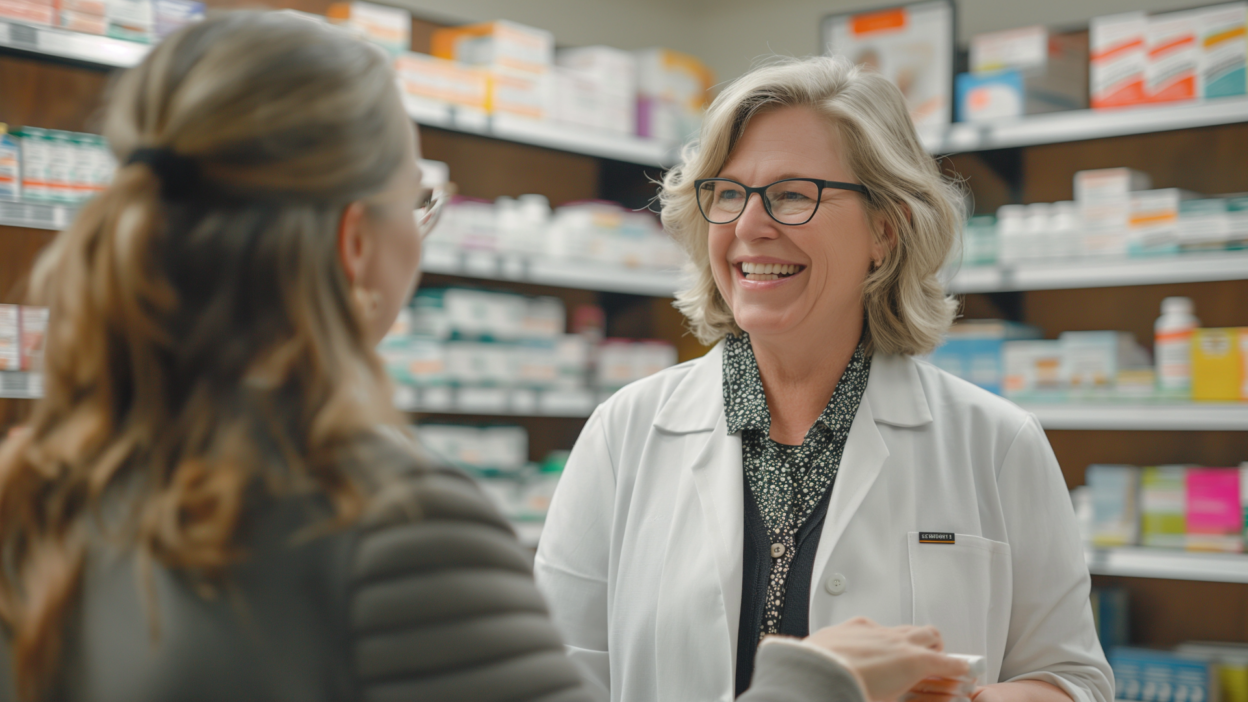
Think about the last time you trained on a new service, medication therapy management, CGM counseling, pharmacogenomics consultations, travel immunizations. Now think about whether your pharmacy technicians can explain that service to a patient at the pickup window. If the answer is no, every prescription pickup is a missed referral opportunity. Your team is the most direct patient-facing channel you have, and they need a verbal script just as much as any marketing piece.
The Patient Satisfaction Data Should Give You Confidence
Here is the thing about clinical pharmacy services: patients who use them love them. The data on this is consistent and strong.
Patients are loyal to their local pharmacists and overwhelmingly trust them. On average, respondents in one major national survey had been using their current pharmacy for 6.5 years, longer than they’d had their current primary care physician (5.8 years). One-third reported a “very high” level of trust in their pharmacist, and more than four in five rated their trust as moderately high or very high.
That trust is the foundation of clinical service adoption. More than 90% of patients are comfortable receiving communications about prescriptions and clinical services from their pharmacist, including information about vaccines. Up to 90% of Americans believe that a connected pharmacy experience enhances the overall patient experience.
In one pharmacist home visit clinical services program, 94% of respondents agreed or strongly agreed they would recommend the service continue to be available, and 100% agreed or strongly agreed they were satisfied with the pharmacist visit.
The product is excellent. The delivery mechanism, the pharmacist-patient relationship, is trusted and durable. The gap isn’t quality. It’s visibility. Patients who don’t know a service exists can’t book it, no matter how much they’d value it.
The Three Moves with the Highest Return on Time
1. Build a formal physician referral program.
Don’t just hope for referrals, actively work for them. Develop a professional referral kit for local physician offices that includes a list of your clinical services, a professional bio of your lead pharmacist, information on delivery or specialty services, and prescription pads or cards with your pharmacy’s contact information.
Most pharmacies rely on informal referral relationships. Formalizing that into a structured kit changes the dynamic. A physician’s office that receives a one-page document listing your CGM counseling service, your pharmacogenomics panel capability, and your MTM billing capacity will start sending patients. An office that has never seen a referral kit from you doesn’t know those services exist.
Pick five physician offices within three miles of your pharmacy. Deliver a kit to each one this month. Track whether referrals increase over 90 days. Repeat with five more offices next quarter.
2. Post to your Google Business Profile every week.
As of 2026, Google’s algorithm heavily favors businesses that actively manage their Google Business Profile. Posting weekly updates about services, health events, or clinical tips is free, takes under 10 minutes, and directly improves local search visibility.
Regular updates to a Google Business Profile keep a pharmacy relevant in search results and increase engagement. Businesses that post about seasonal health products, upcoming vaccination clinics, or wellness screenings see higher interaction rates. Keeping the profile fresh signals to potential patients that the pharmacy is active and engaged in the community.
Under-10 minutes. Free. Directly drives the patients who are already searching for the services you offer. This is the highest-leverage 10 minutes in pharmacy marketing, and most pharmacies don’t use it at all.
3. Track where your patients come from.
You can’t scale what you can’t measure. When a patient books a CGM consultation or a pharmacogenomics review, ask how they found out about the service. Build a simple tally, Google search, physician referral, pickup window conversation, social post, word of mouth.
After 60 days, one or two channels will drive most of your clinical bookings. Double down on those. Stop spending time on the ones that aren’t converting.
The Verbal Script Your Team Needs Today
The highest-value free marketing move in pharmacy doesn’t require a website, a Google profile, or a referral kit. It requires a sentence.
Train every technician at your pickup window to say one thing when appropriate: “Did you know we also offer [service] consultations directly with the pharmacist? It’s available by appointment and most insurance covers it.”
That sentence, said at pickup to a patient picking up metformin, a GLP-1, or a psychiatric medication, opens the door to a clinical appointment. Your patients already trust your pharmacy. They’re already there. They just don’t know what else you offer.
The most effective framing for patient adoption emphasizes convenience. Pharmacists see patients on their schedule, without a referral, in a location they already visit. That is not a secondary value proposition, it is the primary one. Lead with it in every message, every verbal script, and every referral kit.
Your 30-Minute Action This Week
Pick the single highest-value clinical service your pharmacy currently offers, the one with the best patient outcomes data and the strongest billing potential. It might be MTM, CGM coaching, pharmacogenomics, travel medicine, point-of-care testing, or comprehensive medication review.
Then spend 30 minutes confirming it exists in three places:
Your website. Does the service have its own page or section? Does it explain what it is, who it’s for, and how to book?
Your Google Business Profile. Does your most recent post mention this service? Does your services section list it?
Your team’s pickup script. Can every technician on your staff describe this service in one sentence and invite the patient to learn more?
Three touchpoints. Thirty minutes. Done consistently over 90 days, that single action compounds into a full patient panel.
The clinical capabilities already exist. The trust already exists. The patients are already walking through your door. They just need to know what you offer.
Sources: Drug Topics (Pharmacy Marketing: 10 Simple Ideas That Really Work), Drug Topics (Pharmacies Can Use These Marketing Tips to Attract Customers), Drug Topics (Most Common Mistake When Promoting Clinical Services, 2026), Outcomes Network (What Patients Want From Pharmacies Beyond Prescriptions, 2024), PMC / Canadian Journal of Hospital Pharmacy (Satisfaction Survey for Medication Management Program), Lumistry Blog (Pharmacy Advertising Ideas 2026), OYDisplay / Drug Topics Marketing Reference (2026)