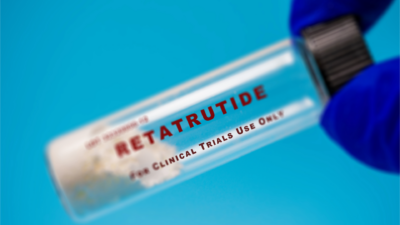


Six months ago, this vaccine was dead on arrival. In February, the FDA sent Moderna a rare refusal-to-file letter and the agency wouldn’t even review it. Two weeks later, after Moderna made the rejection public, the decision was reversed. On August 5, 2026, that same vaccine became the first standalone mRNA influenza vaccine approved in the U.S.
It’s called mFlusiva (formerly mRNA-1010), approved for adults 50 and older. The headline everyone will repeat this fall, that it’s about 27% more effective than a standard flu shot, is doing a lot of work. Here’s what it actually means, and what it doesn’t.
What to tell the patient at your counter
That 27% comes from the pivotal Phase 3 trial, published in the New England Journal of Medicine, and it’s a relative number: it means roughly a quarter fewer breakthrough cases than an older standard-dose shot, not that the vaccine blocks 27% of all flu. The trial was large and rigorous, and the benefit held up across age groups and across the major flu strains.
One honest caveat to carry into patient conversations: the trial saw very few influenza B cases, so its protection against flu B is genuinely uncertain. When a patient asks “does it cover flu B?”, the truthful answer is “probably, but this trial couldn’t prove it.”
The part the headlines skip: two approvals, not one
mFlusiva was approved through two different pathways, and they aren’t equally solid.
For adults 50 to 64, it’s a full approval backed by real efficacy data; actual flu cases prevented. Solid ground.
For adults 65 and older, it’s an accelerated approval, based on antibody response rather than confirmed prevention of flu. Moderna must now run a follow-up trial to prove the vaccine actually protects this group; if that trial disappoints, the older-adult approval could be pulled.
Why the split? For people 65+, the CDC preferentially recommends the enhanced flu vaccines (high-dose, adjuvanted, or recombinant) over standard-dose shots. But the main trial compared mFlusiva against a standard-dose vaccine, which isn’t the preferred option for this age group.
FDA reviewers called that comparison insufficient as the primary basis for approval in older adults. Moderna bridged the gap with a separate study pitting mFlusiva directly against a high-dose vaccine, where it came out ahead on antibody response. That’s an encouraging signal but antibodies are a stand-in for real-world protection, which is exactly why the follow-up trial is required. A WashU-led study in Nature Immunology (funded in part by Moderna and including Moderna co-authors) found the vaccine produces a broader and longer-lasting antibody response, which helps explain the strong showing without being proof of clinical benefit on its own.
The trade-off patients will feel: reactogenicity
If you counsel on one thing, counsel on this: mFlusiva hits harder than a standard flu shot. Sore arms, fatigue, headache, and muscle aches were all reported at roughly double the rate of the comparison vaccine.
The reassurance: these reactions are mostly mild to moderate and clear up in about two days; the same mRNA-platform pattern patients already know from their COVID shots. Set that expectation upfront and you keep their trust; let a rough 24 hours blindside them and you may lose them for future seasons.
A useful counseling point: mFlusiva contains no egg protein at all. Egg allergy is no longer a barrier to any flu vaccine under current guidance, but the egg-free platform may still reassure patients specifically anxious about it.
The safety signal worth handling honestly
Across the trials there was a small, unexplained imbalance in deaths from unspecified causes in the mFlusiva group. The context matters, and it’s reassuring: overall death rates were the same in both groups, serious adverse events were balanced, the deaths didn’t cluster after vaccination, and the people who died carried heavy underlying illness. Reviewers judged a link to the vaccine unlikely. Importantly, there were no cases of myocarditis or pericarditis (the heart-inflammation signal watched closely with mRNA vaccines) in the key monitoring window.
But reviewers couldn’t fully close the question, so Moderna committed to actively tracking deaths, heart inflammation, and Guillain-Barré syndrome after launch. This is the kind of unresolved limitation a pharmacist audience should hear from us first, not discover later.
The bigger reason this matters
Manufacturing speed. Traditional egg-based flu vaccines take about six months to produce; the mRNA platform can do it in two to three, and it skips the egg-grown mutations that can blunt the match to circulating strains. In a normal year that means a tighter strain match. In a pandemic threat, it could mean having a vaccine in time at all. That promise is real but still a promise. mFlusiva was approved on how well it worked and how safe it was, not on any proven real-world payoff from faster manufacturing. Worth noting, too: the trial measured whether the vaccine protects the person who gets it, not whether it slows spread, so counsel it as personal protection, not a proven way to shield others.
Bottom line
A genuine milestone: the first mRNA flu vaccine to reach the market, cleared by a unanimous advisory vote. The efficacy case for ages 50–64 is solid; the 65+ approval is promising but conditional, with a confirmatory trial still owed. Expect more reactogenicity than a standard shot, and counsel accordingly.
One guideline note: current ACIP and ACP recommendations predate this approval, so neither reflects mFlusiva yet. ACP declined to weigh in on mRNA flu vaccines earlier this year, citing thin, low-certainty data at the time, a caution worth knowing, but one that read on an earlier evidence base than we now have. Both bodies will likely revisit. Whether mFlusiva earns a preferential recommendation for older adults, the thing that would truly move uptake, is the next chapter to watch.
Sources: FDA MFLUSIVA approval record and Clinical Review Memorandum (BLA 125869/0); the FLUENT trial (Leroux-Roels I, et al. NEJM. 2026;394(18):1803–1813); Moderna’s high-dose comparison study; a mechanistic B-cell study (Matz HC, et al. Nature Immunology, June 2026); ACIP 2025–26 recommendations (MMWR. 2025;74(32):500–507) and ACP 2025–26 practice points (Ann Intern Med. 2026;179(1):110–117); with reporting from STAT, NBC News, NPR, CBS News, Science News, Pharmacy Times, and PharmExec. Clinical findings are drawn from the peer-reviewed trial and FDA review; manufacturer statements are attributed as such. Licensed indication (adults 50+) is per the FDA approval record.