

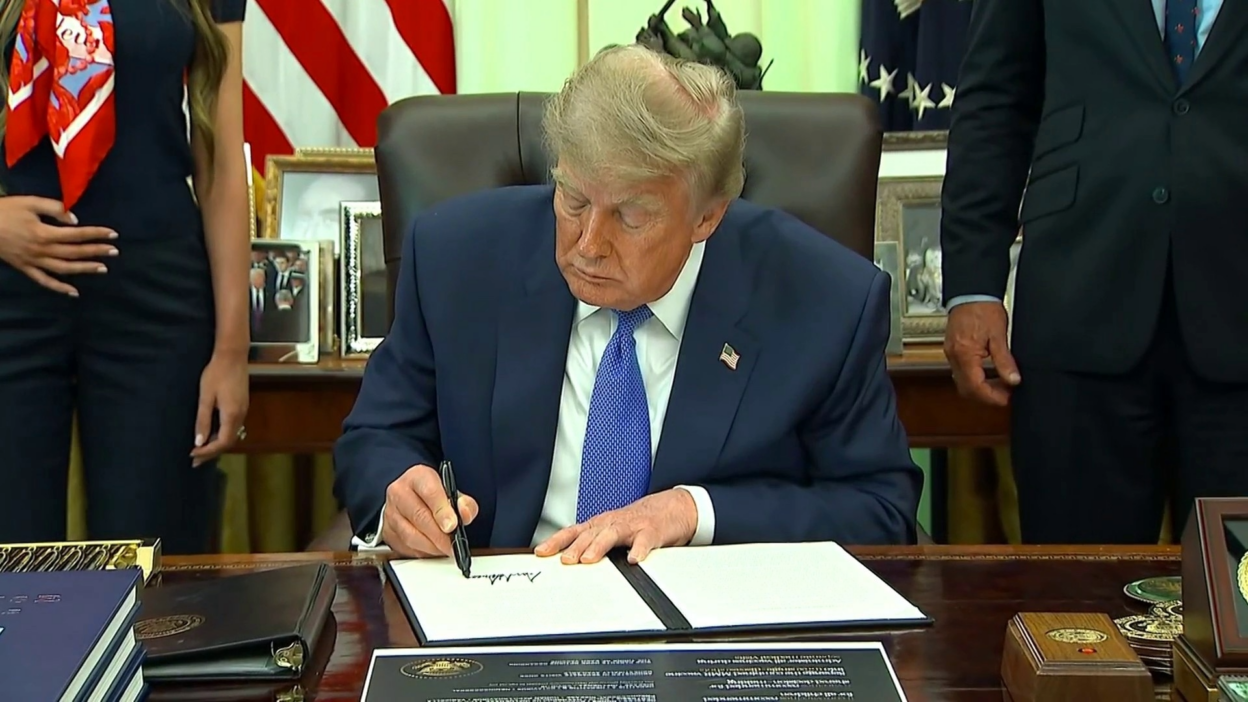
On August 10, 2026, President Trump signed an executive order titled “Delivering Gold Standard Childhood Vaccine Recommendations for Americans,” narrowing the vaccines recommended for all children from 17 to 11 immunizations. It is the most significant federal action targeting the childhood vaccine schedule in the modern era, and it has already produced exactly what pediatricians, pharmacists, and public health experts warned it would: confusion, parent panic, and a wave of calls that pharmacists are fielding right now.
What the Order Actually Directs
The new executive order recommends that vaccines for COVID-19, rotavirus, flu, hepatitis A, hepatitis B, and bacterial meningitis be administered based on shared clinical decision-making rather than universal recommendation. A separate set of vaccines remains recommended universally: those for measles, mumps, rubella, diphtheria, tetanus, pertussis, polio, Haemophilus influenzae type B, pneumococcal disease, HPV, and chickenpox.
The order recommends that childhood immunizations be administered at separate medical visits, which in practice could more than double the number of doctor appointments for children and could mean more copays. It also suggests that the combined MMR vaccine be separated into three shots, given individually.
The August 10 order builds on a December 2025 presidential memorandum and a May 2026 executive order aimed at aligning U.S. recommendations with those of peer nations. The recommendations trace back to HHS’s January 2026 decision under Secretary Robert F. Kennedy Jr. to cut routine childhood immunizations from 17 to 11.
The MMR splitting directive drew the most medical concern. Trump called for the combined MMR vaccine to be split into separate shots despite decades of research showing the MMR vaccine is safe and effective. Before signing the order, Trump suggested, without evidence and contrary to established scientific evidence, that “together, there could be a possibility they’re quite lethal.” Doctors say the MMR vaccine has an excellent safety record and is highly effective.
The Legal Reality Every Pharmacist Must Understand Before Taking a Patient Call
This is the most important clinical fact in the entire story, and it is the one most patients will not know unless a pharmacist tells them.
The executive order does not alter the immunization schedule pharmacists work from, because a federal court has already stayed the underlying rollback and the ACIP votes behind it.
The federal childhood immunization schedule remains the same as it was in July 2025, which recommends routine vaccines for 16 diseases. COVID-19 vaccines for healthy children are recommended based on shared decision-making between families and clinicians, rather than routinely for all children, as had been the case since an earlier change. Insurance companies continue to cover all vaccines in the AAP vaccine schedule, including COVID-19 shots.
The legal structure matters precisely. Congressional statute gives ACIP the authority to make vaccine recommendations, with CDC director approval or rejection. The January 2026 HHS attempt to revise the childhood schedule from 17 to 11 vaccines was challenged in federal court. A preliminary injunction stayed that revision. The August 10 executive order directs HHS to pursue the same goal, but an executive order is a political directive to the executive branch, not a revision to ACIP’s legal recommendations.
As an attorney specializing in vaccination law stated, “the executive order doesn’t have the rule of law behind it.” If CDC attempts to formally change the schedule again without following the ACIP process established by Congress, it will likely face the same legal challenges as before.
For the parent calling your pharmacy right now, this translates to one clear sentence: the current vaccine schedule has not legally changed.
The AAP Counter-Guidance That Strengthens Your Clinical Position
The American Academy of Pediatrics issued updated influenza guidance recommending flu vaccination for all children aged 6 months and older, citing 190 pediatric deaths in the 2025-2026 flu season and evidence of approximately an 80% reduction in pediatric flu death risk with vaccination.
The AAP and the American Academy of Family Physicians both continue to recommend the full prior childhood vaccine schedule. The AAP disagrees with the administration’s recommendation and says all young children ages 6 months to 23 months are at high risk for severe COVID-19 and should be vaccinated.
This professional medical society guidance matters for pharmacy practice in a specific way. Pharmacists should reinforce that scientific evidence and coverage have not changed, use AAP and AAFP guidance for counseling, and coordinate messaging with clinicians to counter confusion and misinformation.
The pharmacist who tells a parent “the AAP, which includes pediatricians across the country, still recommends flu vaccination for all children 6 months and older, and the evidence shows it reduces pediatric flu deaths by about 80%” is providing an evidence-based clinical statement that is completely accurate and directly useful.
The Pharmacy Scope of Practice Dimension
The order has specific operational implications for pharmacist vaccine administration authority that vary by state, and this is the part most pharmacists haven’t fully worked through yet.
The order’s changes to core recommendations, combined with continuing uncertainty over ACIP, have direct consequences for pharmacy practice, since vaccine administration authority and insurance coverage for many vaccines are tied to ACIP recommendations.
In states where pharmacist vaccine administration authority is linked specifically to ACIP-recommended vaccines, a formal change to ACIP recommendations would restrict which vaccines pharmacists could administer without individual prescriptions. In Wisconsin, for example, pharmacists can only administer vaccines without a prescription that appear on the federal schedule. If a vaccine were formally removed from that schedule, pharmacists would need an individual prescription for each shot before administering it to a child.
Because the court injunction means the formal ACIP schedule has not changed, this operational concern has not yet materialized for most states. However, pharmacists should verify their specific state’s language now, before the court situation evolves. The question to research: does your state pharmacy practice act tie vaccine administration authority to ACIP recommendations specifically, or to a broader definition of recommended vaccines that includes AAP and AAFP guidance?
That verification, done this week, prevents the operational surprise of a scope limitation arriving without warning if the legal situation changes.
The MMR Splitting Reality Check
The executive order’s call for splitting the MMR vaccine into three separate shots is the element with the least operational reality behind it and the most patient confusion potential.
Delayed early-series vaccinations strongly predict missed MMR by age 2, with odds ratios around 6 to 7, suggesting extra visits from MMR splitting could amplify underimmunization.
From a manufacturing standpoint, single-antigen measles, mumps, and rubella vaccines have essentially no domestic manufacturing infrastructure in the United States. The MMR combination exists precisely because the single-antigen vaccines had manufacturing and cold-chain challenges that the combination formulation solved. Recreating three separate licensed and manufactured products for domestic distribution is a multi-year undertaking that requires FDA approval for each product, and no such applications have been submitted.
The AAP continues to recommend the MMR vaccine for all children, but talk of splitting the shot could cause confusion among parents. The parent who calls asking whether their child needs “three separate measles, mumps, and rubella shots now instead of MMR” deserves a clear answer: the MMR vaccine is still available, still recommended by AAP, and still covered by insurance. The splitting directive is a policy aspiration, not a current clinical instruction, and separate vaccines do not currently exist in the U.S. commercial supply chain.
The Flu Season Intersection
This executive order arrives six weeks before the annual flu vaccine season begins in earnest. The AEP coverage uncertainty comes at the worst possible moment for flu vaccine uptake.
The AAP’s counter-guidance citing 190 pediatric flu deaths in the 2025-2026 season and an approximately 80% mortality reduction with vaccination is the most immediately actionable clinical statement pharmacists can use in patient conversations this fall. 190 pediatric deaths in a single flu season is not an abstract statistic. It is a number that most parents don’t know and that, stated plainly, reframes the flu vaccine conversation from an optional precaution to a documented, evidence-backed mortality prevention.
The flu vaccine for children 6 months and older remains covered by insurance plans that follow AAP guidance. The executive order’s move of flu vaccine to “shared clinical decision-making” does not change the insurance coverage status for plans that have not voluntarily altered their coverage in response to the order.
The pharmacist who clarifies both of those points, coverage status and mortality risk, in a two-minute phone call with a worried parent converts a patient hesitation moment into a flu vaccine appointment before September ends.
The Counseling Framework for the Calls Coming In Right Now
Every parent who calls or visits your pharmacy with a question about the vaccine order needs the same two-part answer, stated calmly and factually.
Part one: the current vaccine schedule has not legally changed. An executive order directed HHS to work toward narrowing the schedule, but a federal court injunction from earlier this year has prevented the formal ACIP revision from taking effect. The vaccines your children are scheduled to receive have not been removed from the legal schedule. Insurance coverage has not changed for vaccines recommended by AAP.
Part two: flu vaccine is still recommended for all children 6 months and older. The American Academy of Pediatrics, the organization representing the pediatricians who will be seeing your children, recommends flu vaccination for all children 6 months and older. There were 190 pediatric flu deaths last season. The evidence shows the vaccine reduces the risk of those deaths by about 80%. That recommendation has not changed.
Do not speculate about what might happen legally or politically. State what is currently true. Use AAP and AAFP guidance as your clinical authority. Coordinate your messaging with the pediatricians and family medicine physicians in your community so parents receive consistent information from both their doctor’s office and their pharmacy.
APhA and eight partner pharmacy organizations sent a joint letter to Kennedy in July raising concerns that vaccine administration authority and billing are tied to ACIP recommendations and asked for guaranteed prompt ACIP review after FDA approvals, minimum annual meetings, and MMWR publication. That advocacy letter is this profession’s official response to the systemic uncertainty the August 10 order extends. The pharmacist’s individual response is to be the calm, accurate, trusted clinical voice in their community during a moment of confusion that will last weeks and months.
Be calm. Be factual. Be the most trustworthy voice in the room.
Sources: Drug Topics (Trump Signs Order Narrowing Childhood Vaccine Recommendations, August 11, 2026), Pharmacy Times (Trump Executive Order Recommends Separating MMR Into 3 Shots, August 2026), BioPharma Dive (Trump Signs Order Seeking to Upend Childhood Vaccine Schedule, August 11, 2026), NBC News (Trump Order Aims to Cut Number of Diseases All Children Should Be Vaccinated Against From 18 to 11, August 10, 2026), Scientific American (Trump Issues Executive Order Aimed at Rewriting Childhood Vaccine Schedule, August 11, 2026), Time (What Trump’s Executive Order Could Mean for Childhood Vaccines, August 12, 2026), WMTV 15 NEWS / NBC News Wisconsin (7 Childhood Vaccines Dropped From Federal List Under Trump Executive Order, Pharmacists React, August 11, 2026), American Academy of Pediatrics (Updated Influenza Guidance, 2026-2027 Season), Healthline (CDC Vaccine Panel ACIP New Vaccine Recommendations Coverage)