
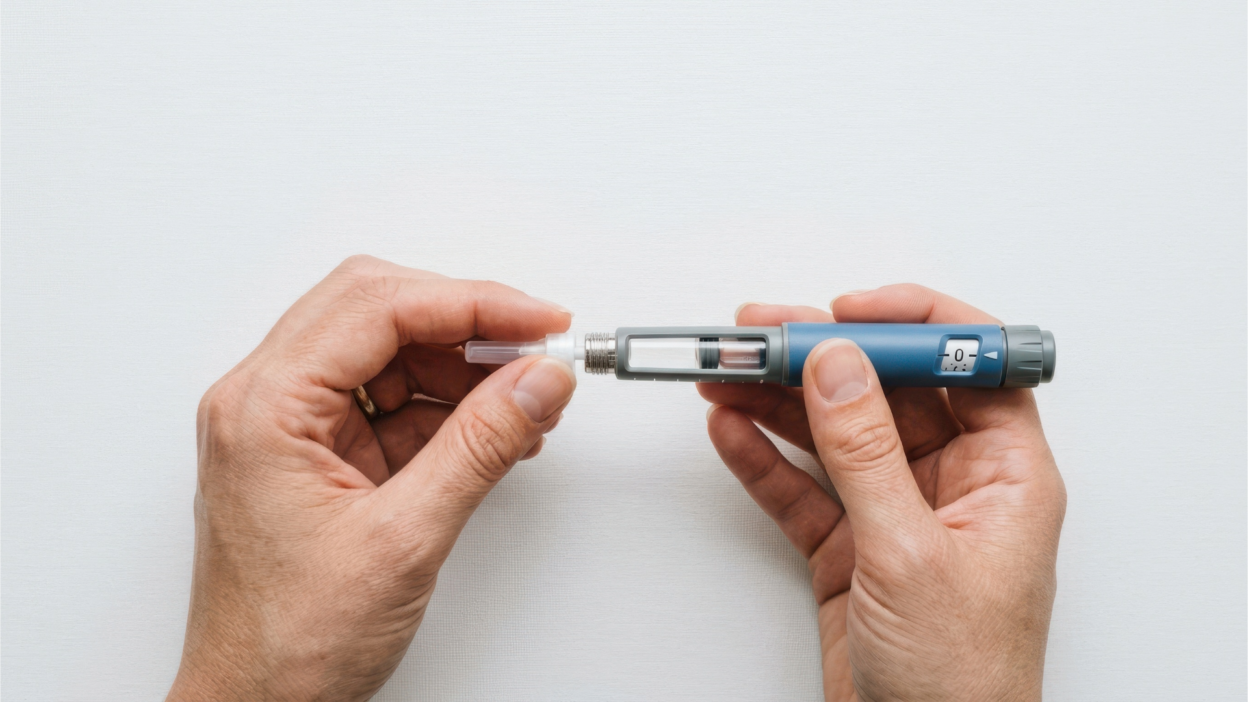
For more than a century, insulin has steadily evolved. We’ve developed faster insulins for meals, longer-acting insulins for basal coverage, concentrated formulations, insulin pumps, continuous glucose monitors (CGMs), and automated insulin delivery systems. But for patients who need basal insulin, one part of treatment has remained remarkably consistent: they generally have to take it every day.
In 2026, that changed.
In March, Novo Nordisk’s Awiqli (insulin icodec-abae) became the first once-weekly basal insulin approved in the United States for adults with type 2 diabetes. Then in September, Eli Lilly announced the U.S. approval of Onswik (insulin efsitora alfa-gobe), another once-weekly basal insulin for adults with type 2 diabetes.
The practical difference is easy to understand. Someone who would normally take approximately 365 basal insulin injections every year could potentially reduce that number to about 52. This is more than two new insulin products. Once-weekly basal insulin is becoming an entirely new therapeutic category.
How Do You Make Insulin Last an Entire Week?
Making insulin last seven days required researchers to fundamentally change how it behaves inside the body.
Awiqli uses strong but reversible albumin binding to create a circulating reservoir that gradually makes insulin available. Its half-life is approximately eight days. Onswik takes a different approach, combining an engineered insulin with part of a human immunoglobulin protein. Its large molecular size and slower clearance produce an approximately 17-day half-life and a very flat pharmacokinetic profile.
Different engineering, same goal: one injection that can provide basal insulin activity across an entire week. But making insulin last seven days is only useful if it can control glucose as effectively as daily insulin.
Can One Injection Really Replace Seven?
The clinical trial programs behind both drugs suggest it can.
In Novo Nordisk’s ONWARDS 1 trial, 984 adults with type 2 diabetes who had not previously used insulin received either once-weekly icodec or once-daily insulin glargine U100. After 52 weeks, mean A1C decreased from 8.50% to 6.93% with icodec compared with 8.44% to 7.12% with glargine. Participants receiving icodec also spent 71.9% of their time within the target glucose range compared with 66.9% with glargine.
Lilly saw a similar result with efsitora. In QWINT-2, A1C decreased from 8.21% to 6.97% with once-weekly efsitora and from 8.24% to 7.05% with once-daily insulin degludec after 52 weeks. Time in range was also slightly higher with efsitora.
QWINT-1 went a step further by testing a simplified fixed-dose strategy. Patients started with 100 units of efsitora weekly and could move through predetermined doses based on fasting glucose. Even with this simplified approach, efsitora remained noninferior to daily glargine for A1C reduction.
The takeaway is straightforward: weekly basal insulin did not achieve convenience by sacrificing glucose control.
Fewer Injections Creates a Different Safety Challenge
Weekly dosing does create an obvious concern. If an insulin remains active for an entire week, a dosing mistake can potentially have longer consequences.
In ONWARDS 1, clinically significant or severe hypoglycemia remained uncommon, although the rate was higher with icodec than with glargine at 0.30 versus 0.16 events per person-year. Across the efsitora QWINT trials in type 2 diabetes, hypoglycemia rates were generally low and comparable with daily basal insulin comparators.
That makes patient selection, titration, glucose monitoring, and education especially important.
It also creates practical questions that pharmacists will increasingly encounter. How do you switch someone from daily basal insulin to weekly insulin? What happens if a patient misses their normal injection day? When should the dose be adjusted? And how do we prevent someone accustomed to daily insulin from accidentally treating a weekly insulin like a daily product?
Awiqli adds another consideration because it is a concentrated U-700 formulation.
A patient who has used insulin for years may actually require more counseling, not less, because the familiar daily routine has fundamentally changed. Medication reconciliation will need to capture the weekly dose and dosing day, and transitions of care will require healthcare professionals to know when the patient’s last weekly injection was administered.
The Bigger Story Is Treatment Burden
This may ultimately be the most important part of these approvals.
A person taking once-daily basal insulin has to remember and administer roughly 365 injections every year. Once-weekly therapy reduces that to approximately 52. That is more than 300 injections removed from a patient’s yearly routine.
Fewer injections will not automatically mean better outcomes. Affordability, insurance coverage, adherence, medication errors, appropriate patient selection, and long-term safety will determine how these products perform in everyday practice.
But they fit into a much larger change happening in diabetes care.
Weekly GLP-1 therapies have already changed expectations around how frequently medications need to be administered. Continuous glucose monitors have reduced the burden of repeated fingersticks for many patients. Automated insulin delivery continues to simplify parts of diabetes management. Now basal insulin itself is moving from daily to weekly.
For pharmacists, that creates an important role. Weekly insulin will require education around switching, dosing, missed doses, hypoglycemia, medication reconciliation, and safe use of concentrated formulations. Making a medication easier to take does not eliminate the need for medication management.
At the beginning of 2026, the United States had no approved once-weekly basal insulin. Within months, two products had entered the picture.
Sometimes a major change in pharmacy does not come from inventing an entirely new therapeutic class. Sometimes it comes from taking something patients have done every day for decades and asking whether it really needs to be done 365 times a year.
For basal insulin, that answer is starting to change.
- FDA. Novel Drug Approvals for 2026 — Awiqli (insulin icodec-abae), approved March 26, 2026.
- Anderer S. FDA Approves Weekly Basal Insulin for Adults With Type 2 Diabetes. JAMA. 2026;335(18):1564.
- Rosenstock J, et al. Weekly Icodec vs Daily Glargine U100 in Type 2 Diabetes Without Previous Insulin (ONWARDS 1). N Engl J Med. 2023;389(4):297-308.
- Bajaj HS, et al. Once-Weekly Insulin Icodec vs Daily Basal Analogues: ONWARDS 1-5 Participant-Level Meta-Analysis. Diabetes Obes Metab. 2024;26(9):3810-3820.
- Wysham C, et al. Insulin Efsitora vs Degludec in Type 2 Diabetes Without Previous Insulin (QWINT-2). N Engl J Med. 2024;391(23):2201-2211.
- Rosenstock J, et al. Weekly Fixed-Dose Insulin Efsitora in Type 2 Diabetes Without Previous Insulin (QWINT-1). N Engl J Med. 2025;393(4):325-335.
- Bergenstal RM, et al. Once-Weekly Insulin Efsitora Alfa: Design and Rationale of the QWINT Program. Diabetes Obes Metab. 2024;26(8):3020-3030.
- Leohr J, et al. Steady-State Pharmacokinetics and Glucodynamics of Once-Weekly Insulin Efsitora Alfa. Diabetes Obes Metab. 2026;28(5):4010-4018.
- Rosenstock J, et al. The Basis for Weekly Insulin Therapy: Icodec and Efsitora Alfa. Endocr Rev. 2024;45(3):379-413.
- Eli Lilly and Company. FDA Approves Onswik (insulin efsitora alfa-gobe) for Adults With Type 2 Diabetes [press release]. September 2026.