
For four decades, ketone testing meant a urine strip or a fingerstick giving a single snapshot, no trend, and only if the patient remembered to check. On August 25, the FDA authorized Abbott’s Libre Duo 10 Day, the first wearable in the U.S. to continuously monitor ketones, and the first anywhere to track glucose and ketones in a single sensor.
Here’s what healthcare professionals need to know.
What it does
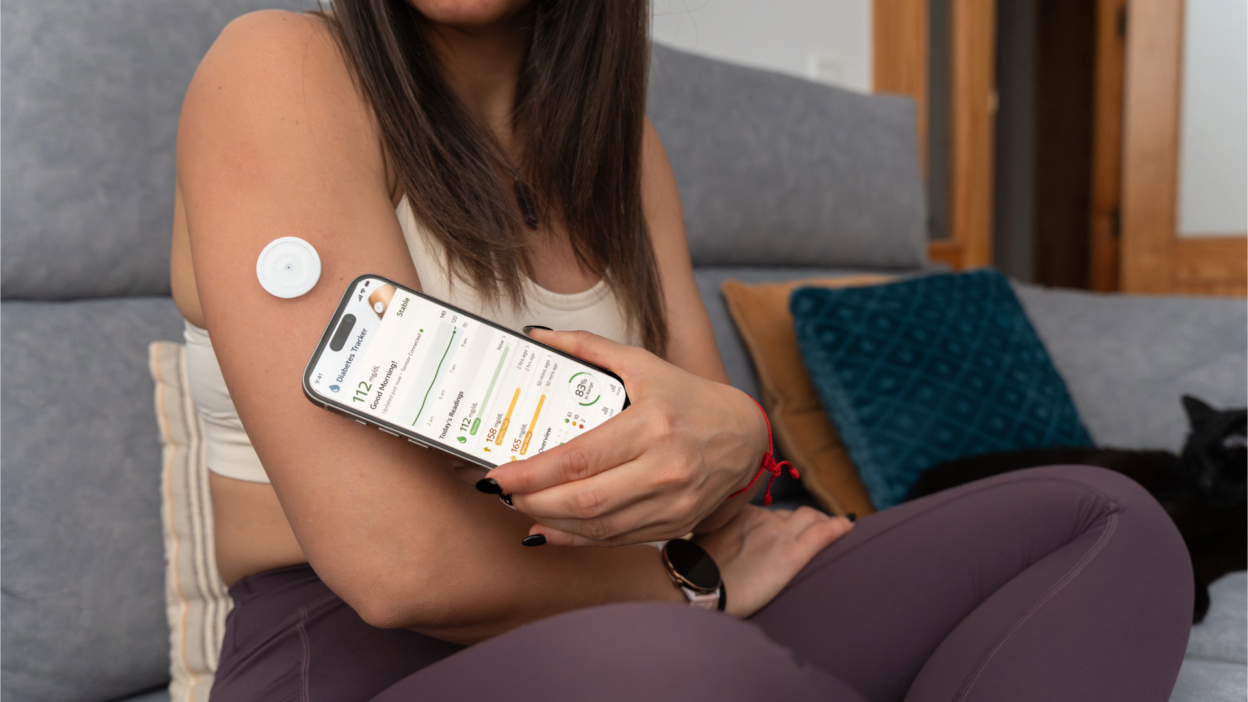
The sensor reads both glucose and β-hydroxybutyrate in interstitial fluid every minute, around the clock, over a 10-day wear period. Data streams to a smartphone app showing current level, trend direction, and an alarm when ketones climb toward a concerning threshold. It’s cleared for anyone with diabetes ages 2 and older.
The population it’s aimed at is specific: people at higher risk of elevated ketones (those on insulin or glucose-lowering agents, including SGLT2 inhibitors).
Why it matters
Glucose and ketones don’t always move together. A patient can be trending toward diabetic ketoacidosis while their glucose still reads near-normal. This is the classic euglycemic DKA picture, and precisely the scenario CGM alone misses. That’s the counseling flag for the SGLT2 inhibitor group.
The adherence gap this fills is well documented. In a real-world analysis of over 2.5 million ketone readings, 92.4% of Libre reader users never recorded a single ketone test. Only 5% tested when glucose exceeded 250 mg/dL. Among those who did register ketones ≥1.5 mmol/L, testing was delayed 5–8 hours, with rechecking rare.
Continuous monitoring changes the equation. In one clinical case, an Abbott ketone alarm firing above 1.0 mmol/L (after an insulin pump cannula dislodged) prompted a cannula swap and supplemental insulin. Ketosis resolved without hospitalization, even as levels climbed past 3.1 mmol/L.
The evidence and the caveats
Authorization came through the FDA’s De Novo pathway (the route for low-to-moderate-risk devices of a new type) following Breakthrough Device designation. The decision rested on six clinical studies enrolling more than 600 participants ages 2 and older. The device accurately tracked clinically meaningful ketone changes across the full wear period, including flagging elevated ketones before DKA onset.
Two things to hold onto. First, ketone readings are meant to be interpreted alongside glucose and symptoms, not as a standalone diagnostic. Second, wear time isn’t guaranteed: Abbott reports that 84.1% of adult sensors and 68.8% of pediatric sensors lasted the full 10 days, meaning roughly one in six adult and one in three pediatric sensors may fall short.
When you’ll see it
Abbott plans a U.S. launch later this year and is working toward integration with automated insulin delivery systems. Alarm-threshold defaults and AID interoperability remain to be finalized in labeling, worth watching before you counsel patients on what to expect.
Sources
Regulatory authorization, De Novo pathway, and Breakthrough Device designation U.S. Food and Drug Administration. Press announcement authorizing Abbott Diabetes Care’s Libre Duo 10 Day through the De Novo premarket review pathway, establishing special controls, and noting prior Breakthrough Device designation. FDA, August 25, 2026. (Primary source — FDA decision announcement.)
Real-world ketone-testing adherence gap (92.4% never tested; 5% tested at glucose >250 mg/dL; delayed testing at ketones ≥1.5 mmol/L) Bergenstal RM, Virdi N, Quadri F, Curl CC, Rahman S. “Real-World Ketone Testing Patterns Among People Using FreeStyle Libre.” Diabetes Technology & Therapeutics, 2026.
Bergenstal RM, Virdi N, Quadri F, Alva S. “Monitoring Ketonemia in People With Diabetes: Preliminary Findings From Real-World Studies.” Diabetes Technology & Therapeutics, 2025.
Clinical case — continuous ketone alarm preventing DKA after cannula dislodgement Kong YW, Jones HC, Ngan J, et al. “Preventing Diabetic Ketoacidosis With Continuous Ketone Monitoring: Insights From a Clinical Research Case.” Diabetes Technology & Therapeutics, 2026.
Sensor wear-time completion rates (84.1% adult / 68.8% pediatric over 10 days) Abbott. Libre Duo 10 Day product information, freestyle.abbott. (Manufacturer-reported data; underlying study not yet independently published. Cite with attribution, e.g., “Abbott reports…”)
Comparative context — 10-day factory-calibrated CGM sensor survival (~87%) Wadwa RP, Laffel LM, Shah VN, Garg SK. “Accuracy of a Factory-Calibrated, Real-Time Continuous Glucose Monitoring System During 10 Days of Use in Youth and Adults With Diabetes.” Diabetes Technology & Therapeutics, 2018.
Background — FDA De Novo pathway and device regulation Aboy M, Crespo C, Stern A. “Beyond the 510(k): The Regulation of Novel Moderate-Risk Medical Devices, Intellectual Property Considerations, and Innovation Incentives in the FDA’s De Novo Pathway.” npj Digital Medicine, 2024.
Background — FDA Breakthrough Devices Program Kadakia KT, Dhruva SS, Ross JS, et al. “FDA Authorization of Therapeutic Devices Under the Breakthrough Devices Program.” JAMA Internal Medicine, 2025.