

Healthcare systems rarely suffer from a shortage of problems worth solving. Frontline workers see inefficient processes, unnecessary delays, poor technology, communication failures, and administrative work every day. They also develop ideas for fixing them.
The harder part is turning those ideas into something bigger than a workaround inside one hospital.
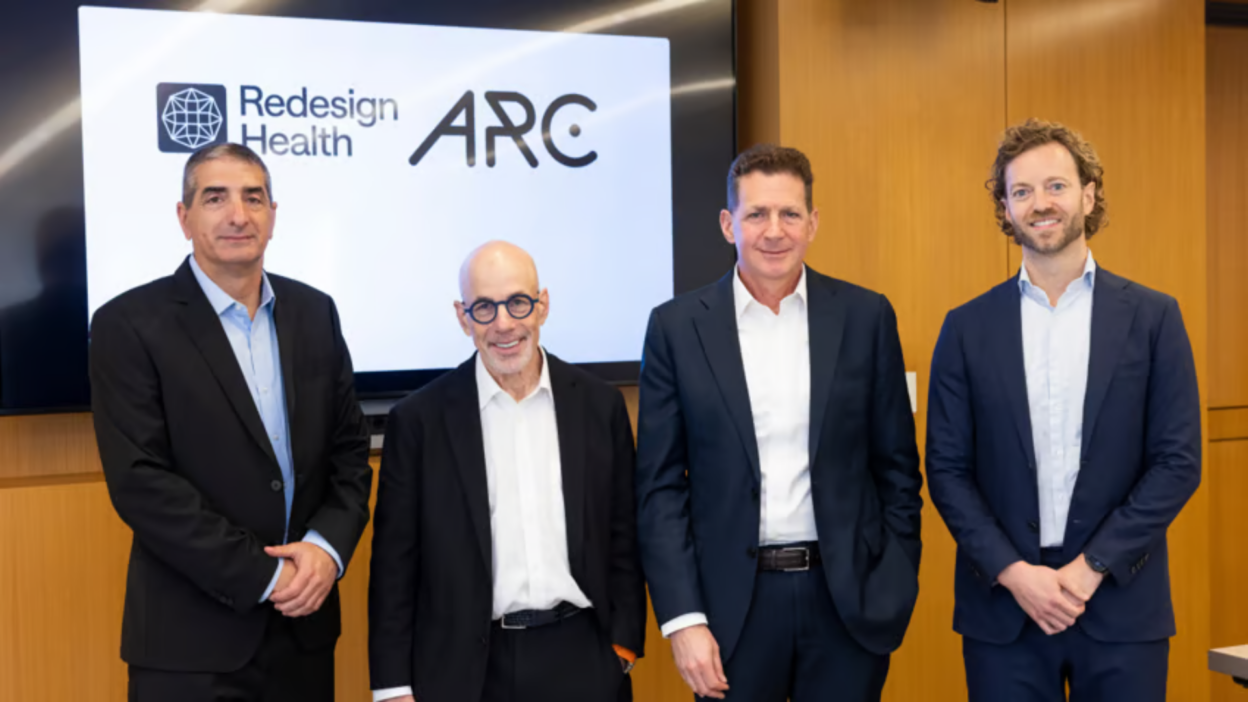
On October 22, Redesign Health and Sheba Medical Center’s ARC Global announced plans to merge. They also agreed to acquire AVIA, pending final approvals. Together, the organizations work with more than 100 health systems across five continents, while companies and products developed through their networks have reached more than 100 million patients. Fierce Healthcare reported that the combined organization carries an approximately $2 billion valuation, citing a source familiar with the deal.
The goal is more interesting than the size of the transaction. The new platform wants to help health systems take problems identified by their own clinicians and operators, build solutions around them, test those solutions inside real healthcare environments, and then scale the strongest ideas across other organizations. Some could eventually become standalone companies.
For pharmacists interested in entrepreneurship, that should sound familiar.
Every pharmacy professional has encountered a workflow and thought, “There has to be a better way to do this.”
The difference is that healthcare organizations are increasingly building infrastructure to do something with that thought.
The problem is not a lack of ideas
Stephen Klasko, former CEO of Jefferson Health and the new chair of Redesign Health’s board, summarized the opportunity in Fierce Healthcare: health systems already have plenty of good ideas. What they often lack is the structure needed to turn those ideas into products that can spread beyond one institution.
That problem shows up everywhere in healthcare.
A nurse notices that discharge delays repeat for the same reasons. A physician sees that important information never reaches the right person at the right time. A pharmacist recognizes that the same medication-access problem creates hours of unnecessary work every week.
The frontline team may even create a temporary solution. Someone builds a spreadsheet, adds a manual checklist, writes a new workflow, or asks IT to make a small change.
Sometimes the workaround helps. However, it usually stays local.
The new Redesign Health and ARC model aims to create a path from observation to implementation. Redesign brings company-building experience, capital, engineering, and AI capabilities. ARC brings a clinician-led innovation model developed at Sheba Medical Center and a global network of health systems. AVIA, if the acquisition closes, adds more than a decade of experience helping U.S. health systems evaluate and implement digital health technologies.
Together, they want to make innovation repeatable rather than accidental.
The person closest to the problem may have the best starting point
This is where the story becomes especially relevant to pharmacists.
Pharmacists see parts of healthcare that many entrepreneurs never experience directly. They see what happens after the prescription is written. They watch prior authorization stall treatment. They see prescriptions routed to the wrong specialty pharmacy. They deal with medication lists that do not match after a hospital discharge. They call prescribers because an electronic workflow failed to communicate something important.
These problems often look ordinary after enough years in practice.
They are not.
They are information.
Someone outside pharmacy may never realize that a particular workflow creates three phone calls for every prescription. They may not know that a certain documentation requirement forces pharmacists to repeat the same task hundreds of times each month. They may never see how a poorly designed electronic health record screen creates medication errors or unnecessary clarification requests.
The pharmacist does.
That is what entrepreneurs sometimes call domain expertise. You understand the problem because you have lived inside it.
The advantage is not that pharmacists automatically know how to build the company. They usually do not. The advantage is knowing which problems are real, how often they occur, who experiences them, and what happens when nobody solves them.
That knowledge can be an excellent place to start.
Healthcare innovation is moving closer to the people delivering care
Redesign Health and ARC are making a deliberate bet that more healthcare technology should originate inside healthcare organizations rather than outside them.
The combined organization plans to embed technologists, product leaders, engineers, and AI researchers alongside health-system clinicians, operators, IT teams, and internal developers. Teams can identify a problem, create a solution around the actual workflow, test it where care is delivered, and then determine whether the solution deserves to scale.
That approach addresses one of healthcare technology’s recurring challenges.
A startup can build an impressive product and still fail because it does not fit the workflow. The technology may add clicks, require data that staff do not have, ignore an important regulatory requirement, or solve a problem that looks important from outside the hospital but does not rank highly for the people doing the work.
Building closer to the frontline can reduce that gap.
Redesign Health’s current transformation model describes the process in three stages: identify where change can create value, equip healthcare teams to build solutions, and scale what works across the organization and the wider network.
For pharmacists, that model should feel intuitive. Start with the real workflow, not the imagined one.
A workaround is not the same thing as a business
Seeing a problem does not automatically mean you have found a company.
That distinction matters.
Pharmacy is full of annoyances. Some are serious enough that people would pay to remove them. Others are inconvenient but too small, too local, or too difficult to solve economically.
Entrepreneurs have to separate the two.
Suppose a pharmacist notices that specialty prescriptions repeatedly arrive at the wrong pharmacy. The first question is not, “Can I build an app?” The better question is how often the problem occurs, what it costs, who suffers from it, and whether another organization has enough incentive to pay for a solution.
The same applies to medication reconciliation, prior authorization, inventory management, refill workflows, patient education, and documentation.
A useful problem usually has several characteristics. It happens often enough to matter. The consequences are meaningful. It affects enough people or organizations to justify attention. Most importantly, someone has a reason to spend money fixing it.
Redesign and ARC have an advantage here because their solutions can be tested inside health systems before anyone tries to turn them into companies. If the idea does not improve the workflow, adoption, cost, or clinical outcome, the organization learns that early.
That validation step is what separates a clever idea from something that may deserve to scale.
Health systems could become customers, builders and owners
The business model also changes the role of the health system itself.
Traditionally, a hospital might identify a problem and then buy technology from an outside vendor. In the new model, the health system can participate earlier. Its workforce can help identify the problem, design the solution, test it, and potentially share in the value if the product expands elsewhere.
ARC has already used this approach. Fierce Healthcare reports that its model has supported more than 130 startups, including three companies that reached unicorn status. ARC’s participating health systems can also hold equity in companies they help create.
That creates an interesting economic loop.
A health system identifies an internal problem. It helps create and validate a solution. Other hospitals experience the same problem and adopt the product. If the solution becomes commercially successful, the original institution may share in some of the value it helped create.
Redesign Health and ARC describe that approach as turning healthcare institutions into engines of innovation and economic growth rather than treating innovation only as another expense.
For healthcare entrepreneurs, that changes where a company can begin. The idea does not always have to start in a garage or accelerator. It may begin during a shift.
Pharmacists already have a laboratory for problem discovery
Many pharmacists believe entrepreneurship starts with an idea for a product.
A better starting point is often the problem.
Your current workplace can become a laboratory for discovering those problems, even if you never plan to build anything while employed there.
Pay attention to repeated friction.
Which medication problem comes up every day? Which task requires a highly trained pharmacist but almost no clinical judgment? Where does information repeatedly get lost? Which process requires three departments because their systems do not communicate? What makes patients give up? What creates phone calls that should not be necessary?
Those questions are more useful than brainstorming random startup ideas.
A pharmacist working in retail may notice completely different problems from one working in specialty pharmacy. A hospital pharmacist may see failures in transitions of care. A managed-care pharmacist may see inefficiencies in utilization management. A long-term care pharmacist may recognize problems around medication coordination and monitoring.
That variation is valuable.
Your unfair advantage may be a problem you have seen 500 times that somebody outside your corner of healthcare does not even know exists.
You do not need to know the solution yet.
Problem discovery comes first.
AI makes frontline knowledge even more valuable
AI is an important part of the Redesign Health and ARC strategy, but the companies are not presenting technology as a substitute for frontline expertise.
They are pairing the two.
The combined organization plans to place engineers and AI specialists inside health systems so they can work with the people who understand the clinical and operational problem. Redesign also brings a proprietary AI operating system built around healthcare research and institutional needs.
That model captures an important lesson about healthcare AI.
The ability to build software is becoming easier. Understanding what deserves to be built remains difficult.
An AI engineer can create an impressive tool quickly. However, someone still needs to know whether it solves a meaningful problem, whether the workflow is safe, what data are required, where the technology should intervene, and what could go wrong.
That is where healthcare professionals bring value.
For pharmacists, AI may lower the technical barrier between seeing a problem and testing a potential solution. You may not need to become a software engineer. You may need to become better at describing the workflow, defining the problem, evaluating the output, and explaining what a successful solution must accomplish.
The more powerful the building tools become, the more valuable good problem selection becomes.
Keep a friction list for one week
There is a simple exercise pharmacists can use to practice this way of thinking.
For one week, keep a friction list.
Every time you catch yourself thinking, “There has to be a better way to do this,” write down what happened. Do not solve the problem yet. Just capture it.
At the end of the week, review the list and rank each problem using three factors: frequency, severity, and number of people affected.
A workflow that is mildly annoying once a month probably belongs near the bottom. A problem that wastes 20 minutes every day across hundreds of pharmacies deserves more attention.
Next, look at the top three problems and ask who experiences the cost.
Does the pharmacist lose time? Does the physician office absorb more work? Does the hospital stay become longer? Does the payer spend more? Does the patient wait longer for treatment? Does a caregiver have to coordinate something the healthcare system should handle?
Once you identify who experiences the pain, ask who has an incentive to fix it.
That exercise does not produce a startup overnight.
It teaches you how entrepreneurs discover problems worth building around.
You do not have to leave healthcare to become entrepreneurial
There is another important lesson in this merger.
Healthcare entrepreneurship is not limited to quitting your job, raising venture capital, and starting a company from scratch.
You can practice entrepreneurship inside an organization.
A pharmacist who identifies a recurring problem, measures it, proposes a better process, tests the idea, and proves that it works is already using many of the same skills.
That person may eventually become a founder. They may also move into innovation, product management, digital health, strategy, operations, or venture building without ever starting their own company.
Large health systems increasingly have innovation centers, venture arms, digital transformation teams, incubators, and partnerships with outside builders. The Redesign Health and ARC merger is another sign that those capabilities are becoming more structured.
For pharmacists interested in nontraditional careers, that creates another search strategy.
Look for healthcare innovation, venture building, clinical product, digital transformation, innovation strategy, health-system ventures, and clinical innovation roles.
Your pharmacy background may become useful because you understand the problems those teams are trying to solve.
The $2 billion valuation is not the most important number
Fierce Healthcare reported that the combined Redesign Health and ARC organization is valued at approximately $2 billion. That figure came from a source familiar with the transaction, rather than from the companies’ official announcement, so it should be viewed as reported deal context rather than a publicly disclosed transaction valuation.
The more meaningful numbers may be elsewhere.
Redesign Health has launched more than 60 companies, according to Fierce Healthcare. ARC has supported more than 130 startups. AVIA’s intelligence platform is used by more than 90,000 health-system leaders and staff to evaluate more than 7,000 digital solutions. Together, the organizations say their network reaches more than 100 health systems across five continents.
That creates a potentially powerful distribution system for innovation.
A problem discovered in one hospital may also exist in dozens of others. A solution tested in one institution could gain access to design partners and potential customers across the network.
That is how a local workflow improvement can begin to look like a company.
The idea still has to work. It has to create enough value to justify implementation. It has to fit real healthcare operations.
But the pathway from frontline observation to scalable business is becoming more visible.
Your next business idea may already be annoying you
Pharmacists often look outside the profession when searching for entrepreneurial ideas.
They study consumer apps, popular startups, artificial intelligence trends, or entirely different industries. Sometimes that produces something valuable.
However, the Redesign Health and ARC strategy suggests another place to look first.
Look at your own work.
Healthcare professionals spend years accumulating information about what does not work. They see the same delays, administrative burdens, clinical risks, and communication failures repeatedly. Most learn to navigate around them because the job still has to get done.
That experience can become invisible after a while.
Do not let it.
The broken medication workflow you solved again this morning may contain more useful market information than another hour spent brainstorming startup ideas.
You may not have the engineering skills to build the solution. You may not know how to raise capital. You may not understand how to create a company.
Those pieces can be learned, hired, or partnered for later.
The first advantage is recognizing a problem worth solving.
Healthcare systems already have people with those insights walking their hallways, clinics, and pharmacies every day. Redesign Health, ARC Global, and AVIA are building a platform around the idea that those people should have a better way to turn what they know into something scalable.
Pharmacists should take the same lesson personally.
The next time you find yourself saying, “There has to be a better way,” do not immediately move on to the next task.
Write it down.
You may be looking at the beginning of something much bigger than a workaround.
Resources & Citations
- Redesign Health and ARC Global. “Redesign Health and ARC Global Merge to Help Health Systems Shape the Future of Healthcare From Within.” October 22, 2026. Official announcement of the merger and planned acquisition of AVIA. The organizations say the combined network works with more than 100 health systems across five continents and has reached more than 100 million patients through products and companies developed across their networks.
- Fierce Healthcare. “Redesign Health, ARC Global Merge in $2B Deal to Accelerate Health System Innovation.” October 22, 2026. Independent reporting on the merger, reported approximately $2 billion valuation, AVIA acquisition, company-building strategy, embedded engineering model, health-system ownership opportunities, and the organizations’ existing venture activity.
- Redesign Health. “Transform: AI-Driven Transformation for Health Systems.” 2026. Redesign Health’s current description of its health-system transformation model, including identifying high-value priorities, building solutions with clinicians and operators, and scaling successful solutions across the ARC network.
- ARC Global. “ARC Summit 2026.” October 2026. ARC’s description of its global innovation ecosystem and focus on healthcare transformation, venture creation, strategic partnerships, AI, digital health, and implementation at scale.