

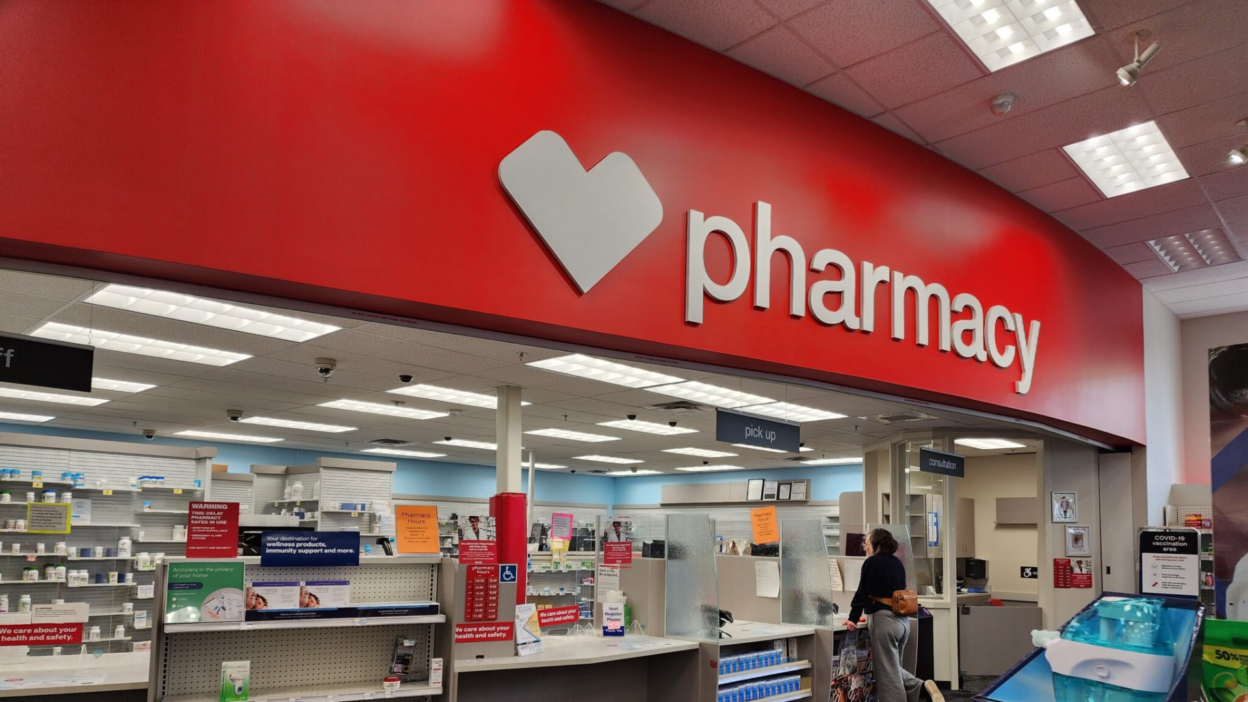
For nearly two decades, CVS Health followed one of the biggest ideas in American healthcare: put more pieces of the system under one roof.
CVS combined retail pharmacies with Caremark, one of the country’s largest pharmacy benefit managers. It later added Aetna, creating a company that could insure the patient, manage the pharmacy benefit, fill the prescription, provide specialty medications, deliver primary care, and increasingly bring care into the home.
Now CVS plans to break much of that structure apart.
On November 4, the company announced plans to separate into two independent, publicly traded companies during the first half of 2028. One company will retain Aetna, CVS Caremark, CVS Specialty, Oak Street Health, and Signify Health. The other will become CVS Pharmacy, combining approximately 9,000 retail pharmacies with mail pharmacy, MinuteClinic and virtual care, plus the Health100 technology business.
The separation still requires final board approval and other customary conditions. Until then, CVS Health will continue operating as one company.
For pharmacy, however, the announcement creates a fascinating question.
What does a company built around 9,000 community pharmacies have to become when it stands more independently as a healthcare business?
That may be one of the most important questions facing community pharmacy over the next decade.
CVS spent years building the opposite model
To understand why the separation matters, it helps to remember what CVS spent years constructing.
CVS bought Caremark in 2007, bringing a massive pharmacy benefit manager together with its retail pharmacy chain. Then came the approximately $78 billion acquisition of Aetna in 2018. Later deals added Signify Health and Oak Street Health, expanding CVS further into home-based assessments and primary care.
The strategy reflected a larger trend across healthcare. Companies wanted to connect insurance, pharmacy benefits, medication distribution, and care delivery.
In theory, greater integration could make healthcare easier to navigate. An insurer could work with a PBM, pharmacy, physician group, and other care services inside the same organization. Data could move across the system. Different businesses could coordinate around the same patient.
CVS became one of the clearest examples of that strategy.
The planned separation now redraws those boundaries.
Reuters reported that the split will return CVS to having a standalone retail pharmacy company for the first time since the Caremark acquisition roughly two decades ago.
However, the future CVS Pharmacy will not look like the drugstore company of 2006.
It will inherit much more than prescription counters.
That is where the story becomes interesting.
The new CVS Pharmacy is really a community healthcare company
CVS is describing the future company as a national retail pharmacy and community healthcare business.
Its assets will include approximately 9,000 CVS Pharmacy locations, mail pharmacy, MinuteClinic, virtual care, and Health100. CVS says the independent company will also continue expanding services delivered by nearly 30,000 pharmacists and pursue partnerships with payers, PBMs, manufacturers, and other parts of healthcare.
That description matters.
If CVS were simply separating its drugstores, the strategic story would be much narrower. Instead, the new company will combine physical pharmacy locations with healthcare delivery and technology.
A patient could potentially interact with the same company through a pharmacist, MinuteClinic visit, virtual care appointment, mail prescription, or digital health platform.
CVS already describes Health100 as a technology business designed around affordability, access, navigation, and chronic-condition management. The company has also connected digital weight-management visits with medication pickup and pharmacist support through its broader retail network.
So the future CVS Pharmacy will have an interesting set of assets.
It has locations.
It has pharmacists.
It has healthcare professionals through MinuteClinic.
It has virtual care.
It has medication fulfillment.
It has technology.
The strategic challenge will be turning those pieces into a healthcare business that creates value beyond prescription volume alone.
Retail pharmacy economics make that question urgent
Community pharmacy has been under pressure for years.
Pharmacies face reimbursement challenges, competition from online and mail-order models, changing consumer behavior, and continued pressure on the economics of dispensing. Reuters noted that CVS drugstores have faced payment pressure and competition from online pharmacies, while the growth of prescription delivery can reduce the store visits that once generated additional retail purchases.
CVS has already been trying to change the economics.
Its CostVantage reimbursement model, introduced before the separation announcement, was designed to move retail pharmacy toward a clearer cost-plus structure. Under that model, reimbursement can incorporate the pharmacy’s drug acquisition cost, a defined markup, and a fee tied to pharmacy services.
That addresses one part of the challenge.
The larger question remains: what is the economic value of having thousands of pharmacists and pharmacies embedded in communities across the country?
If the answer is only prescription fulfillment, the business has to compete heavily on efficiency, reimbursement, price, and volume.
If the pharmacy becomes a platform for care, the value equation changes.
Then the physical location is not simply where inventory sits.
It becomes healthcare infrastructure.
Nine thousand locations can be more valuable than nine thousand dispensing sites
CVS has something that many healthcare companies would have to spend billions of dollars trying to recreate: physical access to communities.
Its network includes approximately 9,000 retail locations. CVS says a pharmacy sits within ten miles of most Americans.
That scale creates possibilities beyond dispensing.
Imagine using those locations for vaccinations, chronic-disease monitoring, point-of-care testing, medication management, preventive services, treatment navigation, and other forms of accessible care.
Some of that already happens today.
The more interesting question is whether those services can evolve from secondary activities around the prescription counter into a larger part of the business model.
CVS itself is signaling that direction. In announcing the split, CEO David Joyner described CVS Pharmacy as a potential “front door” to healthcare and emphasized its position as a frequently accessed consumer health touchpoint. The company also said the independent pharmacy business would continue expanding pharmacist-delivered services.
That phrase, front door, deserves attention.
A front door is where someone enters the healthcare system.
Historically, the pharmacy has often sat near the end of the journey. A patient sees a prescriber, receives a prescription, and then arrives at the pharmacy.
A community healthcare model could move the pharmacy earlier.
The pharmacist becomes more important if the business sells care
This separation could make the value of the pharmacist easier to see.
In a traditional dispensing model, the pharmacist is essential to operating the prescription business. The economics still revolve largely around the product moving through the pharmacy.
A broader healthcare model asks the pharmacist to create value in additional ways.
The pharmacist can help manage medications, identify gaps in care, support chronic disease, administer vaccines, resolve access problems, educate patients, and coordinate with other healthcare professionals.
Those activities can matter even when they do not produce another prescription.
CVS recently began testing a chronic-care model in five Michigan pharmacies. The company is exploring whether pharmacists can help patients monitor measures such as blood pressure, glucose, and cholesterol while playing a larger role in managing chronic conditions. CVS has also discussed with Medicare officials how pharmacists could potentially expand access to lower-cost care.
A pilot does not prove that these services will become a major national business.
However, the timing is notable.
CVS is simultaneously testing how pharmacists might manage more healthcare while preparing to create an independent pharmacy company.
The next several years could reveal whether those two ideas can become economically connected.
Technology becomes much more important in that model
Health100 moving with CVS Pharmacy is another detail worth watching.
CVS describes Health100 as an AI-focused technology business designed to improve affordability, access, navigation, and healthcare experience. Its consumer platform can combine information across insurers, providers, and pharmacies while helping people navigate care and manage chronic conditions.
That creates an interesting combination.
CVS Pharmacy will have physical locations and a digital layer.
The stores can provide human access. Technology can help identify needs, coordinate information, personalize interactions, and continue supporting the patient after they leave.
That could make the pharmacist more useful too.
Imagine a pharmacy system that knows a patient is overdue for a health screening, struggling with medication adherence, facing a price increase, or showing signs that a chronic condition needs attention.
Technology identifies the opportunity.
The pharmacist provides judgment.
Virtual care handles issues that do not require a physical encounter.
MinuteClinic manages another category of care.
The pharmacy fulfills medication when treatment is necessary.
That is much closer to a healthcare platform than a conventional drugstore.
Whether CVS can execute that model profitably is still an open question. However, the asset mix gives the independent company more options than dispensing alone.
The specialty pharmacy decision may be just as important
One part of the separation deserves particular attention from pharmacists.
CVS Specialty is not going with CVS Pharmacy.
It will remain with the healthcare solutions company alongside Aetna, Caremark, Oak Street Health, and Signify Health.
CVS has not said that this decision represents a judgment about one form of pharmacy being more valuable than another. It would be inappropriate to invent a motive.
Still, pharmacists should watch how the two businesses develop because retail and specialty pharmacy increasingly operate in different economic and clinical environments.
Specialty medications often treat rare or complex conditions. They can involve high costs, limited distribution networks, benefit verification, manufacturer relationships, prior authorization, financial support, and intensive clinical management. CVS says its specialty operation serves roughly two million patients and includes dedicated teams supporting complex and rare conditions.
Those capabilities remain alongside the PBM and insurer.
Traditional retail pharmacy, meanwhile, moves into the independent CVS Pharmacy company with community care, mail pharmacy, and technology.
That creates two different pharmacy businesses built around very different parts of the medication system.
The distinction will be worth studying.
Retail pharmacy now has to answer a harder question about value
Suppose you removed prescription count from the conversation.
What remains valuable about a pharmacy?
Location is valuable.
Patients already know where the pharmacy is, and many interact with it regularly.
Trust can be valuable. A patient may have known the same pharmacist for years.
Medication expertise creates value because pharmacists understand treatment, access, safety, adherence, and drug interactions.
Care delivery creates another layer. Pharmacies can provide vaccines, testing, monitoring, education, and other services.
Technology and data may make those interactions more personalized.
Convenience matters too. Few healthcare locations combine extended hours, medication access, consumer health products, and professional expertise in one place.
The challenge is turning those assets into sustainable revenue.
That is the economic question hiding underneath the CVS separation.
A pharmacy can possess enormous healthcare value without automatically having a business model that captures it.
The next era of community pharmacy will depend on closing that gap.
The independent company may gain more freedom to partner
CVS also says separation could give each company greater strategic focus and flexibility.
For CVS Pharmacy, one interesting part of that flexibility may involve partnerships.
The company specifically said the independent pharmacy business plans to pursue a wider set of relationships across the healthcare system, including with payers, pharmacy benefit managers, and manufacturers.
That could matter.
Under the current structure, CVS Pharmacy shares a corporate parent with one of the country’s largest PBMs and one of its largest insurers.
After separation, CVS Pharmacy would stand independently from Caremark and Aetna.
That could create a different commercial environment for working with other healthcare organizations. Exactly how those partnerships develop remains unknown.
Still, imagine the potential customer base for a 9,000-location healthcare network.
Health plans may want pharmacy-based services for members. Employers may want convenient chronic-care programs. Manufacturers could need patient-support infrastructure. Health systems might need community follow-up after discharge. Digital health companies may need physical locations where virtual services connect with in-person care.
The pharmacy network becomes infrastructure that other healthcare companies can potentially plug into.
That could be a much broader business than prescription fulfillment.
The store itself may have to evolve
If CVS Pharmacy wants to become a community healthcare company, the physical store may eventually need to change too.
Many pharmacies were designed primarily around dispensing and retail shopping.
A care-delivery model creates different requirements.
Patients may need private spaces for consultations. Pharmacists need enough staffing and protected time to provide services. Technology has to reduce repetitive operational work instead of adding more tasks.
Technicians may need expanded roles. Scheduling systems become more important. Clinical documentation has to connect with other parts of healthcare.
Most importantly, the pharmacy cannot simply add more services to an unchanged workload.
If pharmacists spend more time managing chronic disease, providing preventive care, interpreting data, or coordinating treatment, someone or something has to absorb the operational work that currently consumes much of the day.
That makes automation and workflow redesign essential.
A future pharmacy cannot practice at the top of the pharmacist’s training while preserving every process built around the old dispensing model.
The business model and the operating model have to change together.
This could also expand what a community pharmacy career looks like
The implications go beyond pharmacists working inside stores.
A standalone CVS Pharmacy built around care, technology, and services would need people to design and operate those systems.
That could create more work around clinical product development, chronic-care strategy, digital health, population health, pharmacy operations, payer partnerships, patient engagement, analytics, virtual care, medication access, and implementation.
Pharmacists could fit into many of those functions.
Someone has to decide which care models pharmacists can deliver. Another team needs to measure outcomes. Product teams must build the software. Operations leaders have to determine staffing. Business teams need to sell services to payers or employers.
Pharmacists who understand both pharmacy workflow and healthcare strategy could become especially valuable.
That reflects a larger trend throughout the profession.
Some of the most interesting pharmacy careers may increasingly sit around pharmacy rather than directly behind the counter.
A company with nearly 30,000 pharmacists also has a powerful source of domain expertise.
The question is how effectively it can turn that expertise into products, services, and care models.
The split does not prove that vertical integration failed
It would be easy to interpret the announcement as a simple verdict on CVS’s strategy over the last 20 years.
The reality is more complicated.
CVS says the separation follows a strategic review and argues that both businesses can operate with greater focus, agility, and independent capital allocation. The company also says the healthcare solutions business will retain important integration across Aetna, Caremark, specialty pharmacy, primary care, and home-based services.
Reuters noted that regulatory scrutiny of vertically integrated healthcare companies has increased, while CVS has also faced challenges involving medical costs, pharmacy reimbursement, online competition, and other business pressures. CVS executives have said the company’s recent operating improvements created an opportunity to pursue the separation.
So this is not healthcare suddenly abandoning integration.
One large integrated company is drawing a new line through its assets.
For pharmacists, the more useful question is what that new line tells us to watch.
Insurance, PBM services, specialty pharmacy, primary care, and home health stay together.
Retail pharmacy, mail pharmacy, clinics, virtual care, and consumer health technology form another company.
Each side now has to prove what that combination can become.
CVS Pharmacy will have to define what a pharmacy company is worth
The separation is expected to take more than a year. CVS is targeting completion in the first half of 2028, subject to regulatory, tax, SEC, and board-related conditions.
That gives pharmacists time to watch the strategy unfold.
Will CVS Pharmacy expand care delivery?
Will pharmacist-led services become a meaningful revenue stream?
How will MinuteClinic and virtual care connect with the pharmacy?
What will Health100 add to the patient relationship?
Which partnerships will the independent company pursue?
How will it compete against mail-order, online, transparent-cash, and direct-to-consumer pharmacy models?
Most importantly, what will CVS decide is the core value of having 9,000 pharmacies in American communities?
That answer may matter far beyond CVS.
Independent pharmacies, regional chains, grocery pharmacies, health systems, employers, payers, and technology companies are all wrestling with versions of the same question.
The prescription remains important.
The pharmacist remains important.
The physical pharmacy can remain important too.
However, the economic model surrounding all three is changing.
Ask what remains when prescription volume disappears
There is a useful exercise hidden inside the CVS announcement.
Imagine a pharmacy where prescription volume is no longer the primary measure of value.
What assets remain?
You still have a healthcare professional with deep medication expertise. You have a physical location patients can access. You may have years of patient relationships and medication history. You have opportunities to identify care gaps, improve adherence, manage chronic conditions, solve access problems, provide preventive care, and connect patients with the rest of healthcare.
You also have something many digital health companies desperately want: regular real-world contact with patients.
Now ask which of those assets someone would pay for.
That is the harder question.
Community pharmacy has spent years proving that pharmacists can do more.
The next phase requires proving how those capabilities become a sustainable business.
CVS is about to test that question at enormous scale.
After nearly two decades of building one of America’s most vertically integrated healthcare companies, CVS plans to send its retail pharmacy network out as the center of a separate public company.
The new CVS Pharmacy will still fill an enormous number of prescriptions.
Its future, however, may depend on proving that a pharmacy can be worth much more than the prescriptions it fills.
And that question could help define what community pharmacy becomes next.
Resources & Citations
- CVS Health. “CVS Health Announces Intent to Create Two Distinct Leaders in Healthcare.” November 4, 2026. CVS announced plans to separate into two publicly traded companies in the first half of 2028. The future CVS Health will include Aetna, CVS Caremark, CVS Specialty, Oak Street Health, and Signify Health. CVS Pharmacy will include approximately 9,000 retail pharmacies, mail pharmacy, MinuteClinic and virtual care, and Health100.
- CVS Health Corporation. Form 10-Q for the quarter ended September 30, 2026, filed November 4, 2026. The filing confirms the planned structure, expected timing, required conditions, and the company’s current pharmacy and healthcare operations.
- Reuters. “CVS to Break Up $117 Billion Business, Separating Pharmacies From Insurance; Shares Fall.” November 4, 2026. Reuters reported on the planned separation, CVS’s history of vertical integration, current pressures facing U.S. drugstores, investor reaction, and the future leadership and asset structure of both companies.
- Reuters. “How CVS Built a Healthcare Empire It Now Plans to Split.” November 4, 2026. Reuters traces CVS’s expansion through Caremark, Aetna, Signify Health, Oak Street Health, and other acquisitions that created its integrated healthcare model.
- CVS Health. “CVS Specialty Pharmacy Services.” Current company overview. CVS describes its specialty operation as supporting patients with rare and chronic conditions through complex medication access, payer coordination, limited-distribution therapies, clinical support, and specialized care teams.
- CVS Health. Third Quarter 2026 Results. November 4, 2026. CVS reported continued investment in consumer health services, Health100, retail pharmacy, and integrated medication and care experiences ahead of the proposed separation.