

Drug Topics published a piece this week that every pharmacist should sit with. It features Hedva Barenholtz Levy, PharmD, BCPS, BCGP, director of HbL PharmaConsulting in St. Louis, Missouri, who has been conducting in-home medication reviews for older adults since the late 1990s. She is not a niche outlier. She is a prototype.
What Levy Figured Out Before Almost Anyone Else
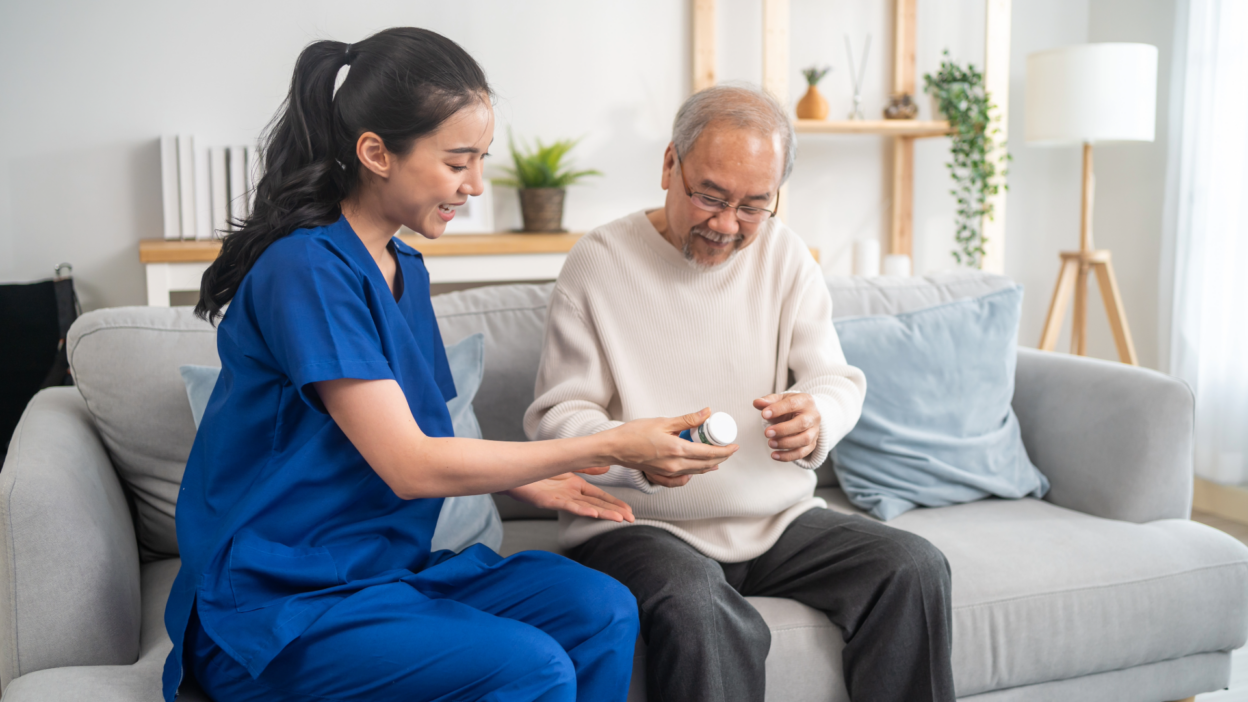
Levy founded HbL PharmaConsulting in 1995, initially to promote safe and effective medication use among older adults. Within a few years, she had developed a distinctive service: traveling to patients’ homes and sitting at their kitchen tables, observing how and where medications are stored, watching how patients actually manage their daily routines, and uncovering the medication risk that is completely invisible in a clinic or pharmacy setting.
The insight behind the model is deceptively simple: the place where a patient lives is not a neutral backdrop to their medication management. It is a clinical environment with its own hazards, its own patterns, and its own information that no amount of electronic health record review or office visit documentation can replicate.
“There’s not a patient with whom I would speak and not find multiple issues to help educate them on, be it nonprescription or prescription medication use, and ways to optimize that drug therapy,” Levy said in her Drug Topics interview.
She describes sitting at the kitchen table, seeing the ten bottles lined up near the stove, noticing that some of them are from three different pharmacies, observing that the patient has organized their daily medications in a manner that bears no relationship to the prescribing instructions, and understanding for the first time why that patient’s blood pressure has been uncontrolled for two years despite “adherent” prescription refills. The prescription was being filled. The medication was not being taken correctly. Nobody had ever gone to the kitchen to see why.
Levy has developed and validated a self-administered Medication-Risk Questionnaire to identify older adults at high risk of medication-related problems in community settings. She has published extensively on topics including nonbenzodiazepine hypnotics in older adults, the Beers Criteria and beyond-Beers frameworks for inappropriate prescribing, fall-related medication risk, and the prescribing cascade. She is a past president of the American Society of Consultant Pharmacists and the author of “Maybe It’s Your Medications: How to Avoid Unnecessary Drug Therapy and Adverse Drug Reactions,” published in 2023.
She built this practice, largely alone, in the late 1990s, when nobody else was doing it this way. She has been doing it for thirty years.
The Structural Shift Levy Anticipated
Healthcare is moving to the patient. Not metaphorically. Literally.
Remote patient monitoring, telehealth, home-based chronic care management, in-home medication review, AI-assisted continuous monitoring, and wearable health technology are collectively relocating the practice of medicine from the clinic to wherever the patient actually lives. Every major healthcare system in the country is building infrastructure to extend clinical reach into the home setting, because the outcomes data on home-based care is increasingly unambiguous and the economics of preventing one hospitalization dwarf the cost of delivering care proactively in the home.
The home-based primary care model Levy has worked within for thirty years is now a documented clinical standard. Ninety-six medically complex patients with an average age of 82, an average of 13 chronic conditions, and a median of 17 medications were assessed in a home-based primary care pharmacist model pilot published in a peer-reviewed journal. Over a four-month period, pharmacists made 175 medication recommendations, of which 30.3% were accepted, with the most common actions being medication discontinuation, deprescribing, and dose adjustments. The patients were still alive, living at home, managing 17 medications with conditions that included the full complexity of late-life chronic disease.
The clinical reality those numbers represent: no other provider in that patient’s care team had systematically reviewed 17 medications in a frail 82-year-old with 13 chronic conditions before the pharmacist showed up. That is not a rare situation. It describes the majority of home-based primary care patients in the United States.
The Demographic and Economic Tailwinds
The structural tailwinds behind home-based pharmacist practice are not speculative. They are documented, funded, and accelerating.
73 million Baby Boomers are aging in place. The 65-and-older population is projected to reach 80 million by 2040. The majority of that population has multiple chronic conditions, takes multiple medications, and receives the majority of their care at home between clinic visits. The combination of medication complexity and reduced clinical oversight that accompanies aging in place is precisely the environment where pharmacist-led in-home medication review produces the most clinical impact.
The economics are equally clear. The average cost of a preventable adverse drug event in a patient over 65 is $16,000. The cost of a hospital readmission in this population averages $18,000 to $26,000 depending on condition. The cost of a pharmacist home visit for medication review runs $150 to $500 per visit depending on complexity and billing model. The math does not require a health economist to interpret.
Hospital-at-home programs have expanded from fewer than 20 U.S. sites in 2019 to over 300 active programs across more than 125 health systems as of 2025. Pharmacy-at-home is following that trajectory, with ASHP and ASCP both documenting expansion of pharmacist home visit services as a component of comprehensive care management programs.
The regulatory infrastructure is arriving in parallel. The CMS ACCESS Model, covered in a prior issue of this newsletter, explicitly pays for outcomes rather than office visits, creating financial incentive for the kind of between-visit clinical monitoring that home-based pharmacist services provide. The RPM billing codes covered in the Remote Patient Monitoring issue are paying for continuous monitoring of the same patients Levy has been visiting in their homes for thirty years, now supplemented by wearable blood pressure cuffs and connected glucometers that transmit data to the reviewing pharmacist between home visits.
The Clinical Intelligence That Only a Home Visit Reveals
Levy describes what she finds in patients’ homes in terms that every pharmacist will recognize as clinically significant and almost never surfaced by standard care.
She sees medications stored incorrectly, including refrigerated medications kept at room temperature and light-sensitive drugs stored in direct sunlight on a windowsill. She sees pill organizers that don’t match the current prescription schedule because the patient never got updated instructions after a dose change. She sees over-the-counter medications, supplements, and herbal products that the prescribing physician does not know about and that interact meaningfully with the prescription regimen. She sees cognitive deficits that show up as medication management failures before they appear in any documented clinical assessment.
“Visiting patients in their homes — sitting at the kitchen table, seeing how and where medications are stored, and understanding the daily routine — reveals barriers to safe medication use that are invisible in traditional clinic or pharmacy settings,” Levy explained.
The information that a home visit surfaces cannot be retrieved through a medication reconciliation at a clinic visit. The patient who says “I take all my medications as prescribed” during a clinic visit is not lying. They are reporting their understanding of what they do. The pharmacist who sits in their kitchen, opens the cabinet, and counts the remaining pills sees the difference between reported adherence and actual adherence in a way that no medication possession ratio can capture.
Building Toward This Model: The Two Pathways
For a pharmacist who wants to build competency in home-based pharmacy care, two distinct pathways exist depending on their current practice setting.
The community pharmacy pathway: Identify home health agencies, adult day care programs, senior centers, and home-based primary care practices in your service area. These organizations are already seeing the patients who need in-home medication review. A collaborative practice agreement with a home-based primary care practice allows a clinical pharmacist to provide billable medication review services for their patient panel, documented through the practice’s electronic health record and billed under the CPT codes for comprehensive medication management or, where applicable, the remote therapeutic monitoring codes that cover medication adherence review.
The health system pathway: ASHP’s Practice Advancement Initiative 2030, covered in a prior issue of this newsletter, explicitly recommends expanding pharmacist roles in transitions of care and home-based monitoring. Health systems building hospital-at-home programs are actively identifying the clinical pharmacy component they need. A pharmacist who brings both the clinical competency in high-risk medication management for elderly patients and a working knowledge of the home visit model is the candidate those programs are looking for.
The American Society of Consultant Pharmacists has published competency frameworks for pharmacist home visit services and maintains a directory of members who practice in this setting. ASCP’s senior care pharmacist credential, the BCGP, which Levy holds, is the credentialing pathway that formally recognizes expertise in medication management for older adults.
The Broader Principle This Model Demonstrates
Levy’s practice is, at its core, a proof of concept for the entire direction this newsletter has been mapping across dozens of issues over the past year.
The pharmacist who waits for the patient to appear at the counter is dependent on the patient making the visit, filling the prescription on schedule, and asking the question. The pharmacist who goes to the patient removes every one of those dependencies. They see the patient at the moment of risk, in the environment where the risk lives, with the complete picture of what is actually happening rather than what the patient believes is happening.
That proactive, outward-facing model is not only better clinical practice. It is a more defensible business model in a market where mail-order, direct-to-patient platforms, and AI-enabled dispensing automation are systematically reducing the value of passive prescription dispensing. The pharmacist who sits at the kitchen table cannot be replaced by an app, an algorithm, or a mail-order fulfillment center.
The demographic tailwind is enormous. The economic case is documented. The regulatory infrastructure is arriving. The technology is making continuous home-based monitoring increasingly practical. And a pharmacist in St. Louis has been running the model successfully since 1995.
The question is not whether home-based pharmacy practice is where the profession’s most resilient future lies. The evidence on that question is settled. The question is whether each pharmacist reading this newsletter is building toward it or waiting for someone else to define what it looks like.
Your Action This Week
Identify the pharmacist in your market who is already doing in-home medication review or home-based clinical pharmacy services. They may be affiliated with a home health agency, a hospice, a home-based primary care practice, an Area Agency on Aging, or a senior living community.
Reach out, ask to observe a visit, and ask what they wish they had known before they started. The pharmacists who get to the home first are not necessarily the ones with the deepest clinical knowledge. They are the ones who decided to move toward the patient before everyone else did.
The visit happens at the kitchen table. The risk is already there. The question is whether a pharmacist shows up to see it.
Sources: Drug Topics (In-Home Care and Medication Review Keeps Patients Safe: Interview with Hedva Barenholtz Levy, PharmD, July 2026), HbL PharmaConsulting / barenholtzlevy.com (Practice Profile and Publications), University of Michigan College of Pharmacy (Hedva Barenholtz Levy Alumni Profile), PMC (Pharmacist Medication Review: An Integrated Team Approach to Serve Home-Based Primary Care Patients, PMC8148331), ASCP (Senior Care Pharmacist and BCGP Credential Overview), ASHP (Hospital-at-Home Program Development and Pharmacy Role), Skyhorse Publishing (Maybe It’s Your Medications: How to Avoid Unnecessary Drug Therapy and Adverse Drug Reactions, Levy H.B., 2023), American Journal of Health-System Pharmacy (Home-Based Pharmacist Services in Complex Patients, systematic review)