
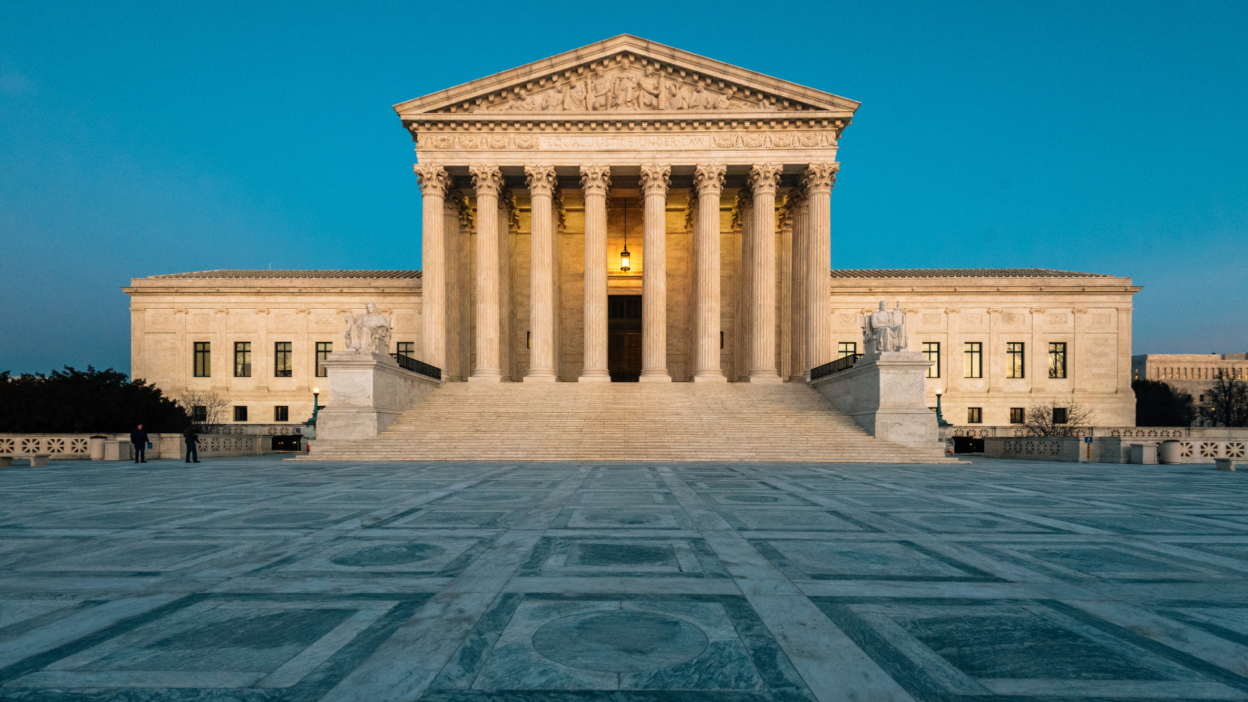
On June 4, 2026, the U.S. Supreme Court issued a unanimous decision in Hikma Pharmaceuticals USA Inc. v. Amarin Pharma, Inc. Justice Ketanji Brown Jackson wrote for all nine justices, reversing a Federal Circuit ruling, and in doing so issued the clearest judicial statement the generic drug industry has ever received on skinny label protection. The pharmacy implications arrive immediately.
What the Case Was Actually About
Amarin’s Vascepa, containing the active ingredient icosapent ethyl, received FDA approval in 2012 for one indication: treating severe hypertriglyceridemia, a condition where blood triglyceride levels are dangerously high. Amarin called this the SH indication.
In 2019, the FDA approved Vascepa for a second and commercially far more significant use: reducing cardiovascular risk in patients already taking statins who have elevated triglycerides. Amarin called this the CV indication and obtained method-of-use patents protecting it.
Hikma had already submitted an abbreviated new drug application for generic icosapent ethyl in 2016. When Amarin’s SH-indication patents were later invalidated and the new CV patents were secured, Hikma responded by filing what is called a section viii statement, seeking approval of a skinny label that covered only the now-unpatented SH indication while carving out the CV indication entirely.
The FDA approved Hikma’s generic icosapent ethyl in 2020 with that skinny label and assigned it an AB rating, designating it as therapeutically equivalent and fully interchangeable with Vascepa when used according to its labeling. Amarin sued anyway, arguing that the totality of Hikma’s communications, including the label, a patient information leaflet, Hikma’s website, and press releases that described the product as a “generic Vascepa” and cited total Vascepa sales figures for both indications, actively induced infringement of the CV-indication patents.
The District of Delaware dismissed the case. The Federal Circuit revived it in 2024, finding it plausible that a physician could read the totality of Hikma’s materials as encouraging use of the generic for the patented cardiovascular indication. The Supreme Court stepped in, granted certiorari in January 2026, heard argument April 29, and ruled June 4.
What the Court Actually Held
The Supreme Court reversed unanimously and did so in just five weeks after argument, a strong signal that the entire bench agreed with Hikma’s and the generic industry’s position.
The Court framed the central question precisely: “The central question is whether Amarin plausibly alleged that Hikma actively encouraged infringing uses, not merely whether doctors could plausibly read the alleged statements as instructions to infringe.” The Federal Circuit’s “could be read” standard was explicitly rejected.
The Court found Amarin’s allegations insufficient on three specific grounds.
First, generic labeling must mirror the brand’s label by statute, with an exception only for carved-out uses. Hikma’s label reflected that statutory requirement. Compliance with federal law cannot, without more, establish liability for inducement.
Second, calling a product the “generic equivalent” of its reference drug is, as the Court recognized, a factually accurate description of its regulatory status and normal industry practice. Hikma’s press releases using that language did not cross into active encouragement of infringement.
Third, Hikma’s press releases citing total Vascepa sales figures for both indications were, in the Court’s words, “the vaguest of vague” statements. A prescriber would have to review those press releases, understand that the figures referred to combined-indication sales, and draw from that fact a subtle encouragement to prescribe the generic for the carve-out indication. The Court held that chain of inference too attenuated to survive a motion to dismiss.
The Court rejected the theory that omissions establish liability. Hikma’s failure to affirmatively clarify in every communication that its drug was approved only for the less commonly known SH indication, not the more prominent CV indication, did not constitute active inducement. Otherwise, ordinary merchants could become liable for any misuse of their goods and services no matter how attenuated their relationship with the wrongdoer.
The ruling does not eliminate the inducement theory entirely. A brand manufacturer can still pursue an induced infringement claim if it plausibly alleges specific, affirmative conduct clearly designed to promote the carved-out use. Active encouragement can be explicit or implicit, but it must be clear and affirmative. What Amarin alleged did not meet that bar.
Why This Matters for Generic Drug Access
The practical outcome of the ruling is substantial.
The decision is a triumph for the generic drug industry and its use of skinny labels, which allow cheaper versions of drugs to be marketed for specific indications without infringing patents protecting other uses. Patients For Affordable Drugs CEO Merith Basey described the outcome directly: the ruling “protects an important pathway for bringing lower-cost generic medicines to patients.” Had the Court ruled the other way, generic manufacturers could have faced increased legal risk when following the rules established by Congress and the FDA.
The stakes were specific and high. Vascepa’s CV indication is its commercially dominant use. Most of the prescriptions written for icosapent ethyl in clinical practice were for cardiovascular risk reduction in statin-taking patients with elevated triglycerides, a use that became well-established after the REDUCE-IT trial demonstrated a 25% relative risk reduction in major cardiovascular events. A ruling that made skinny-label generics liable for induced infringement of that indication would have effectively blocked competition for the drug’s primary clinical use until the CV patents expired.
The decision also carries implications beyond Vascepa. The logic is expected to carry over to biosimilar products under the Biologics Price Competition and Innovation Act, where biosimilars approved for a subset of the reference product’s indications face similar carve-out decisions. Where a biosimilar carries a skinny indication list, the Hikma ruling now shapes how parties assess the risk of launch communications, indication-specific marketing, and post-marketing conduct.
What a Skinny Label Actually Looks Like at Your Counter
For most pharmacists, the abstract patent law analysis matters less than the practical clinical question: what does a skinny-labeled generic mean for the patient in front of you?
Here is the specific scenario this ruling makes more common. A patient presents a prescription for icosapent ethyl 1g capsules, QD, for a 55-year-old patient on atorvastatin with triglycerides of 220 mg/dL. The indication on the prescription, if stated at all, is cardiovascular risk reduction. You reach for the AB-rated generic icosapent ethyl. That generic’s label covers severe hypertriglyceridemia, not cardiovascular risk reduction. The drug is the same molecule. The dose is the same. The pharmacopeial specifications are identical. But the generic’s FDA-approved labeling does not cover the indication for which the prescription was written.
This is not an error by anyone in that scenario. The FDA approved the generic’s skinny label specifically to allow competition while protecting Amarin’s patented CV indication. The prescriber may have written for Vascepa and the substitution occurred automatically at point of dispensing per state law. The patient has no reason to know any of this has happened.
The pharmacist is the only person in that chain who sees the complete picture: the generic’s actual label, the prescription indication, and the patient’s full medication profile. All 50 states and the District of Columbia permit or require medical providers to substitute the brand-name drug with the cheaper generic version, as the Supreme Court opinion itself acknowledged. That automatic substitution happens at your counter, under your licensure.
The Clinical Counseling Dimension
The Supreme Court’s ruling sharpens the clinical responsibility without creating new legal liability for pharmacists. Nothing in Hikma v. Amarin changes the pharmacist’s existing obligations under state practice acts, counseling requirements, and professional standards.
What it changes is the information environment. The ruling makes it more likely, not less, that generic manufacturers will market their skinny-labeled products broadly without affirmatively flagging indication limitations in every communication. The Court specifically held that such omissions do not constitute inducement. That is a legally correct holding. It also means the pharmacist at the point of dispensing is doing more of the clinical interpretive work that the labeling no longer does automatically.
The counseling conversation that matters most: when you dispense a skinny-labeled generic for a patient whose prescription may be for an off-label use not covered by the generic’s label, does the patient understand that their medication is being used for a purpose the label does not explicitly mention? Does the prescriber know which generic formulation is being dispensed and whether the generic’s label covers the intended indication? Is there any clinical difference between how the brand and generic present dosing and monitoring guidance for the indication in question?
These questions apply beyond icosapent ethyl. Skinny-labeled generics exist across multiple therapy classes. Carvedilol carries a skinny-labeled generic that covers heart failure but not the hypertension indication. Memantine has generics with narrower indication sets than the branded Namenda. Gabapentin’s commercial and generic labeling includes multiple overlapping use categories across seizure disorder, postherpetic neuralgia, and extensive off-label psychiatric and pain applications. The ruling reinforces that generic manufacturers are not required to proactively flag these label differences in their marketing, which means the pharmacist’s role in recognizing and communicating them to patients increases.
The Pipeline Context That Makes This Ruling Matter for Years
The Hikma ruling arrives at a moment when the pipeline of blockbuster drugs approaching patent expiration is unusually large, and the skinny label question will become a routine feature of generic drug entry for oncology, neurology, and cardiology products across the next decade.
Existing proposals in Congress, including the Skinny Labels, Big Savings Act, seek to further clarify and strengthen protections for section viii carve-outs. After this decision, innovators will likely feel that the existing framework does not adequately protect the substantial investments required to develop and clinically validate new indications for existing drugs. Legislative pressure for further codification of skinny label protection, and legislative counterpressure from innovators seeking to limit it, will intensify. The pharmacist who understands both the legal framework and its clinical implications at the point of dispensing will be the most valuable participant in that ongoing debate.
Your Action This Week
Identify three of your highest-volume generic medications where you know or suspect the generic label differs from the brand in its approved indication coverage. Icosapent ethyl is a clear current example. Carvedilol is another. Review the FDA’s Orange Book and the actual approved labeling for each generic to confirm whether a carve-out exists.
For each one where a labeling gap is confirmed, build a brief counseling note in your dispensing system: the generic is approved for specific indications, and if the prescription appears to be for an indication not listed on the generic label, flag it for a brief patient and prescriber communication before dispensing. That flag takes 30 seconds to create and could prevent a patient from spending months on a medication whose labeling doesn’t address the clinical purpose the prescriber intended.
The Supreme Court unanimously affirmed that generic manufacturers who follow the FDA’s skinny label framework are not liable for that label gap. The clinical responsibility for catching it at the point of care belongs to the pharmacist.
Sources: U.S. Supreme Court (Hikma Pharmaceuticals USA Inc. v. Amarin Pharma, Inc., No. 24-889, decided June 4, 2026, opinion by Justice Jackson), Fierce Pharma (It’s Unanimous: SCOTUS Agrees With Hikma in Skinny Label Case vs. Amarin, June 4, 2026), National Law Review (Supreme Court Hands Generics a Unanimous Win on Skinny Labels in Hikma v. Amarin, June 4, 2026), Greenberg Traurig (The Skinny on the Supreme Court’s Decision in Patent Infringement Case Hikma v. Amarin, June 5, 2026), Foley Hoag (Hikma v. Amarin: It’s Not Just About Skinny Labels, June 8, 2026), Biosimilars Law Bulletin (Supreme Court’s Unanimous Ruling in Hikma v. Amarin: A Game-Changer for Skinny Label Strategies, June 11, 2026), Mondaq / Duane Morris (U.S. Supreme Court Weighs in on Skinny Labels and Inducement), Legal Information Institute / Cornell (Hikma Pharmaceuticals v. Amarin Pharma, full opinion text)