When pharmacists think about careers in the pharmaceutical industry, attention naturally gravitates toward the drug itself.
What is being developed? What does the clinical trial show? Which new indication is coming next? What role could a PharmD play in medical affairs, clinical development, regulatory affairs, or drug information?
Those are important questions. But they capture only part of what it takes to turn a promising molecule into a medicine that can reliably reach millions of patients.
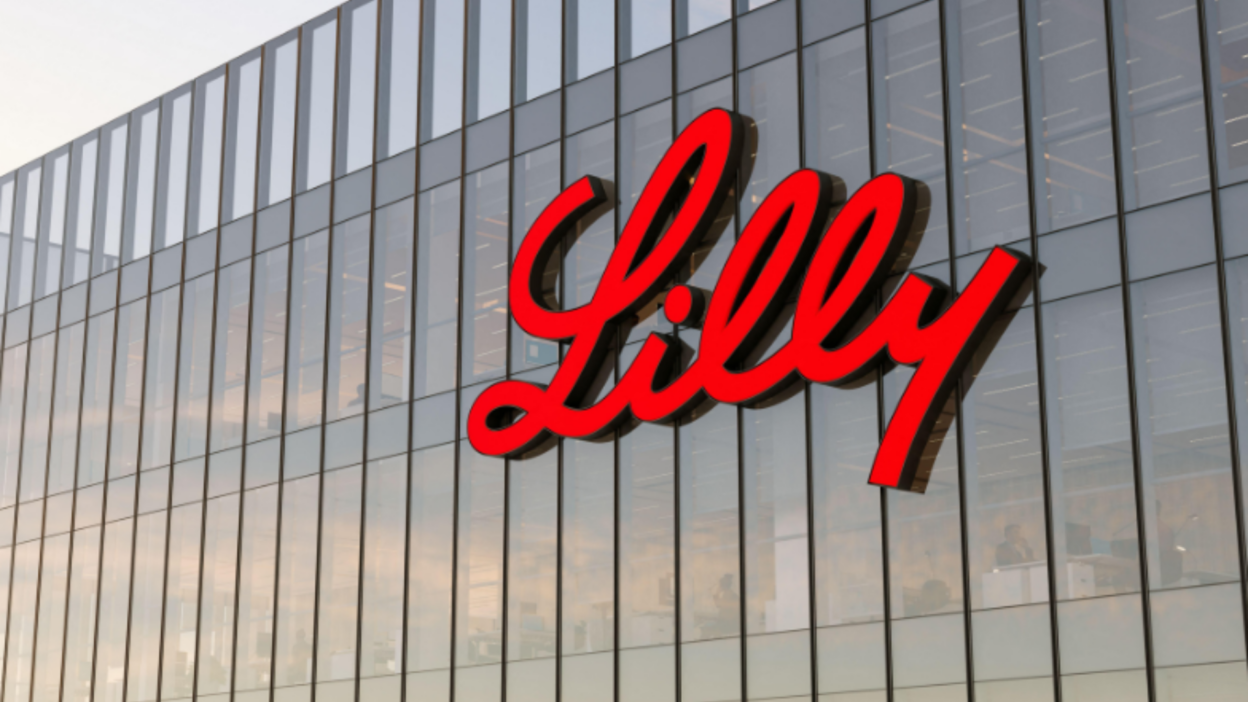
Lilly offered a useful reminder of that on September 21 when the company broke ground on a new $6.5 billion manufacturing facility in Houston, Texas. The plant is expected to employ more than 600 people and manufacture active pharmaceutical ingredients for small-molecule medicines, including Lilly’s oral GLP-1 medicine Foundayo (orforglipron), as well as advanced therapeutics such as oligonucleotides. Lilly also expects roughly 4,000 construction jobs while the facility is being built.
The project itself is not new. Lilly originally announced the Houston facility in September 2025, when it said the site would focus on synthetic small-molecule medicines across cardiometabolic health, oncology, immunology, and neuroscience. What changed this week is that the project moved from announcement to construction, Lilly began emphasizing active hiring, and the workforce infrastructure needed to support the facility became much more concrete.
Lilly is providing $12.5 million to support a workforce relationship with San Jacinto College focused on training for advanced chemical synthesis manufacturing. The company says the effort will help develop technicians, operators, maintenance professionals, and other manufacturing talent, while expanding equipment and training capacity and involving Lilly experts in curriculum development. Lilly also announced a separate $2.5 million charitable contribution to the San Jacinto College Foundation for scholarships.
For pharmacists interested in what else they can do with their degree, the most useful part of this announcement may not be the size of the facility.
It is the reminder that every medicine creates an enormous career ecosystem around it.
A drug does not become a medicine because the clinical trial worked
Imagine a company develops a promising new therapy and receives compelling clinical data.
That still does not put the medication into a patient’s hands.
The company must be able to manufacture the active ingredient at the required scale. The production process must be reproducible. Equipment has to work within defined parameters. Raw materials have to meet specifications. Processes have to be validated. Quality systems must detect deviations. Regulatory requirements have to be met. Documentation has to withstand inspection. Manufacturing changes have to be assessed. Supply has to be forecast. Finished material has to move through a reliable distribution network.
For every dose a patient eventually takes, an enormous amount of work happens behind the scenes.
That is why a $6.5 billion pharmaceutical manufacturing site is not simply a building filled with machines.
It is a collection of functions.
Manufacturing operations.
Manufacturing science.
Quality assurance.
Quality control.
Engineering.
Automation.
Validation.
Technical services.
Supply chain.
Process development.
Regulatory CMC.
Technology transfer.
Data and analytics.
Environmental health and safety.
Operational excellence.
Lilly’s own manufacturing career materials describe a network that spans engineering, manufacturing information and control systems, technical services and manufacturing science, and quality. The company characterizes those teams as supporting products across the lifecycle, from the molecule through reliable commercial supply.
That is a much broader career map than most pharmacists see when they type “PharmD pharma jobs” into a search bar.
Manufacturing itself is becoming a technology career
The Houston facility is also useful because it challenges an outdated picture of pharmaceutical manufacturing.
Lilly says the plant will incorporate machine learning, artificial intelligence, digitally integrated systems, advanced analytics, and extensive automation throughout manufacturing operations. The company says those technologies will be used to improve execution and support reliable production of high-quality medicines.
This means the modern drug plant increasingly sits at the intersection of chemistry, engineering, data, automation, quality, and healthcare.
A manufacturing team may need to understand not only how a chemical process works, but how sensors generate production data, how automated systems control equipment, how deviations are detected, how analytical information is interpreted, and how digital systems preserve data integrity in a regulated environment.
That technological layer creates career paths that would have looked very different a generation ago.
Lilly separately describes technology roles across artificial intelligence, data engineering, systems engineering, cloud technology, and other digital areas throughout its business. Its manufacturing organization includes dedicated manufacturing information and control systems functions as well.
For pharmacists, the takeaway is not that every PharmD should suddenly become a chemical engineer or automation specialist.
The more useful lesson is that the pharmaceutical industry is becoming increasingly interdisciplinary.
A medication company is also a manufacturing company, a technology company, a data company, a quality organization, and a highly regulated supply-chain operation.
Once you understand that, the career landscape becomes much larger.
The functions around the drug are worth studying
Take quality as an example.
When pharmacists hear “quality,” they may think about medication errors, quality improvement, or patient safety. Inside pharmaceutical manufacturing, quality takes on another dimension.
A manufacturer needs systems ensuring that processes consistently produce material meeting specifications. Deviations have to be investigated. Changes have to be controlled. Procedures must be followed. Equipment and processes need to remain in a validated state. Documentation matters because regulators need evidence that what the company says happened during manufacturing is actually what happened.
A current Lilly manufacturing-operations posting for the Houston site illustrates how interconnected these responsibilities can become. The role includes operating in a GMP environment, maintaining processes in a validated state, supporting quality and regulatory compliance, working with cross-functional process teams, investigating manufacturing events, and helping build the systems needed to launch a completely new facility.
Then consider manufacturing science and technical services.
These teams may work on the scientific and technical performance of manufacturing processes. They investigate why processes behave differently than expected, support improvements, evaluate changes, and help ensure production stays within tightly controlled specifications. Lilly describes its technical services and manufacturing science function as helping control production processes involving ingredients, equipment, facilities, manufacturing methods, packaging materials, and labeling.
Regulatory CMC adds another layer.
CMC stands for chemistry, manufacturing, and controls. It is the regulatory framework surrounding how a drug substance and drug product are made, characterized, controlled, and documented. A clinically effective molecule is not enough. Regulators also need confidence that a company can manufacture it consistently and appropriately.
Then there is technology transfer.
A process developed at one scale or location may eventually need to be transferred into a larger manufacturing environment. That transition requires knowledge to move with it. Processes have to be understood, equipment differences considered, analytical methods established, documentation transferred, and performance verified.
Supply chain adds another set of questions. What materials are required? Where do they come from? How much inventory is necessary? What happens when demand changes? What vulnerabilities exist? How do you maintain reliable supply for a product patients depend on?
None of these areas is secondary to the medicine.
Without them, there is no medicine available for the patient.
A PharmD will not be the preferred background for every one of these jobs
This distinction matters.
Seeing a pharmaceutical company invest billions in manufacturing does not mean every manufacturing position suddenly becomes a pharmacist opportunity.
Many roles appropriately prioritize chemical engineers, mechanical engineers, chemists, microbiologists, data scientists, supply-chain professionals, automation engineers, or people with specialized manufacturing backgrounds.
That should not discourage pharmacists from studying these functions.
It should change the question they ask.
Instead of starting with:
“What pharmaceutical manufacturing jobs can a pharmacist get?”
start with:
“What does this function actually do, and where does pharmacy training create useful overlap?”
A pharmacist may bring medication knowledge, understanding of dosage forms, pharmacology, regulatory awareness, quality thinking, risk assessment, scientific literature evaluation, patient-safety perspective, and experience working inside highly regulated healthcare environments.
That foundation may become more relevant in some functions than others.
It may also need to be combined with additional skills.
Someone interested in regulatory CMC may need to learn far more about manufacturing regulations and technical documentation.
Someone interested in quality may need deeper familiarity with GMP systems, investigations, corrective and preventive actions, change control, validation, and data integrity.
Someone interested in supply chain may need to understand forecasting, inventory strategy, planning systems, logistics, and manufacturing constraints.
Someone interested in manufacturing technology may need much stronger skills in data, automation, or digital systems.
The degree becomes the starting point, not the entire qualification.
That is a much more realistic way to think about nontraditional careers.
Search functions before searching degrees
There is a simple career-research mistake pharmacists make all the time.
They go to LinkedIn or a pharmaceutical company career page and type “pharmacist.”
The search engine then shows them only the jobs the company happened to title or tag in a way that matches that word.
The pharmacist concludes those are the available options.
But pharmaceutical companies are not organized around professional degrees.
They are organized around functions that have to get work done.
Lilly’s career site, for example, separates opportunities across areas such as manufacturing and quality, engineering, supply chain, technology, research and development, and other business functions. Its manufacturing organization alone includes multiple technical disciplines that would never appear in a search for the word “pharmacist.”
A better strategy is to search the function first.
Look for quality.
Manufacturing.
Regulatory.
Validation.
Operations.
Supply chain.
Manufacturing science.
Technical services.
Process development.
Clinical manufacturing.
Automation.
Then open the positions and study them.
Do not immediately ask whether you qualify.
Ask what the work actually is.
What problem is this employee responsible for solving? What skills keep appearing? What software or systems are mentioned? What regulatory concepts matter? What educational backgrounds are accepted? What kinds of previous experience do successful candidates appear to need?
After reading ten postings in the same function, patterns begin to emerge.
That is career intelligence.
The groundbreaking also makes the workforce story more tangible
Lilly’s relationship with San Jacinto College is worth paying attention to for another reason.
Companies do not invest billions of dollars into facilities and then simply hope the necessary workforce appears.
The workforce itself becomes part of the infrastructure.
Lilly says its $12.5 million commitment with San Jacinto College will expand hands-on training and create pathways into advanced chemical synthesis manufacturing, including roles for technicians, operators, maintenance professionals, and other manufacturing personnel. The company says no prior experience will be required for some of these training pathways.
That tells you how significant a new manufacturing site can become to a region.
The physical plant creates direct roles, but it can also generate training programs, supplier relationships, logistics needs, technology projects, educational partnerships, and demand for specialized talent around the facility.
Lilly originally estimated that the Houston site itself would create 615 high-wage permanent roles, along with roughly 4,000 construction jobs. The September 2026 update describes the permanent workforce as more than 600 employees and confirms that hiring has begun.
For pharmacists thinking about career mobility, these investments can serve as signals.
Where pharmaceutical companies build capacity, new teams have to be built around that capacity.
You do not need to wait until the building opens to begin watching those teams form.
Your career research should happen before you need the job
Here is the exercise I would recommend this week if pharmaceutical industry interests you.
Choose three pharmaceutical manufacturers.
Go directly to their career pages.
Do not search “pharmacist.”
Pick several functional terms instead: quality, manufacturing, regulatory, validation, operations, supply chain, manufacturing science, or clinical manufacturing.
Open ten positions that sound even remotely interesting.
Then study the language.
Which skills appear repeatedly?
Which degrees are accepted?
Which roles require experience in regulated environments?
How often do you see project management?
How often do you see cross-functional collaboration?
What manufacturing terminology keeps appearing?
What software or technical platforms show up?
Which positions require deep scientific expertise, and which seem to value leadership, operations, communication, or process improvement?
Then compare that list with your own experience.
You may discover that a function is much further from your current background than you expected.
That is useful information.
You may also discover that skills you already use in pharmacy appear in job descriptions under completely different language.
That is useful too.
Maybe you manage workflow but the industry calls it operations.
Maybe you investigate medication errors but the role emphasizes root-cause analysis and corrective action.
Maybe you lead pharmacy implementation projects but another industry describes that experience as change management.
Maybe you regularly work within strict procedures and regulatory requirements but have never thought about that experience as working within a regulated operational environment.
None of that means you should stretch your experience into something it is not.
It means you should learn how other industries describe the capabilities you actually possess.
Only after you understand the function should you ask whether another credential, course, certification, or project would meaningfully close the gap.
That is far more useful than buying a credential first and hoping it leads somewhere later.
The drug is only the center of a much larger career map
A $6.5 billion pharmaceutical manufacturing facility naturally draws attention because of the medicine it will produce.
But for pharmacists exploring what else they can do with a PharmD, the more interesting exercise may be to look at everything required around that medicine.
Someone has to develop the manufacturing process.
Someone has to validate it.
Someone has to monitor quality.
Someone has to investigate deviations.
Someone has to manage regulatory documentation.
Someone has to transfer processes from development into commercial manufacturing.
Someone has to integrate automation.
Someone has to interpret manufacturing data.
Someone has to forecast demand.
Someone has to protect the supply chain.
Someone has to build and eventually operate the facility.
And someone has to make sure that when the millionth dose is produced, it meets the same standards as the first.
That is pharmaceutical industry too.
Lilly’s Houston investment is not proof that every one of those careers is a PharmD career. It is something more useful.
It is a reminder to stop defining the industry only by the roles pharmacists already know.
Follow the medicine through its entire lifecycle.
Study the functions around it.
Understand the problems those teams solve.
Then determine where your pharmacy background gives you something valuable to contribute and what additional skills you would need to build.
Because sometimes the fastest way to discover a career you did not know existed is to stop searching for your degree and start studying everything required to make the drug possible.
Resources & Citations
- Eli Lilly and Company. “Lilly Breaks Ground in Houston, One of Ten U.S. Manufacturing Sites Announced Since 2020.” September 21, 2026. Primary source for the $6.5 billion groundbreaking, more than 600 expected permanent jobs, approximately 4,000 construction jobs, manufacturing plans for small-molecule APIs and oligonucleotides, $12.5 million San Jacinto College workforce initiative, separate $2.5 million scholarship contribution, current hiring, and planned use of AI, machine learning, advanced analytics, and digital automation throughout the facility.
Lilly September 21 groundbreaking announcement - Eli Lilly and Company. “Lilly Plans to Build a New $6.5 Billion Facility to Manufacture Active Pharmaceutical Ingredients in Texas.” September 23, 2025. Original announcement of the Houston facility, confirming that the project was first disclosed in 2025, its planned location at Generation Park, original employment estimate of 615 permanent roles, small-molecule focus, therapeutic areas, construction jobs, and planned digital-manufacturing technologies.
Lilly original 2025 Houston announcement - Eli Lilly and Company Careers. “Lilly in Houston, Texas.” Current career page for the Houston manufacturing site, describing the original 2025 announcement, the planned investment, small-molecule manufacturing focus, and Houston recruiting presence.
Lilly Houston careers page - Eli Lilly and Company Careers. “Global Manufacturing & Quality / Engineering.” Current overview of Lilly’s manufacturing career functions, including engineering, manufacturing information and control systems, technical services and manufacturing science, and quality.
Lilly Manufacturing & Quality careers - Eli Lilly and Company Careers. “Associate Director, Manufacturing Operations, Small Molecule.” Current Houston job posting illustrating responsibilities involved in starting the new API facility, including GMP manufacturing, validated processes, quality systems, regulatory compliance, investigations, cross-functional process teams, operational excellence, and startup activities. Job requirements and openings can change over time.
View the Houston manufacturing operations role - Eli Lilly and Company Careers. “Key Manufacturing Locations.” Current overview of Lilly’s manufacturing and quality network, including Houston and other major global manufacturing sites.
Lilly key manufacturing locations - Eli Lilly and Company Careers. “Technology at Lilly.” Current overview of technology functions across the company, including artificial intelligence, data engineering, systems engineering, and other digital capabilities relevant to Lilly’s increasingly technology-enabled operations.
Lilly technology careers