
Earlier this month, we wrote about ChatGPT moving directly into Epic and what happens when AI stops being something a pharmacist opens in another browser tab and starts becoming part of the healthcare workflow itself.
Now another shift is happening further upstream.
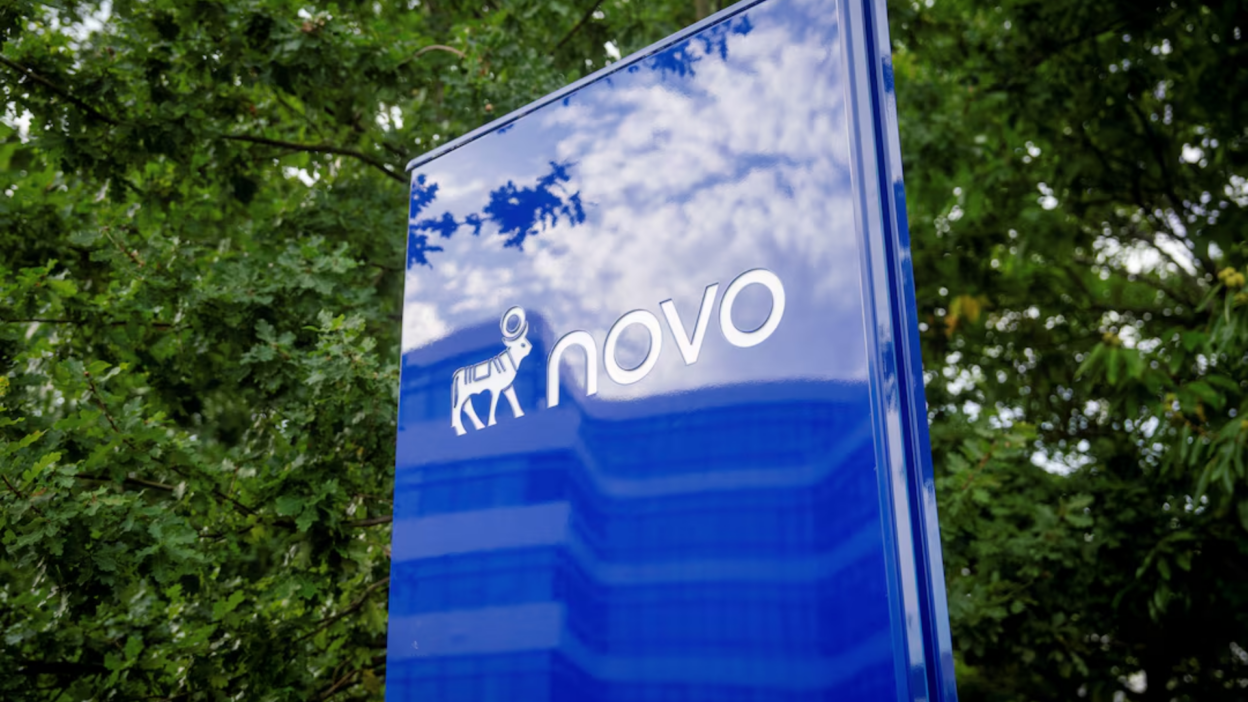
On September 16, Novo Nordisk announced a collaboration with Anthropic to use Claude models and Claude Science across research and development. The companies plan to work together on scientific challenges identified by Novo researchers, develop tools supporting biological reasoning, and use AI-driven software to help accelerate drug discovery and development.
That is a very different use of AI.
This is not AI helping summarize a patient chart after a medication reaches the market.
It is AI entering the process that helps determine which medicines might exist in the first place.
And when you look at what Anthropic announced immediately afterward, the direction becomes even clearer.
On September 17, Anthropic opened applications for a new Life Sciences Verification Program, designed to give qualified life-sciences organizations access to advanced models for work spanning drug discovery, research biology, clinical development, manufacturing, quality assurance, regulatory affairs, and other scientific workflows. Anthropic says dozens of organizations participated during early access and that applicants are reviewed for research credentials, security standards, and ethical oversight before receiving access.
The same day, Anthropic published another result.
The company reported that Claude, working through Claude Science, optimized more than 30 open-source biomolecular models in just under four weeks, making them roughly four times faster on average while also improving memory efficiency. These are Anthropic-reported results, not an independent clinical validation, but they provide a useful glimpse into the type of scientific work AI systems are beginning to perform alongside researchers.
Then Reuters reported another development that makes the story even more interesting.
Anthropic has established a physical biology lab in the San Francisco Bay Area, giving the company the ability to combine AI-driven scientific work with real biological experimentation instead of operating only through computer models and software. Reuters reported that Anthropic is expanding its life-sciences team and exploring how AI can support areas of biology and drug development, while saying the lab is not exclusively focused on drug discovery.
Put those developments together and you get a much bigger story than “Novo is using Claude.”
AI is moving upstream into the science behind medicine.
Look at the entire drug lifecycle
Most pharmacists interact with medications near the end of an extraordinarily long process.
By the time a drug reaches a community pharmacy, hospital formulary, specialty pharmacy, or patient consultation, years of work have already happened.
A biological target had to be identified.
Researchers had to determine whether modifying that target might affect disease.
Potential molecules had to be designed and tested.
Preclinical studies had to be completed.
Clinical trials had to be designed.
Regulatory submissions had to be prepared.
Safety signals had to be evaluated.
Manufacturing had to be scaled.
The product had to move through regulatory review, commercialization, market access, and finally into clinical use.
You can think of that lifecycle as:
Target identification → molecule design → preclinical research → clinical development → regulatory review → commercialization → medication use
For most of the recent AI conversation in pharmacy, we have focused near the end of that chain.
AI assisting with medication information.
AI summarizing charts.
AI helping document interventions.
AI supporting prior authorizations.
AI improving pharmacy workflow.
Those applications matter.
But what Novo and Anthropic are working on sits much earlier.
If AI can help scientists reason through biological problems, improve computational models, analyze scientific information, design experiments, write and optimize scientific code, or support portions of drug discovery, then AI is not simply changing how healthcare is delivered.
It may increasingly influence how medicines are discovered and developed.
That matters to pharmacists because pharmacy careers extend across that entire lifecycle.
Working in pharma is going to mean working around AI
This does not mean every scientist suddenly hands drug discovery over to a chatbot.
And it definitely does not mean an AI model independently discovers a medicine, proves that it works, and sends it to the FDA.
Drug development remains extraordinarily complex.
Biological hypotheses fail.
Models can be wrong.
Preclinical findings may not translate into humans.
Clinical trials can fail.
Safety problems can emerge late.
Regulators require evidence.
Manufacturing introduces another layer of complexity.
Human scientific judgment remains central.
But the tools available to those humans are changing.
Novo says the collaboration will focus on specific scientific challenges and workflows identified by its researchers and computational teams. The goal is to use Anthropic’s models and Claude Science to strengthen scientific reasoning and accelerate parts of research and development.
That is the part pharmacists interested in industry should pay attention to.
You may never build a machine-learning model.
You may never write the code behind Claude.
You may never work in a wet lab.
But if you enter pharmaceutical industry roles over the next decade, there is a growing chance that the teams around you will use AI somewhere in their workflow.
A medical affairs team may use AI-assisted evidence synthesis.
A clinical development group may use AI to help analyze scientific information, draft structured outputs, or support study-planning workflows.
A regulatory team may use AI-assisted tools to organize complex documentation and identify inconsistencies.
A pharmacovigilance group may use models to help surface potential signals from large amounts of safety information.
A drug-information team may use AI to retrieve and synthesize scientific evidence.
An R&D organization may use AI systems in biological reasoning, computational modeling, or scientific software development.
The important career question therefore changes.
It is no longer simply:
“Do I know how to use ChatGPT?”
It becomes:
“Do I understand how AI changes the scientific workflow I want to work in?”
That is a much more useful question.
Pharmacists do not need to become machine-learning engineers
I think this distinction is important because AI conversations often push healthcare professionals toward the wrong conclusion.
A pharmacist sees AI entering drug discovery and thinks:
Do I need to learn Python?
Maybe.
For some careers, technical skills could be extremely valuable.
But that is not the universal lesson.
There will also be tremendous value in people who understand enough science and medicine to determine whether the output of an AI system actually makes sense.
Think about what happens as AI becomes better at generating scientific work.
Someone still has to ask:
Is the evidence strong enough?
Did the model interpret the biology correctly?
What assumptions went into the analysis?
Does this finding matter clinically?
Does it generalize to the relevant patient population?
What information is missing?
What safety question has not been answered?
Does the conclusion match the underlying data?
Is the result reproducible?
What needs experimental confirmation?
What can responsibly move forward?
Those are not simply AI questions.
They are scientific judgment questions.
And that is where domain expertise becomes valuable.
The stronger AI becomes at producing information, analysis, and candidate solutions, the more important it becomes to have people who can evaluate those outputs within the context of pharmacology, clinical evidence, disease, safety, regulation, and patient care.
For pharmacists interested in industry, that creates an opportunity.
The valuable skill may be validation
When generative AI first became widely available, “prompt engineering” suddenly became one of the most discussed skills.
There is nothing wrong with learning how to communicate effectively with an AI system.
But in life sciences, I think a deeper skill will matter more.
Validation.
If AI proposes a scientific interpretation, can you determine whether it is defensible?
If it summarizes a clinical program, can you identify what it left out?
If it generates regulatory content, can you verify every underlying claim?
If it surfaces a potential safety signal, can you distinguish an interesting pattern from something clinically meaningful?
If it helps design a workflow, can you recognize where human scientific review must remain?
That is much closer to the work many pharmacists are already trained to do.
Pharmacy education teaches us to evaluate evidence.
Compare therapies.
Question assumptions.
Look for interactions.
Recognize safety problems.
Understand mechanisms.
Interpret clinical studies.
Make decisions under uncertainty.
Those abilities do not become obsolete because AI improves.
They become part of how AI-generated work is translated into decisions.
Anthropic’s verification program tells us something else
Anthropic’s Life Sciences Verification Program is interesting not only because of what the models can do, but because the company is putting a formal access structure around advanced biological capabilities.
Applicants are reviewed for research credentials, security standards, and ethical oversight. Anthropic says verified organizations can use its models across scientific areas ranging from basic research and R&D to clinical development, manufacturing, quality assurance, regulatory affairs, and supply chain.
That list is worth reading twice.
It stretches across an enormous portion of the pharmaceutical enterprise.
Drug discovery is only one part.
AI can potentially touch:
Discovery.
Development.
Manufacturing.
Quality.
Regulatory work.
Clinical research.
Scientific operations.
In other words, AI is spreading across the same functions pharmacists already enter when they move into industry.
That is the career signal.
You do not need to chase a job with “AI” in the title.
You need to understand how AI is changing the function you actually care about.
Take medical affairs
A pharmacist interested in medical affairs does not necessarily need to study protein modeling.
But they should understand how AI may affect literature surveillance, scientific-content development, evidence synthesis, medical-information workflows, and the speed at which internal teams process new evidence.
The competitive advantage may become less about manually finding every publication and more about knowing which evidence matters, how strong it is, what can responsibly be communicated, and where the limitations are.
Now take pharmacovigilance.
AI may help organizations work through enormous volumes of safety information.
That does not eliminate the need for people who understand causality, clinical relevance, signal evaluation, risk communication, and regulatory obligations.
It changes which parts of the workflow consume human time.
The same applies to regulatory science.
If AI helps organize documentation or accelerate drafting, regulatory professionals still need to understand what evidence supports the submission, whether the argument is defensible, and what the regulator is actually asking.
Clinical development?
AI might accelerate analysis or support scientific planning.
But people still have to determine whether the trial answers a meaningful question, whether endpoints are appropriate, whether patient selection makes sense, and how the result fits into the broader treatment landscape.
The pattern is consistent.
Automation moves some work down the stack. Human expertise moves higher.
The Novo collaboration is also a reminder that pharmaceutical companies are becoming technology companies
Novo did not frame this as a small software pilot.
The company said the partnership supports its broader ambition to become the world’s most AI-driven healthcare company.
That statement should matter to anyone planning a long career in pharmaceutical industry.
The traditional boundaries between:
Pharmaceutical company.
Biotechnology company.
Software company.
Data company.
AI company.
are becoming less rigid.
Drug companies increasingly employ software engineers, computational biologists, data scientists, AI researchers, product teams, informatics specialists, and technology leaders alongside chemists, physicians, pharmacists, statisticians, and regulatory professionals.
And AI companies are increasingly building directly for life sciences.
Anthropic’s new physical biology lab takes that convergence one step further.
Reuters reported that the company wants to connect AI, automation, and real experimentation, while expanding a life-sciences effort that already includes partnerships with pharmaceutical and biotechnology organizations.
That means the next generation of medicine may increasingly be developed by teams that look very different from the pharmaceutical R&D organizations pharmacists traditionally imagine.
This is where interdisciplinary pharmacists become valuable
A PharmD alone does not automatically qualify someone for AI-enabled drug discovery.
That is important to say clearly.
Computational biology, medicinal chemistry, machine learning, protein science, statistics, bioinformatics, and many other fields require specialized training.
But pharmacists do not have to compete with those specialists.
The opportunity may be at the intersections.
Pharmacology + data
Clinical development + AI evaluation
Drug safety + automation
Regulatory science + AI workflows
Medical affairs + evidence technology
Informatics + medication expertise
Clinical strategy + digital product
The broader your understanding becomes, the more places you can translate between teams.
That can be extremely valuable inside organizations where scientists, technologists, physicians, regulators, and business leaders all need to understand one another.
You do not have to become the best machine-learning engineer in the room.
You may become the person who understands enough about the medicine, the evidence, the patient, and the technology to ask the right question before the model’s answer becomes a decision.
The biomolecular modeling result shows why this could accelerate quickly
Anthropic’s September 17 research offers one concrete example of the speed these systems may add to scientific work.
The company gave Claude access to more than 30 open-source biomolecular modeling systems and reported that, in under four weeks, Claude improved their computational performance by roughly fourfold on average. It also developed a lower-memory approach that Anthropic says allows larger biomolecular systems to be modeled on a single GPU node.
Again, these are Anthropic’s own reported results.
They should not be interpreted as proof that Claude can independently discover safe and effective medicines four times faster.
That would be a huge leap beyond the evidence.
But consider what the result does demonstrate.
AI systems can increasingly contribute not just by answering scientific questions, but by improving the scientific tools researchers themselves use.
That is another layer of acceleration.
The AI does not necessarily need to discover the drug.
If it makes the computational biology tool faster, helps researchers reason through a difficult problem, accelerates software development, or reduces time spent on repetitive scientific work, the entire research organization can potentially move faster.
Small gains at multiple stages can compound.
And drug development has a lot of stages.
Your Pharmacy Unlocked challenge this week
If you are interested in pharmaceutical industry, do not give yourself the vague assignment:
“Learn AI.”
That is too broad to be useful.
Instead, choose one part of drug development you actually care about.
Maybe:
Clinical development.
Medical affairs.
Drug safety.
Regulatory affairs.
Medical information.
R&D.
Manufacturing.
Quality.
Real-world evidence.
Then spend 30 minutes answering one question:
How is AI changing this specific workflow?
If you are interested in pharmacovigilance, search for how AI is being used in safety surveillance and signal detection.
If you are interested in medical affairs, look at AI-assisted evidence generation, literature monitoring, and medical-information workflows.
If you are interested in clinical development, explore how AI is being used in trial design, patient identification, protocol development, or scientific analysis.
If you are interested in regulatory affairs, understand where AI is entering document preparation, information management, regulatory intelligence, and review.
Then identify:
What work is becoming easier?
What judgment still requires an expert?
What new skill would make me more valuable in that workflow?
That is a much better way to prepare for AI than trying to “learn AI” as if it were one skill.
The drug lifecycle is becoming an AI lifecycle too
Earlier this month, AI moved closer to the patient chart.
This week, we are seeing it move deeper into the scientific process behind the medication.
That progression matters.
The future of pharmacy will not be shaped only by how pharmacists use AI after a drug reaches the patient.
It will also be shaped by how AI changes the way drugs are discovered, studied, evaluated, manufactured, regulated, monitored, and communicated.
For pharmacists who want to work in industry, that creates a positive opportunity.
You do not have to abandon medication expertise.
You need to keep expanding what sits around it.
Understand the drug.
Understand the evidence.
Understand the healthcare system.
And increasingly, understand the technology helping produce and interpret that evidence.
Because AI does not have to replace the pharmaceutical scientist, the regulatory professional, the safety expert, or the pharmacist to transform their work.
It only has to change the workflow.
That is already starting to happen.
And the pharmacists who understand where human judgment becomes more valuable as the technology improves may be some of the best positioned for what comes next.
Resources & Citations
1. Novo Nordisk. “Novo and Anthropic will collaborate to advance drug discovery with Claude.” September 16, 2026.
Primary source announcing the collaboration between Novo Nordisk and Anthropic. Novo says the companies will work on drug-discovery challenges identified by Novo scientists and computational teams, develop solutions for scientific workflows and biological reasoning, use Anthropic models and Claude Science in R&D, and support AI-driven software development. The announcement also states Novo’s ambition to become the world’s most AI-driven healthcare company.
Novo Nordisk collaboration announcement
2. Anthropic. “Introducing the Life Sciences Verification Program.” September 17, 2026.
Primary Anthropic announcement describing the beta Life Sciences Verification Program for qualified life-sciences teams. The program supports approved use of Anthropic models across drug discovery, research biology, clinical development, manufacturing, quality assurance, regulatory affairs, supply chain, and other workflows. Anthropic states that applicants undergo review involving research credentials, security standards, and ethical research oversight.
Anthropic Life Sciences Verification Program
3. Anthropic. “How Claude is uplifting biomolecular modeling.” September 17, 2026.
Primary Anthropic research report stating that Claude, working within Claude Science, optimized more than 30 open-source biomolecular modeling systems in just under four weeks and improved their speed by roughly fourfold on average. Anthropic also reported development of a low-memory mode supporting larger biomolecular systems. These results are company-reported research findings and should not be interpreted as independent evidence of improved clinical drug-development outcomes.
Anthropic biomolecular modeling research
4. Anthropic. “Science.” 2026.
Anthropic’s science portal summarizes its broader efforts to use Claude across scientific research, including biomolecular modeling, protein design, analytical chemistry, biology agents, bioinformatics, scientific computing, and other research applications.
Anthropic Science
5. Reuters. “Anthropic quietly sets up biology lab as it ramps AI drug program.” September 18, 2026.
Independent reporting that Anthropic has established a wet biology laboratory in the San Francisco Bay Area and is expanding its life-sciences activities beyond computational work into physical experimentation. Reuters reported that the laboratory is not exclusively focused on drug discovery and that Anthropic is expanding its biology and biochemical expertise while pursuing broader life-sciences ambitions.
Reuters coverage of Anthropic’s biology laboratory